
The propagation of creeping sedums is stupidly simple. Pull up or cut some of the stems and place them on top of potting soil or stick them into the soil shallowly. Large clumps of tall sedums can be grown by stem cuttings or division. Sedum stem cuttings should be 3 to 5 inches long, with the lowest inch or so removed of leaves before being stuck.
Our favorite sedums:
Among the tall sedums, ‘Dynomite’ is a favorite because of its great bloom color and purple foliage. Russet blooms and variegated foliage characterize ‘Frosted Fire.’ The blue foliage of S. bithynicum is one of our favorite creeping sedums. The leaves of S. tetractinum are a lovely green color that turns scarlet in the winter. Sedum spurium is a pretty little plant with tiny leaves. Try Sedum mexicanum, especially its brilliant yellow-leaved cultivar ‘Lemon Ball’, if you want incredibly little.
Where is the best place to plant sedum?
Sedum (also known as’stone crop flower’) thrives in full to part sun. While taller hybrids require full sun to flower well, creeping varieties can thrive in partial shade.
Sedums prefer a well-drained soil with a pH range of neutral to slightly alkaline. Root and stem rot can be caused by wet, heavy clay.
Tall growing sedums should be spaced 1 to 2 feet apart. Depending on the kind and how rapidly you want it to fill in an area, space low-growing, creeping sedums 6 to 12 inches apart.
Plant sedums when the risk of frost has passed in the spring. Planting transplants till late summer is possible in northern locations. Plant in the spring or fall in warmer climates.
Does sedum need full sun?
Sedum don’t need much water, and if they get at least 6 hours of sunlight per day, they’ll produce their greatest colors. In thick, mucky, or high clay soils, they will not thrive. If you have some high spots and some low locations in your yard, the higher spots that drain well after a heavy rain will be preferable for sedum, while low spots tend to collect water.
Some succulents thrive inside, but sedum isn’t one of them. They simply require an excessive amount of direct sunshine.
Does stonecrop like sun or shade?
The majority of sedums prefer full or partial sun (5 or more hours of direct sun per day). Sedum ternatum, for example, is a woodland plant that prefers to grow on top of rocks in dappled shade. To avoid sunburn, some of the highly variegated sedums (such as S. alboroseum ‘Lemonade’) with pale green, yellow, and white leaf require dappled sunlight.
How Much Fertilizer Should Sedums Receive?:
Sedums prefer a dry environment, so go easy on the fertilizer. The best compost to use is organic compost. Chemical fertilizer can cause flopping and straining.
About Sedum
Sedum, often known as “stonecrop,” comes in a wide variety of types and species, making it suited for use in practically any garden design. They’re hardy, easy to care for, and pollinators adore them!
Based on the growth characteristics of the plants, we split sedum into two categories: low-growing sedum and upright sedum.
- Sedum is a low-growing plant that spreads along the ground and grows to only a few inches (or less) in height. They’re ideal as a ground cover along walks, in rock gardens, or cascading down a stone wall because of this.
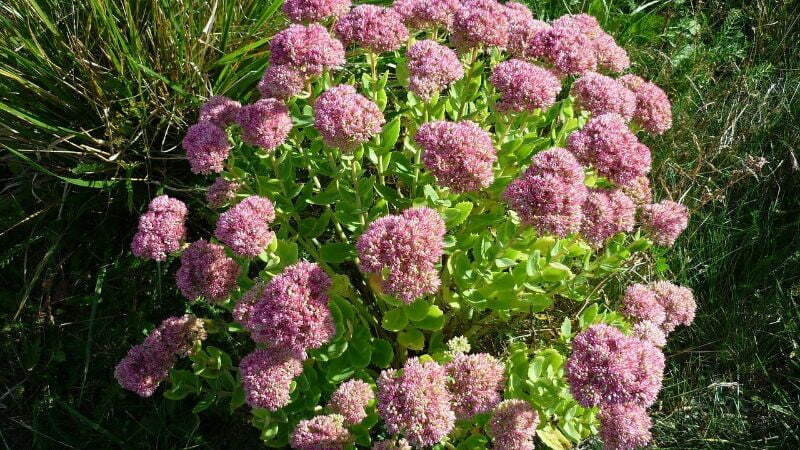
- Sedum that grows upright forms tall, upright clumps with a dense mass of tiny reddish-pink flowers. They’re ideal for border gardens or pollinator gardens because of their height and gorgeous blossoms. Although upright sedum was reclassified to a different genus, Hylotelephium, a few years ago, it is still referred to as a “sedum.”
How do you plant a stonecrop?
Sedums are one of the easiest plants to propagate, and other stonecrops can be propagated in the same way. You only need a leaf or a sliver of stalk. A new succulent can be grown quickly by planting a stonecrop stem shallowly in a very gritty medium or by placing a leaf on the surface of sandy soil. In just a few weeks, the plant material will root and produce a new stonecrop.
What can I plant next to sedum?
Sedum’s Companion Plants
- Chrysanthemums and asters Hardy perennials like asters and chrysanthemums bloom in the fall.
- Fescue in the color of blue. Autumn Joy’s gentle green stems and leaves contrast wonderfully with blue fescue’s spiky, blue-gray foliage.
What is the difference between sedum and stonecrop?
Sedum is a flowering plant genus with succulent properties such as water-storing leaves and stems. The Crassulaceae family includes sedums. Because of its stone-like look, Sedum is also known as stonecrop. The white blossom of the Appalachian stonecrop. Sedums are annuals, perennials, creeping herbs, and shrubs with 600 species in the Northern Hemisphere. Succulent features are shared by both sedum and cactus, but they belong to two separate plant families.
Is stonecrop sedum invasive?
Many gardeners recognize upright sedum species, such as Sedum ‘Autumn Joy,’ as good plants for color in late summer and early autumn’s hot, dry days. Several low-growing sedum types, on the other hand, operate well as ground cover plants in hot, arid climates where other plants struggle to survive.
The Sedum genus contains 400500 species known as sedums, or stonecrops, many of which have been widely embraced as garden plants. It belongs to the Crassulaceae family, which is noted for plants with mushy, succulent leaves. Stonecrop gets its name from the fact that these plants not only withstand but thrive in dry, rocky soil. Sedums can grow to be 2 inches tall or 3 feet tall. Some species can withstand temperatures as low as USDA hardiness zone 3, while others are best suited to warmer regions. Sedums come in both annual and perennial varieties, but they’re always fleshy succulents. Sedums store moisture in their leaves, which is why they thrive in arid environments. Despite the fact that all sedums flower, they’re most commonly planted for their foliage, which comes in unique colors of green not found in other plants.
All sedums are incredibly easy to grow and propagate, and the only way to kill them is to overwater them or plant them in excessively moist soil. A single branch or even a leaf stuck in the ground will swiftly root and grow into a new plant in upright kinds. Low-growing sedums spread quickly but aren’t invasive, and their shallow root systems make them easy to remove, making them great ground cover plants.
For your ground cover needs, here are ten sedum, or stonecrop, varieties to consider.
Can you plant stonecrop in the fall?
Autumn Joy stonecrop, often known as sedum, is a popular upright variety of stonecrop. Its scientific name is Hylotelephium telephium ‘Herbstfreude’ (‘Autumn Joy’). It’s a hybrid plant formed by crossing a sedum species (Sedum telephium) with an ice plant species (Hylotelephium spectabile). The resulting plant has rounded, gray-green leaves that resemble succulents. It blooms in late summer to early autumn, with small pink star-shaped flowers that grow in clusters on top of the plant’s stalks that are 3 to 6 inches across. The blossoms turn a deep rose color after blooming and then rust before dying when the chilly fall temperatures approach. Autumn Joy stonecrop grows slowly and is best planted in the spring, after the fear of frost has passed but before the summer heat sets in.
Does sedum spread quickly?
A creeping sedum might be the plant for you if you’re seeking for a lovely plant that thrives in almost complete neglect. Sedums strut their stuff in places where few other plants would dare. They thrive in crevices in a garden wall or pathway, on roofs or the tops of gently sloped birdhouses, and even under big trees where their massive roots capture the majority of the soil’s moisture. They work well in rock gardens, borders, and containers as well.
Many gardeners have begun to look more closely at species of the genus Sedum as seasonal and long-term droughts become more common across the United States. Sedum ‘Autumn Joy’ is well-known for its late russet blooms, but its ground-hugging relatives are gaining popularity as well.
Stonecrops, sometimes known as creeping sedums, provide a constant source of interest in my garden. They’re some of the most adaptable, drought-tolerant, and simple-to-grow perennials I’ve ever grown in my decades as a gardener. Sedums really reduce the amount of work a gardener has to do as they grow in size. Low growers are known for their ability to spread quickly, preventing weeds from gaining root. Although it is not required to deadhead spent blooms because they will fade away on their own, aged blossoms can be easily removed with a string trimmer. They are rarely afflicted by illnesses or pests as long as they are not over-watered.
While sedums may thrive in even the poorest soilin fact, low or little soil is their preferred mediumgood drainage is essential for their growth. Too much wetness, especially standing water, will destroy a sedum faster than any drought can.
Sedums, once established, require almost no further water to thrive, even in the driest conditions. Sedums are a great choice for gardens in hot, arid areas like the western United States, but they can grow almost anyplace with sufficient drainage. They can be found sticking up from boulders or sprouting from just a few inches of scree in frigid, alpine regions. Almost every USDA Hardiness Zone has at least one Sedum species. Although most creeping sedums prefer full sun, they can also thrive in moderate shade. Sedum ternatum, a North American native, is a sedum that prefers a little more moisture and shade than its relatives.