
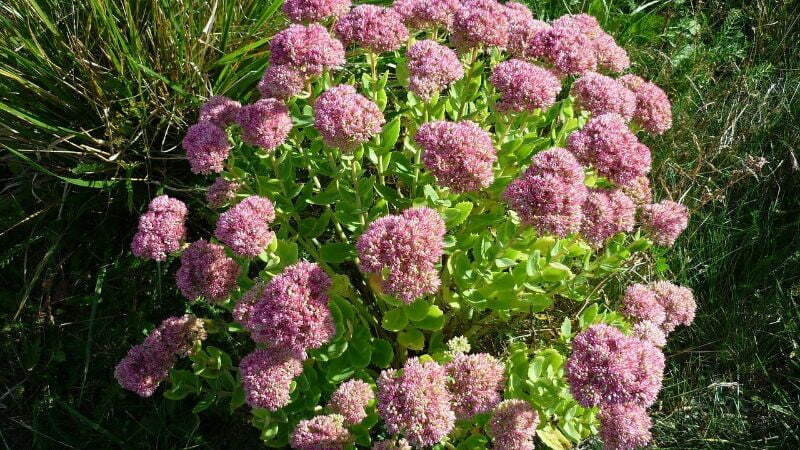
Autumn Joy’s gentle green stems and leaves contrast wonderfully with blue fescue’s spiky, blue-gray foliage. It, like the sedum, prefers well-drained soil and can tolerate both full and partial sun.
What plants go well with succulents?
Companion planting is a popular way to increase height to ground-hugging succulents. The osteospermum, a drought-tolerant flowering plant, is a suitable choice. The flowers of this daisy, like those of the perennial Santa Barbara daisy, can stand upright or trail beside your succulents. Allow them to trail amid succulents that are taller, such as aloe and agave.
Succulents pair well with ornamental grasses, which often bloom in the fall and provide interest into the winter. There are a number of cultivars that have similar maintenance requirements as succulent plants. If planted in the right spot, ornamental grasses can give midday shade.
While many succulents prefer full-day sun, midday shade can help prevent sunburn on the foliage. Check the information on your succulent kind to see if they benefit from shade-giving ornamentals. The shorter blue fescue grass may make a lovely companion for your succulents.
Flowering herbs like yarrow, lavender, salvia, and rosemary are ideal for growing alongside succulent beds. These herbs grow in the same conditions as most succulents that are planted in the ground. Plant these herbs near the back of the bed or all around it, depending on your configuration. Grow them in the middle of the bed if it is open on all sides.
What is attracted to sedum?
Autumn Joy will grow to a height of two feet, attracting butterflies and bees with its succulent stems and leaves, as well as its stunning flowers. The presence of bees in a garden is a significant measure of its health. Sedums are also a good source of nectar for butterflies and hummingbirds in the late season.
Can you mix succulents with flowers?
When selecting flowers for your succulent garden, aim to match the soil, sun, and water requirements of the flowers to those of your succulents. To increase drainage, mix 2 parts potting soil with 1 part pumice or perlite and 1 part horticulture-grade sand when planting flowers and succulents in containers. Combine spring- and summer-blooming flowers with winter-flowering succulents for year-round flowering.
Can I plant cacti and succulents together?
The majority of succulents and cacti require a lot of light to thrive. They’ll look great in the sunniest corner of your home. You’ll be supplying them with what they want if you build some shelves across a sunny window. You should rotate the plants on a regular basis to ensure that all sides of the plant receive equal sun exposure.
Every garden center provides a wonderful selection of cacti and succulents that you may cultivate at home. Some cacti, such as the forest-growing Schlumbergera x buckleyi (Christmas cactus), are sold in department stores as seasonal or gift plants. Because it takes years for cacti to flower, it’s preferable to buy them when they’re already in bloom. You should inspect them to ensure they are sound, with no signs of decay or shriveled or dry parts. They should be the perfect size for their pot, and when you bring them home, make sure they aren’t exposed to any drafts.
Make sure you buy desert cactus that have been planted in well-drained compost. In the spring and summer, they should be well irrigated with tepid water. During the winter months, however, the compost should be allowed to almost entirely dry, especially if the weather is cold. The cactus will be able to go dormant as a result of this.
Cacti should be fed every three weeks during periods of active growth. For this, you can use a well-diluted tomato fertilizer. In the winter, desert cactus like temperatures of 50-55 F (10-13 C). Repot desert cacti only after the roots have completely filled the pot.
Cacti found in the forest are quite different from those found in the desert. Beautiful, dangling blooms arise from the tops of segmented stalks in most cases. These stems resemble a tangle of succulent leaves. They’ve been trained to grow over trees, so they’re growing this way. They are accustomed to being shaded, but they do require bright lighting. They require a lime-free, light, well-drained compost that is misted with lukewarm, soft water. They can be rested at 50-55 degrees Fahrenheit (10-13 C.). After winter, water them sparingly and feed them a light fertilizer once a week, then move them to a room with higher temperatures.
There are at least 50 plant families that can be classified as succulents. During the summer, they should be watered frequently, but only when their compost becomes dry. They can withstand temperatures of around 50 degrees Fahrenheit in the winter (10 C.). In the summer, you should fertilize every few weeks with a well-diluted fertilizer, and they like fresh air to humidity.
Succulents, desert cacti, and forest cacti can all be cultivated together. They’re perfect for showcasing your houseplant collection. Even if they don’t seem to give a damn, you still need to know what they want and need.
What perennials look good with sedum?
Sedum’s Companion Plants
- Chrysanthemums and asters Hardy perennials like asters and chrysanthemums bloom in the fall.
- Fescue in the color of blue. Autumn Joy’s gentle green stems and leaves contrast wonderfully with blue fescue’s spiky, blue-gray foliage.
Plant sedum along walkways or between stepping stones.
Sedum is a low-maintenance plant that looks fantastic between pavement stones or along sidewalks. It is crucial to remember, however, that some cultivars are able to withstand traffic while others are not. Many sedum cultivars cannot endure even light traffic because their leaves hold water, but others can withstand regular traffic from guests, children, and pets. If you’re unsure about which sedum to use for your walkway, ask the experts at your local garden center for help.
Plant sedum along driveways.
Sedums work well for both short and long driveways. They’re a particularly fantastic choice if you want your guests to be greeted by a blanket of color and texture without having to run irrigation all the way to the end of your driveway because they’re a low-water landscaping option once they’re established. Again, certain sedums withstand traffic better than others, so if you have drivers in your family who struggle to remain on the paving stones or concrete, choose a species that can withstand a beating.
Use sedum in container gardens.
A cascading sedum is an excellent addition to a succulent-filled pot, but it can also be used alone in planters. Sedums spill over the sides of container gardens, adding a fresh aspect and visual appeal, especially when they are in bloom. Sedums should definitely be on your list of options if you want a low-water, low-maintenance container garden in one or more of your outdoor living areas.
Will sedum choke out other plants?
The vivid red tones of this ground cover plant darken as the summer and fall progress. Its thick foliage chokes out weeds and spreads swiftly. Because it can grow up to six inches tall, this ground cover choice may need to be clipped to a desired height.
Outside of Pride, Dragon’s Blood Sedum Seeds will undoubtedly succeed. This packet contains 5,000 seeds, which should be enough to cover most lawns because this plant grows quickly.
Does sedum Angelina flower?
‘Angelina’ Creeping Sedum (Sedum rupestre) is a fast-growing, colorful sedum that gives a stunning highlight with colors ranging from chartreuse to golden yellow. It’s simple to grow and spreads swiftly as a drought-resistant groundcover. Summer brings bright yellow star-shaped flowers, while fall brings golden-orange foliage.
Does sedum spread quickly?
A creeping sedum might be the plant for you if you’re seeking for a lovely plant that thrives in almost complete neglect. Sedums strut their stuff in places where few other plants would dare. They thrive in crevices in a garden wall or pathway, on roofs or the tops of gently sloped birdhouses, and even under big trees where their massive roots capture the majority of the soil’s moisture. They work well in rock gardens, borders, and containers as well.
Many gardeners have begun to look more closely at species of the genus Sedum as seasonal and long-term droughts become more common across the United States. Sedum ‘Autumn Joy’ is well-known for its late russet blooms, but its ground-hugging relatives are gaining popularity as well.
Stonecrops, sometimes known as creeping sedums, provide a constant source of interest in my garden. They’re some of the most adaptable, drought-tolerant, and simple-to-grow perennials I’ve ever grown in my decades as a gardener. Sedums really reduce the amount of work a gardener has to do as they grow in size. Low growers are known for their ability to spread quickly, preventing weeds from gaining root. Although it is not required to deadhead spent blooms because they will fade away on their own, aged blossoms can be easily removed with a string trimmer. They are rarely afflicted by illnesses or pests as long as they are not over-watered.
While sedums may thrive in even the poorest soilin fact, low or little soil is their preferred mediumgood drainage is essential for their growth. Too much wetness, especially standing water, will destroy a sedum faster than any drought can.
Sedums, once established, require almost no further water to thrive, even in the driest conditions. Sedums are a great choice for gardens in hot, arid climates like the western United States, but they can grow almost anywhere with good drainage. They can be found sticking up from boulders or sprouting from just a few inches of scree in frigid, alpine regions. Almost every USDA Hardiness Zone has at least one Sedum species. Although most creeping sedums prefer full sun, they can also thrive in moderate shade. Sedum ternatum, a North American native, is a sedum that prefers a little more moisture and shade than its relatives.
When should sedum be divided?
You should know how to divide sedum so you can spread more of these attractive plants, whether you have little spreading rosettes or towering Autumn Joy stonecrop. Sedums thrive in hot, dry climates and bring lively color and quirky form to difficult-to-plant regions. Sedum separation is a simple project that will quickly increase the number of easy-to-grow plants. New divisions form quickly and require little more attention.
Late fall to early spring is the best time to divide perennial perennials. When you know when to divide sedum, you can ensure that it recovers quickly and roots well. Because many sedum plants die back in colder climates, determining where the plant is until new growth appears in early spring can be difficult. It is best to separate the plants at this time.
Plant division can increase blooms and improve plant health. Every three to four years, sedum should be divided. Some growers advise dividing the plant after it has blossomed and while it is still developing. Although recovery will be longer, these resilient small succulents should be able to bounce back rather quickly.