
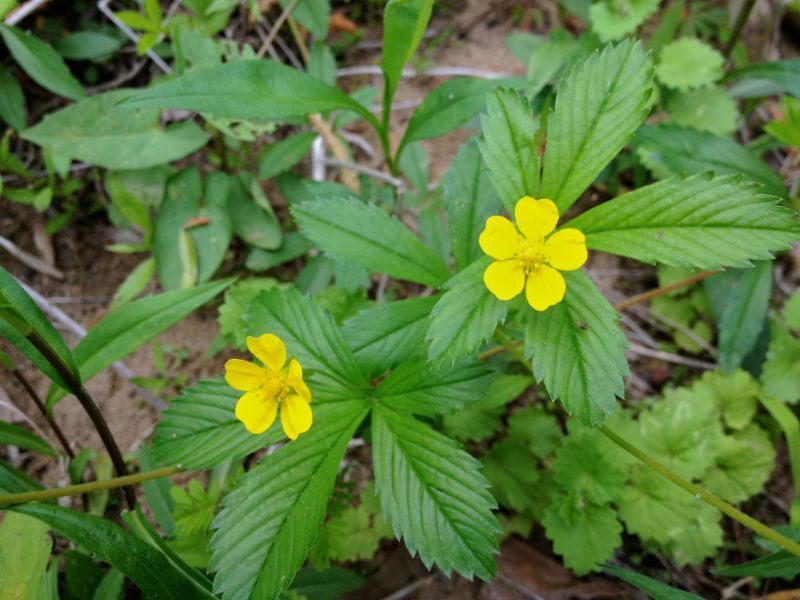
Potentilla is best planted in the spring or fall when the weather is cooler. The best time to plant is in the spring, when the roots will have a complete growth season to establish themselves.
How to plant:
2 inches of compost should be applied to the planting area and mixed into the soil 6 to 8 inches deep. Remove the plant from the container and dig a hole 1-1/2 times the size of the root ball. If the roots are potbound, gently pry them out and insert them in the hole so that the top of the root ball is just above the soil surface. Water well after gently tamping down the soil around the base. Depending on mature size, space 3 to 6 feet apart. In clay soils, adding compost, planting high, and keeping an eye on the amount of water is extremely vital.
Can I transplant a potentilla?
Full sun (6 hours) to moderate shade is optimal for growing and flowering potentilla. a location with fertile, well-draining soil that stays equally moist The plant will not blossom as well if cultivated in partial shade and will become spindly and shabby in appearance. This shrub, like all shrubs, will benefit from a shovelful of compost in the spring.
All of your queries about when and how to transplant will be answered by the following information from one of our previous posts:
In general, you incur the danger of losing a tree, shrub, or perennial when you transplant it.
The larger and older the plant, the more likely it is that the transplant will fail. Early spring or early fall are the best times to transplant because the plant will have plenty of time to establish itself in its new site due to the cold temperatures and regular rain. When a plant or shrub is transplanted, some of its roots are cut, and the remaining roots must re-establish themselves in order to collect nutrients and water from the soil and live.
When transplanting, attempt to cause as little disruption to the roots as possible. A cold, overcast day with rain in the forecast is excellent. Transplanting should never be done during the hottest part of the day or during a dry spell. When you’re ready to transplant, it’s ideal to do so right away, which means you’ll need to prepare the hole at the new spot beforehand. Dig a hole twice the width of the root ball as a general rule of thumb.
Dig down and around the shrub once the new area has been prepared, preserving as much of the root ball as possible. Place the shrub in its new home, which has been half-filled with water, and at the same planting depth as before. Backfill with the soil that was removed, pressing it down with your foot to ensure that all air pockets are gone. Apply a transplant fertilizer at the end.
Remember that regular doses of transplant fertilizer, together with deeper, less frequent watering, will assist to avoid transplant shock and promote a healthy, successful transplant.
How to Transplant Trees and Shrubs, Transplanting or Moving Trees and Shrubs in the Landscape are all covered in the following links.
Should potentilla be cut back in the fall?
You can trim your potentilla in the fall if you want to. To restructure it, trim it close to the ground. You’ll see that new shoots appear quickly.
However, you may notice that the shrub does not flower as well the first year after a harsh prune, but it will bloom profusely the following year.
Do potentilla have deep roots?
Landscape shrub transplanting can be a gardener’s nightmare. Because their roots are both deep and extensive, shrubs established in the landscape are difficult to transfer, unlike nursery plants with limited roots. Potentilla, often known as cinquefoil, is relatively easy to transplant because its roots are thin, woody, and usually shallow. Potentilla (Potentilla fruticosa or Dasiphora floribunda) is a deciduous perennial shrub that is also known as shrubby or bush cinquefoil. The majority of varieties are tiny, standing between two and four feet tall, and flower continuously throughout the summer. Plants are hardy and thrive in Zone 2. They have the ability to rejuvenate by sprouting from the root crown.
Can you split a potentilla?
Shrubs with a central woody trunk that protrudes from the ground are known as tree-like shrubs. This trunk is irreversible, and injuring or cutting it will result in the shrub’s death. Tree-like shrubs include azaleas, arborvitae, and laurels. These shrubs are what they are you can’t cut the trunk in half, and dividing a cluster of roots won’t result in a new trunk sprouting. Seeds, cuttings, and layering are typically used to propagate tree-like shrubs, however division is not an option.
Shrubs with many shoots (known as “canes”) growing from a single clump of roots are known as cane shrubs. Cane shrubs develop and regenerate their canes on a regular basis, and it may be possible to remove existing canes without harming the new ones. Some aucuba, shrub dogwoods, forsythia, lilacs, nandina, potentilla, skimmia, and spirea are cane type shrubs. It may be feasible to divide and propagate these shrubs, depending on how they grew.
Can potentilla be divided?
Division and cuttings are the greatest techniques to propagate potentilla. Which approach you choose will be determined by the sort of potentilla you have in your garden.
- It’s possible to divide perennial herbaceous potentilla in the spring if it doesn’t create woody stems and branches and dies back in the winter. The most critical part of ensuring the divisions’ survival is to keep the soil moist after transplanting them.
- Softwood cuttings are the way to go if you’re growing a shrubby potentilla (one that grows woody stems and branches and doesn’t die back each winter). Summer is a good time to take these cuttings. You may either pot the cuttings and store them in a protected spot till next year, or you can just stick them in the soil in your garden and water them regularly.
Why is my potentilla dying?
Regardless of what caused the dieback, pruning out the dead branches is a good thing. Make a small scrape in the bark to see whether there is any green showing to ensure that a branch is dead. If the underside of the branch is brown and dry, it is most likely dead.
Maintain an eye on the soil moisture in your garden and give the potentilla bushes supplementary water as needed to keep the soil moist but not wet. Install a couple of inches of shredded bark mulch around the plants to help preserve moisture, enhance the soil, and keep weeds at bay while also improving the aesthetic of the bed.
How do you plant Potentillas?
Potentilla is a tiny, rounded shrub native to the United States that looks lovely in a small garden. What makes potentilla so unique is that, unlike many other deciduous shrubs, it flowers in waves from mid-summer through frost. Traditional colors for the little, buttercup-like blooms are yellow or golden, although newer variants come in white, pink, and even orange. This shrub’s finely textured, tiny leaves give it a delicate appearance, and its slow growth rate makes it a popular choice for flower garden pairings with perennials. But it’s also a robust shrub with few soil needs that can be planted anywhere in the landscape as long as it gets enough sun to flower effectively.
Potentilla is a hardy plant that can be found all throughout New England. Plant potentilla plants obtained from a local garden center in well-drained soil mixed with compost from spring through early fall. Potentilla may thrive in any soil that is not too wet. Plants should be spaced 3 to 6 feet apart.
To keep the soil equally moist and avoid weed growth, water newly transplanted potentilla plants thoroughly and mulch with wood chips or bark mulch. In the spring, apply a layer of compost and an organic plant food to fertilize.
Potentilla is a plant that is relatively simple to grow. In colder places, however, there will be some winter dieback. In the spring, prune out any dead, diseased, or broken branches. To keep the plant in shape over the summer, prune it at regular intervals. To keep the shrub from getting overloaded, remove suckers. If necessary, Potentilla can be severely pruned to revitalize the plant. Spider mites may become a problem if you plant in hot, dry conditions. To kill the mites, spray the plants with insecticidal soap.
Plant potentilla along the foundation of windows or as part of a shrub or perennial flower border. Planting yellow-flowered baptisia, salvia, and catmint next to blue-flowered baptisia, salvia, and catmint looks great. Potentilla can be used as a low hedge or in a formal herb garden. Other colored variants can be mixed in with perennial flowers and low-growing shrubs like cotoneaster and dwarf spirea.
‘Abbotswood’ is a popular white flowering variety that reaches a height and width of 3 feet. The leaf shape ‘Abbotswood Silver’ is white and green variegated. The common cultivars ‘Gold Drop’ and ‘Gold Finger’ have beautiful yellow flowers that bloom for long periods of time. Pink blooms bloom on 2-foot tall and wide shrubs in ‘Pink Beauty.’ ‘Snowbird’ features white blooms with double petaled petals. On a 2-foot tall and wide shrub, ‘Tangerine’ features yellow flowers splashed with orange. ‘Sunset’ is a new 16-inch tall cultivar with reddish-yellow blossoms.
Are Potentillas Evergreen?
Petite Potentilla will create a huge ornamental effect in your beds or pots in a range of lovely colors, whether they are low-growing or erect, deciduous or evergreen. Potentilla is a tough, compact small shrub that thrives in cold conditions. It is native to high alpine and subarctic locations.
Can I prune potentilla in spring?
Early in the spring, before the leaves emerge, prune this shrub. Maintain a mounded form by removing 50 percent to 75 percent of the top of the shrub. Take the heaviest canes all the way to the ground and discard them. Reshaping and removing wasted flowers after the shrub blooms in the summer will improve the plant’s appearance while spurring additional flower growth. You can improve the size and number of blossoms on young shrubs by fertilizing them. Fertilizers in the form of granules, liquids, or stakes can be employed. At a rate of 2 pounds or 2 pints per 100 square feet of planting bed, granular types should be mixed into the soil around the plant. Drill or punch 6 deep holes at the plant’s drip line as an option. A total of 1/4 pound of fertilizer per foot of shrub height or spread should be placed into these holes (divided up and poured evenly between all of the holes). These holes should only be filled with about a third of the fertilizer before being top-filled with dirt. This kind of fertilization should only be used once a year, either late fall after leaf fall or early spring before bud break.
Liquid fertilizers (such as Miracle Gro) are mixed with water and administered to the plant in the same way that you would water it (see product for specific details). Starting in late April and concluding in mid-July, this should be done three or four times per year. Stake fertilizers can be used according to the package directions. A balanced blend of 20-20-20, 20-30-20, or 18-24-16 should be utilized with any of the aforementioned procedures. Organic fertilizers, including as manure, can also be utilized successfully. One bushel of material per 6 shrub, or 100 sq. ft. of bed space, should be pushed into open soil.
These shrubs require minimal winter maintenance, but they should be checked for rabbit or other damage on a regular basis. If rabbit damage is discovered, a hardware cloth fence can be used to protect the plant (looks like chicken wire but, with small square holes). The plant’s branches should be knotted together in the center, and then a circle of hardware cloth should be placed around the perimeter. The hardware cloth’s base should be buried in dirt or mulch. Late November is the best time to install this protection, and mid-April is the best time to remove it.
Can you prune potentilla in summer?
Pruning potentillas, Japanese spireas, and Annabelle hydrangeas will keep them looking their best.
Summer flowering shrubs like these and others can be cut back at any point throughout the dormant season. Consider waiting until late winter or early spring, when the plants will have a better chance of recovering.
Late in the winter, cut the entire plant back halfway. Make cuts above a healthy bud using a hand pruner. Though it takes a little longer than a hedge clipper, you’ll get more precise cuts that close faster, lowering the risk of insects and illness.
After that, return half of these stems to the ground, the older and thicker ones. A lopper will allow you to reach deeper into the plant’s core and cut larger stems if necessary.
This will promote new growth at the plant’s base. Furthermore, the older stems will give support for the new growth, decreasing the appearance of floppy growth.
A little additional detail: Increase the time it takes for summer-blooming spireas to bloom. As the initial set of blossoms fades, lightly shear them. You’ll get a second pair of blossoms as a prize. Remove the second set of faded blooms for a third bloom if your season is long enough.