
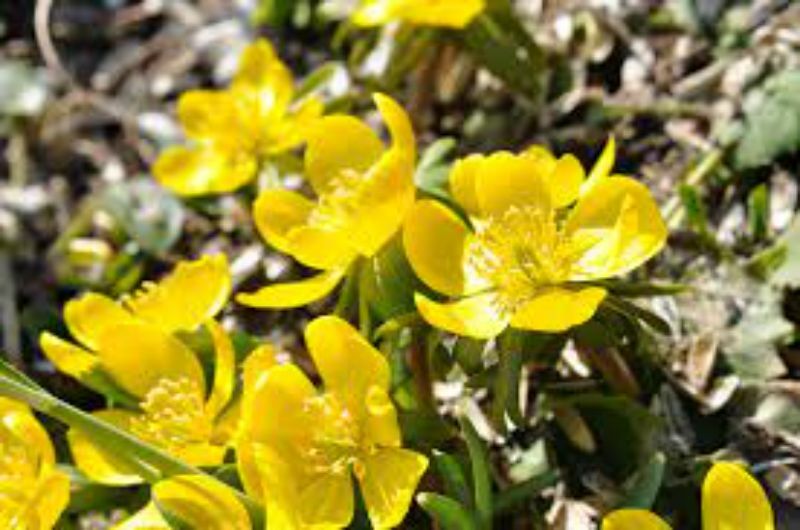
Potentilla is a tiny, rounded shrub native to the United States that looks lovely in a small garden. What makes potentilla so unique is that, unlike many other deciduous shrubs, it flowers in waves from mid-summer through frost. Traditional colors for the little, buttercup-like blooms are yellow or golden, although newer variants come in white, pink, and even orange. This shrub’s finely textured, tiny leaves give it a delicate appearance, and its slow growth rate makes it a popular choice for flower garden pairings with perennials. But it’s also a robust shrub with few soil needs that can be planted anywhere in the landscape as long as it gets enough sun to flower effectively.
Potentilla is a hardy plant that can be found all throughout New England. Plant potentilla plants obtained from a local garden center in well-drained soil mixed with compost from spring through early fall. Potentilla may thrive in any soil that is not too wet. Plants should be spaced 3 to 6 feet apart.
To keep the soil equally moist and avoid weed growth, water newly transplanted potentilla plants thoroughly and mulch with wood chips or bark mulch. In the spring, apply a layer of compost and an organic plant food to fertilize.
Potentilla is a plant that is relatively simple to grow. In colder places, however, there will be some winter dieback. In the spring, prune out any dead, diseased, or broken branches. To keep the plant in shape over the summer, prune it at regular intervals. To keep the shrub from getting overloaded, remove suckers. If necessary, Potentilla can be severely pruned to revitalize the plant. Spider mites may become a problem if you plant in hot, dry conditions. To kill the mites, spray the plants with insecticidal soap.
Plant potentilla along the foundation of windows or as part of a shrub or perennial flower border. Planting yellow-flowered baptisia, salvia, and catmint next to blue-flowered baptisia, salvia, and catmint looks great. Potentilla can be used as a low hedge or in a formal herb garden. Other colored variants can be mixed in with perennial flowers and low-growing shrubs like cotoneaster and dwarf spirea.
‘Abbotswood’ is a popular white flowering variety that reaches a height and width of 3 feet. The leaf shape ‘Abbotswood Silver’ is white and green variegated. The common cultivars ‘Gold Drop’ and ‘Gold Finger’ have beautiful yellow flowers that bloom for long periods of time. Pink blooms bloom on 2-foot tall and wide shrubs in ‘Pink Beauty.’ ‘Snowbird’ features white blooms with double petaled petals. On a 2-foot tall and wide shrub, ‘Tangerine’ features yellow flowers splashed with orange. ‘Sunset’ is a new 16-inch tall cultivar with reddish-yellow blossoms.
Where should I plant potentilla?
Plant outside in the early fall or early spring. Plants grown in containers can be planted out at any time of year.
Grow in any decent, well-drained, fertile soil in an open, sunny location. Full sun or partial shade is fine, but full sun causes the flowers to fade.
Potentilla is a highly useful and tough contender for the border, despite its shrubby forms not being the neatest of plants. It can grow virtually anyplace and has a long flowering period, making it a very useful and difficult rival for the border.
How far apart should I plant potentilla?
Potentilla is best planted in the spring or fall when the weather is cooler. The best time to plant is in the spring, when the roots will have a complete growth season to establish themselves.
How to plant:
2 inches of compost should be applied to the planting area and mixed into the soil 6 to 8 inches deep. Remove the plant from the container and dig a hole 1-1/2 times the size of the root ball. If the roots are potbound, gently pry them out and insert them in the hole so that the top of the root ball is just above the soil surface. Water well after gently tamping down the soil around the base. Depending on mature size, space 3 to 6 feet apart. In clay soils, adding compost, planting high, and keeping an eye on the amount of water is extremely vital.
Do Potentillas spread?
Although the shrubs of this species produce solitary yellow flowers, there are several cultivars with different colors and some with multiple flowers. It is smaller than most cultivars, with a spread of about 4 feet (1 meter).
When should potentilla be planted?
Potentillas thrive in slightly nutrient-depleted soil and slightly drier-than-normal conditions. So don’t feed them and only water them when there’s a drought.
In the UK, late September is the best time to plant a newly purchased potentilla. The earth will be warm, and natural rains will provide sufficient water in most regions. They can be planted at any time when the ground is not frozen or waterlogged, but you will need to keep them watered for the first three months until the plant establishes itself in the spring and summer.
Should you cut back potentilla?
Early in the spring, before the leaves emerge, prune this shrub. Maintain a mounded form by removing 50 percent to 75 percent of the top of the shrub. Take the heaviest canes all the way to the ground and discard them. Reshaping and removing wasted flowers after the shrub blooms in the summer will improve the plant’s appearance while spurring additional flower growth. You can improve the size and number of blossoms on young shrubs by fertilizing them. Fertilizers in the form of granules, liquids, or stakes can be employed. At a rate of 2 pounds or 2 pints per 100 square feet of planting bed, granular types should be mixed into the soil around the plant. Drill or punch 6 deep holes at the plant’s drip line as an option. A total of 1/4 pound of fertilizer per foot of shrub height or spread should be placed into these holes (divided up and poured evenly between all of the holes). These holes should only be filled with about a third of the fertilizer before being top-filled with dirt. This kind of fertilization should only be used once a year, either late fall after leaf fall or early spring before bud break.
Liquid fertilizers (such as Miracle Gro) are mixed with water and administered to the plant in the same way that you would water it (see product for specific details). Starting in late April and concluding in mid-July, this should be done three or four times per year. Stake fertilizers can be used according to the package directions. A balanced blend of 20-20-20, 20-30-20, or 18-24-16 should be utilized with any of the aforementioned procedures. Organic fertilizers, including as manure, can also be utilized successfully. One bushel of material per 6 shrub, or 100 sq. ft. of bed space, should be pushed into open soil.
These shrubs require minimal winter maintenance, but they should be checked for rabbit or other damage on a regular basis. If rabbit damage is discovered, a hardware cloth fence can be used to protect the plant (looks like chicken wire but, with small square holes). The plant’s branches should be knotted together in the center, and then a circle of hardware cloth should be placed around the perimeter. The hardware cloth’s base should be buried in dirt or mulch. Late November is the best time to install this protection, and mid-April is the best time to remove it.
Are potentilla plants invasive?
The invasive perennial herb sulphur cinquefoil can reach a height of 19.7 inches (50 cm). Before flowering, a loose rosette of long-petiolate leaves emerges and withers. Plants can have one or several stems. The stems are unbranched and coated with long and short hairs (branched only in the inflorescence). Cauline (stem) leaves are palmately compound (five to seven leaflets), stipulated, and sessile to short petioled. The core leaflet ranges in length from 1.2 to 5.9 inches (3 to 15 cm) (longer than the other leaflets). Sulfur yellow blooms appear in open, flat-topped inflorescences at the apex of the stems from May to July, and bloom in open, flat-topped inflorescences at the apex of the stems. Five petals, each measuring 0.2 to 0.4 inches (6 to 9 mm) in length, with 25 to 30 stamens make up the flower. Small dark brown achenes with pale veins make up the fruits. Sulphur cinquefoil is a European native that grows in pastures, rangelands, roadside ditches, and other disturbed areas.
Can you over water potentilla?
Plants can wilt from both too much and too little water, and the potentilla is no exception. Although the plant can withstand drought, it only does so to a certain extent. During instances of drought, Washington State University Clark County Extension recommends supplementing it with water. If your plant is wilting and the soil is dry and hard (it prefers loose, well-draining soils), give it some water to see if it may revive.
Can you divide potentilla?
Shrubs with a central woody trunk that protrudes from the ground are known as tree-like shrubs. This trunk is irreversible, and injuring or cutting it will result in the shrub’s death. Tree-like shrubs include azaleas, arborvitae, and laurels. These shrubs are what they are you can’t cut the trunk in half, and dividing a cluster of roots won’t result in a new trunk sprouting. Seeds, cuttings, and layering are typically used to propagate tree-like shrubs, however division is not an option.
Shrubs with many shoots (known as “canes”) growing from a single clump of roots are known as cane shrubs. Cane shrubs develop and regenerate their canes on a regular basis, and it may be possible to remove existing canes without harming the new ones. Some aucuba, shrub dogwoods, forsythia, lilacs, nandina, potentilla, skimmia, and spirea are cane type shrubs. It may be feasible to divide and propagate these shrubs, depending on how they grew.
Can you cut potentilla back to the ground?
Potentilla and spirea stems should be cut back halfway to the ground. Then cut half of the thicker, older stems to ground level. In the spring, new shoots will appear. Also, prune lilacs, forsythia, and other spring flowering bushes until after they have finished blooming.
Can potentilla grow in shade?
Potentilla is the plant for you if you don’t have a lot of room or time and would rather sit in the garden than tend to it. Give it a healthy start in life (see planting directions below), then sit back and enjoy the profusion of delicate flowers it produces year after year, from spring to early October. One of the easiest plants to grow near the front of a border is this small shrub. A potentilla plant, virtually disease-free and low-maintenance, will thrill you for a decade or more.
Rose-like flowers
Pretty blooms (3cm) with five petals that look like little wild roses bloom above neat clusters of miniature green leaves. Potentilla comes in a variety of colors, the most common of which are yellow, red, pink, white, and orange. Flowering occurs at its peak in May and June, but blooms will last all summer.
Almost any soil
Potentillas can be grown in pots, but they thrive in the ground. The good news is that they’re not picky eaters. Potentilla will thrive in any moist, free-draining soil, whether acidic, alkaline, or neutral; sand, chalk, or loam as long as the land isn’t waterlogged. The plant will grow in partial shade, but full sun is recommended for the finest flower display. When it comes to planting, there’s nothing exceptional to think about.
Low maintenance
When planting, make sure to water thoroughly, but once the plant is established, you won’t have to worry. Unless there’s a drought, of course. In the third year after planting, begin pruning your Potentilla plants for structure. Early in the spring, before their new canes grow and while their old ones are still easily accessible, prune them. The idea is to create and maintain a dense but orderly framework that requires little maintenance. During the winter, plants die back to their woody stems, but they can be left alone without any protection.