
Plant Care for Persian Shield Persian shield plants usually bloom in the fall or winter. Persian shield may not have enough time to produce buds and flower when planted as an annual, but the brilliant foliage will make up for it.
What does a Persian shield flower look like?
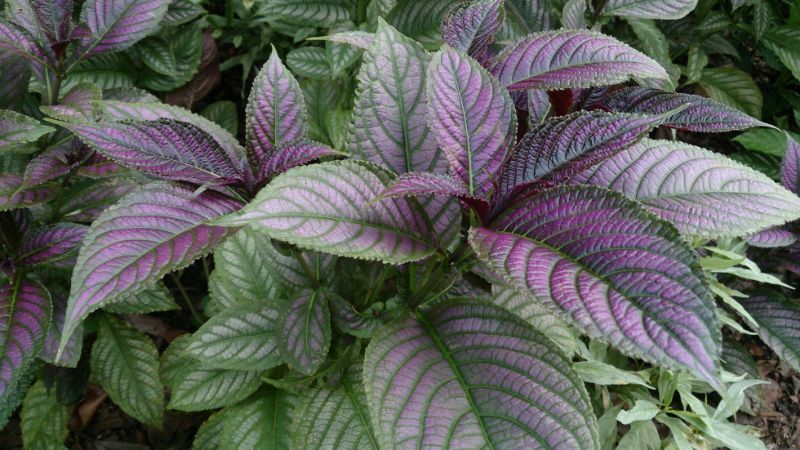
The Persian shield is an outstanding foliar specimen. It grows long, slender leaves with a point that are 4 to 7 inches (10-18 cm) long. They feature deep green veins with purple to silver over the entire surface of the leaf and are somewhat serrated.
In the wild, the plant has a bushy growth and can grow up to 4 feet (1 meter) tall. Growing Persian shield indoors is the best option for most gardeners to enjoy this colorful plant because it is only suitable for USDA zone 10. In the summer, you can leave the plant outside, but bring it back inside before the cold season arrives, and you’ll be rewarded with slender prickly blossoms.
Can Persian shield take full sun?
Persian shield thrives in both the sun and the shade. It requires constant watering when planted in full sun, especially in warmer areas, to keep it from wilting. Spread a 3- to 4-inch-deep layer of mulch over the soil around the Persian shield plant to make it easier to grow. This helps to keep the soil cool and moist for a longer period of time. If you grow Persian shield in pots, you can do the same thing!
Use a general-purpose fertilizer to fertilize Persian shield in the spring. For information on how much and how often to fertilize, refer to the package instructions.
Persian shield can be pruned at any time. Pinching it back every now and again promotes the plant to grow fuller and bushier, especially in the shade.
In Zone 10, Persian shield can be used as a landscape shrub. Grow it as an annual in other places.
Is Persian shield plant rare?
The Persian shield is a one-of-a-kind foliage plant with lustrous, purple, and eye-catching leaves. The color of the leaves is nearly metallic. The plant does flower, and in excellent conditions, it will flower all year, but it’s best to remove the flowers as soon as they appear to keep the plant from getting lanky. In order to maintain the plant compact and bushy, pinch off the emerging shoots. While their growth requirements aren’t particularly demanding, it’s advisable to aggressively prune the plant down to size. The most common kind of Persian shield will easily reach four feet in their natural habitat. Plants with vividly colored foliage, such as coleus or begonia, look very good alongside these plants.
Does Persian shield come back every year?
It is hardy in USDA hardiness zones 9 to 11, but in milder locations, it is most typically cultivated indoors or as a summer annual. Persian shield may die back to the ground after frost in zone 9, and during mild winters in zones 7 and 8, but it will survive and sprout the next season.
Are Persian shields perennials?
Strobilanthes dyerianus is a delicate perennial with iridescent purple leaves that adds drama to any garden. This evergreen subshrub in the acanthus family (Acanthaceae) with the common name Persian Shield has been planted for its attractive foliage indoors and out since Victorian times. It is mainly used as a seasonal annual or as a houseplant in colder locations, as it is only hardy to zone 10 (maybe root hardy to zone 8).
When the weather is mild, Persian shield languishes, but when the weather is hot and humid, it swiftly grows into a huge, bushy, mounded plant. This soft-stemmed herbaceous shrub can reach a height of 5 feet and a width of 3 feet when planted in containers or in cooler climes, but it usually stays considerably smaller.
The lance-shaped leaves on the opposite side have lightly serrated edges and pronounced veins, giving them a quilted appearance. The foliage is a deep purple, lilac, and green with silvery highlights on older leaves, giving the upper surface a distinctive metallic or iridescent luster. The lower leaf surface is purple-maroon in color. Individual leaves grow to be 6-8 inches long and have the best color in warmer weather. Plants acquire woody stems as they mature, and the hue of the foliage tends to fade, so it’s best to start with new plants or take cuttings every year to get the most attractive foliage.
Older plants produce short conical spikes of tiny blooms raised above the foliage in moderate areas in the fall and winter. The five-lobed flowers are pale blue to violet in color and have two, three, or four stamens. The flowers arise from sticky brachts and open progressively along the spike, allowing the plant to bloom for an extended period of time. After a while, the wasted blossoms turn brown, making them unattractive for a long time. Floral buds emerge from every node once the plant produces spikes, and the stems can no longer be used for propagation. Plants are difficult to return to the vegetative stage. Bud initiation is unpredictable, and the elements that cause reproduction are unknown.
For foliar contrast, Persian shield is a nice addition to bigger gardens. It contrasts beautifully with variegated, lime-green or chartreuse-colored foliage. For a monochromatic design, pair the purple leaves with pink, lavender, or purple flowers, such as purple flowered lantana or Verbena bonariensis, or with yellow or orange flowers, such as Tithonia or marigolds, for a high contrast look. For a more refined aesthetic, the silvery highlights on the leaves mirror white flowers or white to silvery foliage, such as lamb’s ears, dusty miller, or silver Plectranthus.
Plant it alongside coleus (such as one with lime green leaves with purple veins and margins), or mix it with caladiums, elephant ears, and/or cannas for a dramatic, tropical appearance. It can be used as a temporary specimen planting in the landscape or around ponds, or it can be used to big mixed container plantings if its growth is regulated.
In northern places, plant Persian shield in full sun; in southern states, it prefers moderate shade. If it becomes overly leggy, it can be pinched back, but this is usually not a concern when grown as a seasonal annual. Provide a soil that is rich in organic matter, has good drainage, and receives plenty of water. Plants should be spaced 18-24 inches apart. Fertilize once a month. Persian shield has few pests and is said to be unappealing to deer and rabbits. Spider mites, aphids, and mealybugs can all infest indoor plants. In frigid locations, this plant may typically be kept over the winter by digging it up in the fall (long before the first frost) and storing it indoors in moderate light. Plants may lose all of their leaves, but they should reappear in the spring from the roots.
Cuttings are commonly used to propagate this plant, but it can also be cultivated from seed. Early spring or summer basal or softwood cuttings root quickly in water or damp medium. Cuttings can also be collected late in the summer or early in the fall and brought indoors to overwinter.
There are about 250 other Strobilanthes species, including S. maculates from the Himalayas, which has silver-splotched leaves, and S. lactates from Brazil, which has white blotched leaves, but none of these are widely available as ornamentals.
What plants go well with Persian shield?
I have other tropicals in a raised bed, so the plant can grow into the earth and get plenty of water.
Ferns, Caladiums, Lamb’s Ears, Silver Plectranthus, and Impatients are all ideal companion plants.
Another fantastic idea is to plant them among red or purple flowers or foliage to complement the Persian Shield’s colors.
During the summer months, this plant can be planted in the garden, but don’t let it get too chilly.
Is Persian shield a coleus?
For some gardeners, Coleus is the go-to foliage plant, while Persian shield is a gorgeous foliage plant that works just as well in summer gardens.
Is Persian shield poisonous to dogs?
Persian Shield is often a safe choice for properties and households with children, pets, and livestock. Although there is no evidence that this plant is harmful, some anecdotal reports claim that the sap can irritate the skin.
It’s usually a good idea to use gloves and wash your hands after handling any plant. Persian Shield isn’t any different.
Wear garden gloves whenever you pinch the Persian Shield Strobilanthes dyerianus plant back, take cuttings, or otherwise handle it. After you’ve finished touching this plant, wash your hands.
Size & Growth
Persian Shield can reach heights of 4 feet tall and 4 feet broad in a frost-free environment.
It is unlikely to grow taller or broader than 3 feet outside of USDA hardiness zones 10 and 11.
Flowering & Fragrance
It’s unusual for this plant to bloom outside of its natural habitat. The plant may bloom in the autumn or winter in particularly warm, humid environments.
Persian Shield is a seasonal bloomer that produces little, five-lobed violet flowers every now and then.
Individually, the flowers are relatively small. They do, however, grow in attractive cone-shaped bunches.
The plant’s popular name, Bermuda Conehead, comes from the shape of its inflorescences.
Foliage
Although the flowers are lovely and even showy, the silvery/iridescent purple foliage is the main attraction of this plant.
These foliage plants have purple leaves that are oval and lance-shaped. The base hue is a dark green with a silvery purple undertone.
The undersides of the leaves are a dark purple color. Leaves can grow up to 8 inches long.
Light & Temperature
The Persian Shield thrives in a wide range of light conditions, from partial shade to full sun.
If you live in a cooler climate, the plant may require full sun during the summer months to achieve its best color.
When overwintering, keep the plant in a bright, sunny area like a potted or container plant.
It’s a good idea to chop it back before the winter weather arrives in these zones, then cover it during the harshest months.
Take cuttings as a precaution in case your plant fails to regrow from the roots.
Watering & Feeding
This plant requires only modest watering, although it does require dependably moist soil.
It’s a good idea to develop a weekly watering routine when growing as a houseplant to keep the soil evenly moist.
Use a slow-release plant food to fertilize your plants multiple times a year (3). Carefully follow the instructions on the package.
Soil & Transplanting
It prefers constant dampness but cannot stand in water. It is critical to have well-drained soil.
Use a high-quality, organic-rich potting soil to keep Persian Shield as a houseplant. There should be lots of drainage holes in the container.
Grooming & Maintenance
Preparing Persian Shield for overwintering and keeping them safe throughout the winter can, however, is difficult.
They can be left to grow to their full height and width, or they can be pinched back to encourage compact, bushy growth.