
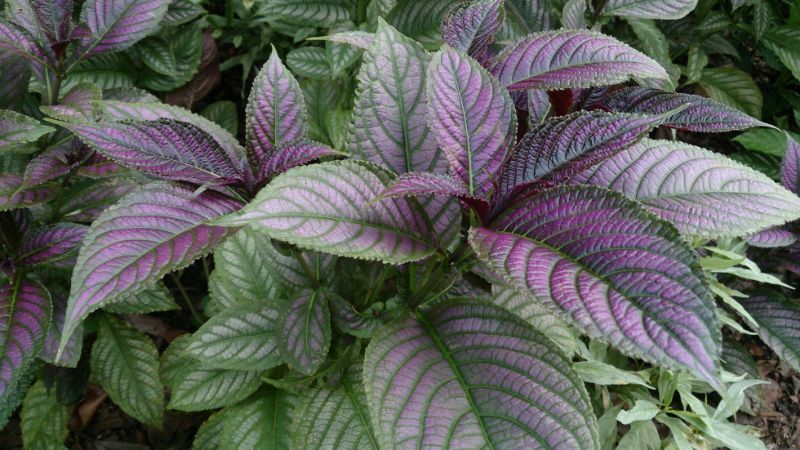
Persian Shield is often a safe choice for properties and households with children, pets, and livestock. Although there is no evidence that this plant is harmful, some anecdotal reports claim that the sap can irritate the skin.
It’s usually a good idea to use gloves and wash your hands after handling any plant. Persian Shield isn’t any different.
Wear garden gloves whenever you pinch the Persian Shield Strobilanthes dyerianus plant back, take cuttings, or otherwise handle it. After you’ve finished touching this plant, wash your hands.
Are Persian shield plants poisonous to cats?
A: It does not appear on any toxic lists that I am aware of, but that does not mean it is safe for a pet to consume. The majority of plants cause moderate gastrointestinal upset in cats. If your pet has a habit of eating plants that aren’t meant for it, you should remove them or place them out of reach. Some cats may find it impossible to keep the plant out of reach, especially since it must still be placed in a light-filled area. Sprays that work as deterrents aren’t always effective.
Is Persian shield a houseplant?
Strobilanthes was dubbed the Persian shield for a reason. The leaves have a vivid, purplish iridescence and a silvery metallic shine, giving them the appearance of miniature armor shields preparing for combat. Despite its Persian name, this plant is endemic to Myanmar (previously Burma), not Persia. In hot areas, it is an evergreen sub-shrub. It is planted as an annual plant in milder climes and is especially popular as a houseplant because it blooms over the winter. It thrives in both indoor and outdoor flowerbeds.
Does Persian shield like sun?
Persian shield thrives in both the sun and the shade. It requires constant watering when planted in full sun, especially in warmer areas, to keep it from wilting. Spread a 3- to 4-inch-deep layer of mulch over the soil around the Persian shield plant to make it easier to grow. This helps to keep the soil cool and moist for a longer period of time. If you grow Persian shield in pots, you can do the same thing!
Use a general-purpose fertilizer to fertilize Persian shield in the spring. For information on how much and how often to fertilize, refer to the package instructions.
Persian shield can be pruned at any time. Pinching it back every now and again promotes the plant to grow fuller and bushier, especially in the shade.
In Zone 10, Persian shield can be used as a landscape shrub. Grow it as an annual in other places.
What is Persian shield plant?
Strobilanthes dyerianus, or Persian shield, is a magnificent ornamental species that grows as a sensitive evergreen perennial in warm, humid Myanmar.
It belongs to the Acanthaceae family, which includes largely tropical flowering plants.
S. dyerianus attracted the attention of US gardeners with its distinctive iridescent purple foliage, and it is now grown as an annual, perennial, and houseplant.
Is Persian shield a coleus?
For some gardeners, Coleus is the go-to foliage plant, while Persian shield is a gorgeous foliage plant that works just as well in summer gardens.
What plants look good with Persian shield?
I have other tropicals in a raised bed, so the plant can grow into the earth and get plenty of water.
Ferns, Caladiums, Lamb’s Ears, Silver Plectranthus, and Impatients are all ideal companion plants.
Another fantastic idea is to plant them among red or purple flowers or foliage to complement the Persian Shield’s colors.
During the summer months, this plant can be planted in the garden, but don’t let it get too chilly.
Is a Persian shield a begonia?
Jon has been collecting plants for over ten years and has amassed a large collection of uncommon and exotic plants. The Persian shield is a one-of-a-kind foliage plant with lustrous, purple, and eye-catching leaves. Plants with vividly colored foliage, such as coleus or begonia, look very good alongside these plants.
Do Persian shields spread?
This wonderful plant is simple to share with friends and family. Seeds or cuttings are used to propagate Persian shields. Cutting just below a growth node, cut 2 to 3 inch (5-8 cm) portions off the plant’s tops.
Remove the bottom leaves and place the cut in a non-soil medium like peat. Mist the medium and cover the cutting with a bag. To keep the cutting from molding, remove the bag for one hour each day. The cutting will sprout roots in a few weeks, and you can replant it in potting soil.