
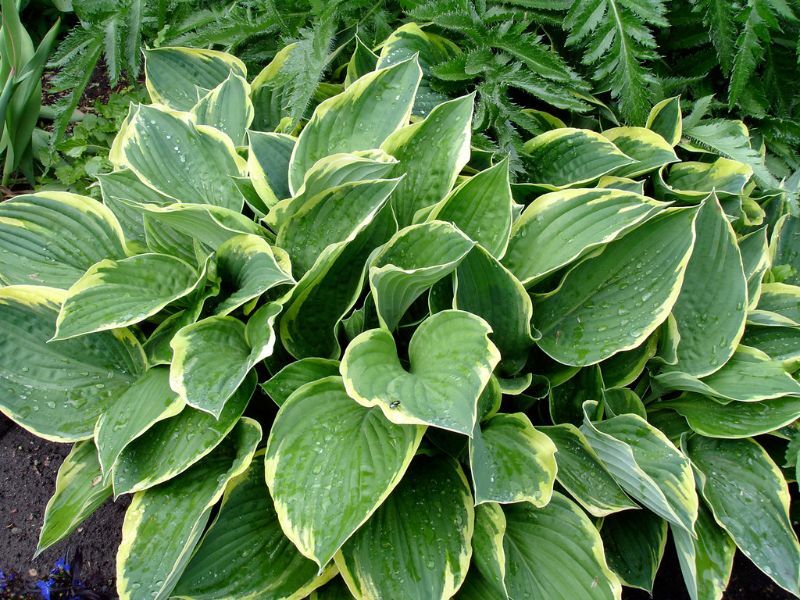
Hopefully, you now know a lot more about Hosta blossoms than you ever thought you would!
- If they aren’t blooming, it could be that they are still settling in or that they aren’t getting enough sun or water.
- Some of the cultivars have a strong scent. Specifically, variations of the Hosta plantaginea genus.
I’d appreciate it if you shared this post using one of the buttons below if you found it useful. It is quite beneficial, and I am grateful.
How do you get hostas to flower?
Hostas prefer a little shade, but not too much. Morning sun and afternoon shade would be great conditions for growing. If your plants are in heavy shade, they may not blossom and instead concentrate on growing more foliage.
Try a granular 10-10-10 fertilizer if your soil isn’t nutritionally balanced. It should be used once in the early spring, then again six weeks later, and finally in mid-July. The pH level of the soil should be between 6.5 and 7.5.
Our Advice:
It’s possible that the plants’ robust green foliage indicates that they’re too busy developing roots to send up blossoms, or that the compost is high in nitrogen (which favours leaf growth at the expense of flowers). To stimulate the plants to flower next spring, feed them a mild solution of tomato feed every 10 to 14 days.
What time of year do hostas flower?
Hostas in Bloom Hostas bloom for about three weeks, depending on the variety, usually between May and September. Each plant produces a scape, which is a tall stalk with flower buds along the length of it.
Do hostas flower every year?
Hostas are planted mostly for their leaves, but they also produce flowers. In the summer, Hostas bloom with purple or white blossoms on tall stems. Although hosta flowers are attractive, they can get tatty within a few days, so many gardeners remove them to focus on the foliage show.
What’s wrong with my hostas?
The most frequent foliar disease of hostas is anthracnose. The cores of the spots frequently disappear, and the leaves become ragged and shredded. Because the disease thrives in warm, damp environments, keeping adequate plant spacing is critical for protection.
What does Epsom salt do for hostas?
Epsom salt enhances chlorophyll levels in hostas, reducing stunted development and making their leaves greener and thicker. It also promotes bushier plant growth and increases disease and insect resistance.
Get Rid of Slugs
The most prevalent pests that attack hostas are slugs. Slugs can be deterred by placing a tablespoon of Epsom salt in the shape of a ring around hostas. Their bodies will be irritated by the sharp crystals of Epsom salt, and they will avoid getting near your plants. For optimal results, apply once a week.
For Yellowing Hosta Leaves
Magnesium insufficiency might be indicated by yellow hosta leaves. Once a month (or more frequently if necessary), sprinkle a spoonful of Epsom salt around the base of your hosta plant per 12 inches of height until it begins to look green again.
For Lush and Healthy Hosta Plants
Even if your soil is not magnesium deficient, factors such as acidic soil, low soil temperature, soil cation exchange capacity, high potassium, and salt can all impede Magnesium uptake by plant roots.
In that case, foliar feeding your hosta plants with Epsom salt solution is a good idea:
- During the rapid growth period, mix 2 tablespoons Epsom salt in 1 gallon of water and spray on the foliage once a month.
- Reduce the amount to 1 tablespoon when growth slows. Your hostas will stay lush and healthy with the foliar application.
Mix Epsom Salt with Fertilizer
To improve the efficiency of the all-purpose liquid fertilizer, mix a pinch of Epsom salt with it before feeding the hosta plants, then apply according to the recommendations on the fertilizer’s packet.
How do you fertilize hostas?
Hostas grow best in neutral soil with a pH of 6.5 to 7.6. If your soil is deficient in your location, you can add compost to it once a year. This will increase the levels of nitrogen, potassium, and phosphorus in the soil, all of which are vital for garden soil. Drainage is further aided by the use of organic waste.
It is advised that newly planted hostas be fertilized with a slow release fertilizer in the spring. Use a 10-10-10 granular fertilizer around the base of the plant as it emerges once it has been established. When it comes to fertilizing hostas, less is more. The leaves might turn brown or curl if there is too much nitrogen in the soil.
Why has my hosta stopped growing?
One of the most important aspects of keeping your hosta plants growing and healthy is to provide them with adequate moisture. If a hosta doesn’t have enough water, it won’t put forth the effort to grow foliage. During the summer, Hostas require at least 1 inch of water every week, and if the soil feels dry at a depth of 1 inch, water them deeply. To limit evaporation from the soil, add a 3- to 4-inch layer of new mulch around the hostas. Reduce the amount of water you give your hostas in the late fall and winter, but don’t allow them entirely dry up.
When Does It Bloom?
It has little bell-shaped flowers on a tall stem that grows up from the center of the plant throughout the mid to late summer. The leaves will turn brown after it blooms.
When Does It Come Back Up?
Hostas do not die in the winter, although they do suffer from winter dieback (also known as dormancy). The plant appears to have croaked when the leaves fall off, but it’s really only conserving energy while waiting for temperatures to warm up again. In the early spring, it will sprout again.
Should hostas be cut back for winter?
Hostas are a perennial plant, which means they lose their leaves in the winter. This easy-to-care-for plant is known for its huge waxy leaves that produce long stalks with blossoms, although it will need to be pruned down in the fall. It is critical to prepare the hostas for winter in order to ensure healthy blooms in the spring. Pests like slugs and bunnies can nibble the leaves and make them seem ragged as the weather becomes cooler. The leaves of the hostas also start to wilt and die back. Trimming the hostas after the first hard freeze is beneficial.