
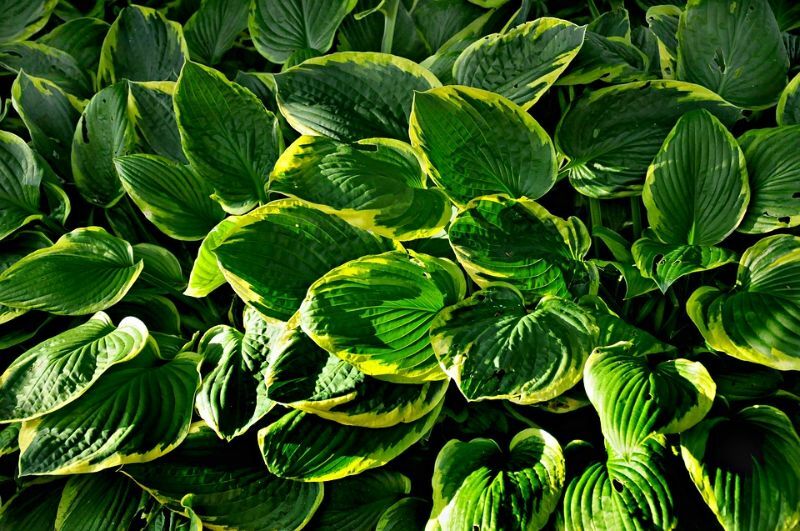
The blue hosta hue is unique because, despite its appearance, it is not genuinely blue. Light is reflected in such a way that the leaves appear blue due to the waxy coating on the leaf surface. Some blues are quite pale, while others are very dark, depending on the amount of chlorophyll in the real leaf. When their waxy surface isn’t as reflective as it once was, most blue-leafed hostas turn green at some point throughout the growth season. When exposed to the sun, heavy watering, or pesticide sprays, the wax appears to practically melt off. The same leaves will not regain their blue tint the next year once the wax has been removed. Select newer and improved blue types with great waxy leaves for the best blue leaf color in a hosta. Plant them in a location with plenty of indirect or softly filtered light. In most areas, the early morning sun is optimal, but it’s critical to remember to keep the leaves shaded throughout the warmest portions of the day. Avoid high-pressure irrigation and petroleum-based herbicides to avoid rubbing the wax off the leaves.
To help you understand how hostas experience color changes, let’s look at some examples of a few popular varieties.
- Hosta montana ‘Aureomarginata’ is an older variety that refers to its variegation in Latin. The name “Aureo” derives from the Latin word aureus, which means “golden,” while the word “marginata” means “margin.” This would lead one to conclude that this is a gold-margin green hosta. It has a yellowish edge for a few weeks in early spring, but it quickly turns creamy white when the leaves unfurl entirely. In the summer, the margin often lightens much further to white. As a result, it’s easy to understand how the name ‘Aureomarginata’ could be misleading.
- Hosta ‘Sea Fire’ is another springtime favorite. In the spring, this hosta is blazing with color, as its name suggests. ‘Sea Fire’ has appeared with nearly the same light yellow coloration as the daffodils, just as they are blossoming. Few plants can match its joy as it awakens from a lengthy winter slumber. However, when summer approaches, its leaves change color from yellow to a rich tropical green.
- The bright gold core of the leaves of the classic variegated Hosta ‘Gold Standard’ is recognized by those who are familiar with it. Surprisingly, its early spring hue does not like that of a plant entitled ‘Gold Standard,’ because the leaves have no gold when they initially emerge. Young leaves are green or chartreuse in color, with a deep green border. It is not until later in the season that the golden color is obtained.
- Hosta ‘Undulata Mediopicta’, another classic, is characterized as having lovely green leaves with white centers. Summer heat, on the other hand, causes the white core to darken, resulting in green frosting or fogging at first, then darkening to all-green.
- The Hosta ‘Remember Me’ (seen above) truly needs two photos to tell its entire narrative. The plant’s leaves are bright gold with blue-green margins when it emerges in the spring. The core of the leaves, however, brightens to ivory or near white by summertime. Many individuals would not know the plant if they were just familiar with it for one season.
The majority of hostas are chameleons, changing their leaf colors throughout the season. The only hostas that do not change color are those that are plain green. Perhaps this is one of the characteristics that distinguishes them and explains why the thousands of hosta types are so fascinating to gardeners and collectors today.
How do you keep hostas blue?
Blue hosta types aren’t blue in the traditional sense. The leaves of the plants are covered in a waxy covering that gives them that blueish tint. This is also known as “glaucous,” which is Latin for greyish blue and is used to describe plants that have those tones or are blue-green in color.
While the color blue in the variety name is a decent indicator of the color you’ll get, there are lots of others whose names don’t even hint at the foliage color.
The blue tint of the hosta leaves may fade throughout the season, depending on the environment and where they’re placed in the garden, as sun exposure, heat, and strong rains can wear it away, revealing more of a green color. Planting your hosta in part shadow, where it only receives a small amount of the chilly morning sun, can help it retain its color. The foliage can also be affected by direct sunlight, which causes the edges of the leaves to burn and turn brown.
Blue hostas have thicker leaves than other hostas, which can help protect the plant against slug damage. Other pests, such as groundhogs, rabbits, and deer, are nevertheless attracted to them. They may also be subject to slug damage if the summer is particularly wet.
Why are my blue hostas not blue?
If you run your finger across a blue hosta leaf, you’ll see that it’s actually green. The blue color is simply a covering of wax called bloom that wears away with exposure to sunlight, heat, or moisture over the course of a growing season. Blue hostas will not stay blue for long in locations with high summer temperatures or a lot of rain. My hostas in the South usually stay blue until mid- to late June. The blue color might last for the majority of the growth season in cooler areas. And, because most blue hostas only have one flush of leaves per year, you’ll have to wait until the next season to see the blue again.
Blue hostas, in general, need a little light shade to keep their blue hue and avoid leaf scorch. The best clumps will grow in a moist, humus-rich soil with some exposure to chilly morning sun. Hostas are strong feeders, so don’t be afraid to use a lot of good compost, manure, or other organic fertilizer. Every spring, I use an organic blend like Plant Tone. In the spring, mushroom compost and high-quality composted manure are also effective top dressings.
The classic pests that wreak havoc on hosta are deer, voles, and slugs, which are all too familiar to most gardeners (ranked in order of size and amount of hair). Sprays and barriers against deer and voles are only slightly successful, and a healthy, microbially active garden (complete with plenty of toads) is the best defense against slugs. In addition, the leaves of blue hostas are thick, which is a distinct advantage in the battle against slugs, as thick leaves are far more resistant to slug gnawing damage than thin ones.
Why are my variegated hosta turning green?
Q: I have numerous hostas that used to have a green center and a white perimeter, but the variegation is fading more and more each year. This year, several of them are completely green. I have some of the same sort in other sections of the yard that have kept their variegation, so I’m presuming the ones that have faded are deficient in some nutrient or were planted in the incorrect soil. What are your thoughts?
A: I suppose I’ll defer to my Clemson University acquaintance Bob Polomski for an answer. Nutrients, according to Bob, have no bearing on the progressive color change. Viridescence is a natural response to warm summer nights that causes the skin to turn green. The leaf color of the ‘Albomarginata’ hosta does not change when the evenings are cool. The shift in color and appearance of the leaves is exacerbated by direct sunlight.
When the leaves begin to turn green, cut your hosta down to the ground level to compel it to return to its original hue. Following that, new white-margined foliage will appear and persist.
In the fall, nothing has changed. However, if you do this extreme procedure too often, the clump will have lesser leaves in coming seasons.
How do you make blue hostas blue?
Blue hostas are a unique variety. All of them are impostors, yet their leaves are truly green! The blue color we observe is due to a waxy coating called cutin; the thicker the coating, the bluer the hosta. Rainfall or overhead watering, sunlight, and heat all wear away this waxy layer. It’s even possible to rub it off.
By regulating some environmental and cultural elements, you can keep your hostas ‘in the blue’ for as long as feasible. Plant them in a shady place and water them regularly using soaker hoses or by aiming your hose at the base of the plant.
Hostas with a thicker cutin covering keep their color for longer than those with a thinner coating. Choose them and provide them with the best cultural opportunities, and your hostas will be singing the blues all summer. Here are some of the best blues songs.
Blue Mouse Ears, the tiniest of the bunch, is a sweetie. It creates little mounds of silvery blue leathery leaves that grow just 6 to 8 inches tall. In summertime, lavender blooms explode from swelling buds. The Hosta of the Year for 2008 was Blue Mouse Ears.
How often should I water my blue hostas?
Watering the root system rather than the foliage benefits Hostas. Deep root growth is aided by slow, deep watering of the soil. For the first two weeks, newly planted hostas will require daily watering.
Small or medium plants will require a good soak once a week once they have established themselves. Hostas tolerate drought but need moist, well-drained soil. Increase the watering frequency to three times per week if the weather is warm. Large hostas should be watered twice a week in the summer and daily in the winter, especially if they get a lot of sun.
Growing Hostas in pots necessitates more frequent watering. Because pots drain faster than gardens, giving the plant the slow sip it requires can be difficult. Water the pot every three days during the summer months. If the soil still appears to be too dry, it may need to be watered on a daily basis.
Why are my green and white hostas turning all green?
A genetic mutation can also lead plants to spontaneously revert. Some hosta kinds are more prone to reverting over time than others, although they can all do so. If only a portion of a plant reverts, that portion can be removed, leaving the remainder of the plant variegated. It is impossible to regain variegation once the entire plant has reverted unless it is a short-term response to an environmental stressor.
How much sun can blue hostas take?
Instead of functioning well on your site, the best you can hope for is a hosta that can tolerate it. In full sun, Hosta cultivars with a lot of white colouring or thin leaves are more likely to burn. Hostas with fragrant flowers, gold or yellow foliage, or slight white variegation, in general, prefer shade, whilst those with fragrant flowers, gold or yellow foliage, or slight white variegation can handle more sun.
How big will a blue hosta get?
In gloomy regions of your landscape, the large blue-green, heart-shaped leaves make quite a statement. These stunning ladies are 30-36″ tall and will dazzle everybody who sees them. In summertime, pale lavender to white flower spikes develop for 2-4 weeks.
Is blue hosta perennial?
Blue hostas are a low-maintenance perennial that is simple to cultivate and transplant. Hostas are popular among landscapers because they come in a range of sizes, textures, and shapes, providing an appealing contrast and variation to your environment.
Why is my white feather hosta turning green?
By including ‘White Feather’ hosta in your landscape, you may add a true touch of the odd. With its unusual colorless leaves, this fascinating perennial adds interest to any planting. The hosta ‘White Feather’ takes light-colored leaves to a new level. It’s not the easiest hosta to cultivate, but with a little care and attention, you may have a truly unique hosta.
A trip back to biology class is required to effectively grow ‘White Feather’ hosta. Do you recall studying about chlorophyll in school? Plants grow because of the green material. The leaves of the ‘White Feather’ hosta are white because it lacks any. As a result, this is a plant that grows slowly.
This beauty won’t reach full size straight away, even in optimum growth settings, so if you wish to grow it, invest in creating ideal hosta growing conditions. To boost soil nutrition and water-holding abilities, add plenty of organic matter.
In terms of light, hostas with a lot of white variegation on their leaves aren’t usually able to survive direct sunlight. The hosta ‘White Feather’ is no exception. For the greatest color, place this pale-leafed perennial in light to full shade. Because lighter-colored leaf tissue is usually thinner, it can readily burn in direct sunlight.
Slugs are attracted to the thin leaf tissue, which they like feasting on. Keep a stock of slug bait on hand when cultivating ‘White Feather’ hosta, and apply it liberally. If you’re worried about your pets, there are pet-safe slug baits available. This white hosta is also popular with rabbits. Sprays or plastic bird netting can be used to protect plants.
The hosta ‘White Feather’ is a little plant. It reaches a height of 6 to 10 inches and a width of 9 to 12 inches. Place it in a visible location, such as the front of a bed or, better yet, in a container. Many gardeners cultivate ‘White Feather’ hosta in containers to give it a prominent place in their landscapes. It’s also easier to keep this pale beauty safe from slugs and rabbits when it’s grown in a container.
When the leaves first appear in the spring, they are the whitest. As the summer progresses, the leaves of the ‘White Feather’ hosta begin to turn green. Green leaf veins appear first, followed by a pale green hue to the leaves. Don’t be startled by the change in color. Remember that the leaves require chlorophyll to power growth and the roots require food to jump-start growth the following year.
‘White Feather’ hosta, like many other hostas, is hardy in Zones 3 to 9. If you’re planting ‘White Feather’ in a pot in a chilly winter climate, bury the container in soil in an empty garden bed for the winter. It’s ideal to have a vegetable planting area. Mulch the soil once it has frozen to give your cherished hosta more protection.
If you like the look of the ‘White Feather’ hosta but don’t think you’re up to the task of caring for a prima donna perennial, look for white variegated hosta variations. ‘Fire and Ice’ and ‘Fireworks’ both have large white patches on their leaves, but they don’t require the same level of care as ‘White Feather’ hosta.