
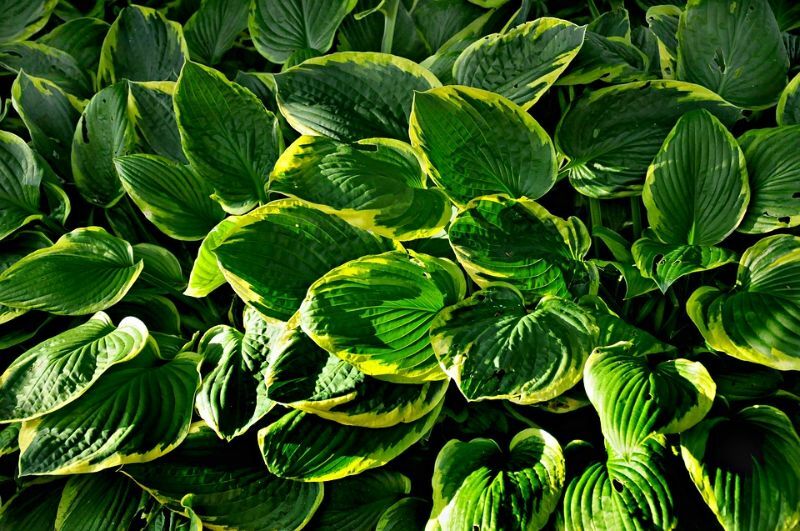
The growth of fragrant hostas has decreased significantly since the mid-1980s. H. ‘Old Faithful’ (Petryszyn 1991), H. ‘Austin Dickinson’ (Lachman 1992), H. ‘Guacamole’ (Solberg 1994), H. ‘Fried Bananas’ (Solberg 1994), H. ‘Hoosier Harmony’ (Zilis 1995), and H. plantaginea ‘Ming Treasure’ (Zilis 1995) are notable fragrant hostas from the (Zilis 1995). In the late summer, these are all fairly exceptional in terms of vitality and huge, fragrant flowers.
A double flowered variant of Hosta plantaginea was the most fragrant hosta that sparked the most interest. This immediately became a collector’s item after it was imported into the United States in the 1980s. While the plant looked beautiful when it was in bloom, it rarely had the ideal conditions for the flowers to open. Only a few gardeners south of Baltimore have ever witnessed the blossoms in full bloom. To thrive, the double flowered version appears to require wet soils, warm days, and cool nights. Every year, gardeners are teased as the buds enlarge, only to turn to mush a day before opening. At the very least, there are other excellent options for the same scent.
Even if you don’t care about garden scent in your hostas, you can rest assured that any hostas with fragrance genes will thrive in the hot, humid summers of the southeast.
Which hostas have fragrant flowers?
Hostas are commonly grown for their beautiful leaves. Flowers are usually seen as an afterthought. Hosta cultivars with fragrant flowers are a notable exception. To properly savor the scent of fragrant flowering hostas, place them near a patio, deck, or pathway. On quiet summer evenings, their scent is most evident. The following kinds are available to home gardeners who want to grow hostas with fragrant flowers.
Fragrant Blue reaches a height of 10 to 12 inches. It features heart-shaped blue-green leaves. In mid-summer, fragrant, light lavender flowers bloom.
Fragrant Bouquet has apple-green leaves with wide, uneven, light yellow borders. Fragrant Bouquet is a fast-growing plant that grows to be 18 inches tall and 24 inches broad. In mid-July to early August, white flowers with a little blue tinge bloom. The blossoms have a strong scent.
Fragrant Gold is a hosta with gold leaves. Plants reach a height of 18 inches. The flowers are a pale lavender color and have a pleasant scent.
Heaven Scent is a Hosta plantaginea sport with light green leaves and broad gold borders. The fragrant, pure white blossoms bloom on the 18-inch-tall stems.
Honeybells grow to be a huge plant with a height of 18 to 24 inches. The leaves are a pale green color. In mid-August, fragrant, light lavender flowers bloom.
Hosta plantaginea’s glossy, light green, heart-shaped leaves are 7 inches broad and 10 inches long. Plants grow into 24 inch tall and 36 inch wide mounds. In August, large, fragrant, trumpet-shaped white flowers bloom. August Lily is a common name for it.
H. plantaginea has a variation called Aphrodite. It has leaves that are similar to those of the species. The double, pure white, fragrant blossoms are Aphrodite’s distinguishing feature.
Invincible’s brilliant, glossy leaves make a 10-inch-high, 12-inch-wide mound. Invincible can withstand a lot of sun. Sites in the shade to 3/4 sun are ideal. In mid-summer, fragrant, light lavender flowers bloom.
Royal Standard is another sun-tolerant hosta. It thrives in the shade to half-sun. Royal Standard is a fast-growing plant with gleaming green foliage and beautiful white blossoms in August.
So Sweet has wide, white borders on its glossy, green leaves. Plants grow into 14-inch-high, 20-inch-wide mounds. In August, So Sweet blooms with huge, white, fragrant flowers.
The leaves of Sugar and Cream are wavy and green, with cream-colored borders. Plants range in height from 18 to 24 inches. The virtually white blossoms are big and aromatic.
Large, green leaves with soft, cream-colored borders are produced by Summer Fragrance. In mid-summer, it blooms with big, fragrant lavender flowers.
Sweet Susan’s leaves are a medium green color. Plants grow to be 18 to 24 inches tall. In August, fragrant lavender blossoms bloom.
White Shoulders is the ultimate kind. It’s a light green kind of H. plantaginea with white margins. White Shoulders has sweet white blossoms.
Consider all of the qualities of hostas when shopping at your local garden center. The size of the plant, the color of the leaves, the shape of the leaves, and the color of the flowers are all key decorative aspects. Another factor to consider is the scent of the flowers. Hostas with aromatic blossoms make lovely complements to the garden.
Are hostas scented?
Many people cultivate Hostas for their flowers, but they are one of the best perennial foliage plants you can grow in the UK. The scent of some hosta blooms is one of its added benefits. A fragrant hosta planted with care may be a beautiful addition to any garden.
A bright medium variety with green leaves and a creamy yellow edge that grows quickly. This hosta can be grown in a pot or in the ground, and it’s a great choice if you’re new to hostas.
What does hostas smell like?
When growers discuss hosta fragrance, they always tend to focus on how strong the aroma is in this or that hosta.
But there’s another question I don’t get asked very often: what does a hosta smell like? The most prevalent reaction is that they smell like honeysuckle. Others claim they have a gardenia or narcissus scent. Although most hostas have a similar scent, they are not all alike.
Because not all fragrant hostas have strong odors, we can categorize them into two categories:
What is a patriot hosta?
‘Patriot’ is a hosta cultivar with a 12-20″ tall mound of huge, variegated, oval basal leaves (up to 7″) with deep green centers and irregular white borders. ‘Francee’ is a popular H. ‘Francee’ sport. Foliage mounds usually grow to be 24-30″ wide.
Which hosta has purple flowers?
‘Golden Tiara’ is a medium-sized plant with large heart-shaped leaves with uneven golden-yellow borders that form a spreading mound up to 38 inches wide. The plant blooms with funnel-shaped purple flowers on 25-inch stalks in late summer. The hosta ‘Golden Tiara’ is known for surviving dry soils better than most other hostas.
Do variegated hostas flower?
After a few frosts, hostas are trimmed back in the fall. Aside from that, these hardy perennials demand very minimal maintenance and are ideal for a shady garden. Hostas are hardy and easy to grow, and they can even outlast the gardener! Find out more about how to grow and care for hostas.
About Hostas
The beauty of hostas is that they come in a variety of sizes, heights, textures, and colors. They can be used in a variety of settings (patio, border, container, rock, and shade) and are also cold-hardy.
The majority of cultivars have a spread and height of 1 to 3 feet, however larger and smaller kinds are available. Variegated white, lime green, and blue-green are just a few of the leaf colors available. Hosta leaves come in a variety of textures and shapes, ranging from smooth and narrow to ridged and heart-shaped.
The plants produce exquisite blooms in pink, lavender, light blue, or white from early summer to early fall, though they are best recognized for their elegant foliage. The flowers attract hummingbirds and other pollinators, and depending on the cultivar, the flowers may even be fragrant.
Note that slugs, snails, rabbits, and, in particular, deer, enjoy hostas almost as much as humans. If you have deer in your garden on a regular basis, keep this in mind because they will quickly nibble a hosta patch down to the stems.
What is the largest hosta UK?
‘Empress Wu’ Hosta Hosta Empress Wu is a magnificent giant with a staggering maximum spread of about 2 meters. A fantastic show-stopping focal point for your yard.
How many types of hosta plants are there?
The unsung heroes of the shady garden are the hostas. Hostas come in 70 different species and over 3,000 different cultivars, so you’ll have enough to choose from. They are grown mostly for their lovely foliage, which adds intriguing texture and color to the garden throughout the season.
TYPES OF HostaS
Many kinds, including Hosta plantaginea, sometimes known as the August lily, have beautifully fragrant blooms. ‘Aphrodite,’ for example, is famed for its very fragrant white blossoms. Its double petals fragrant the evening air long after the other hostas’ blossoms have gone. My August lily is still in bud, despite the fact that August is finished. I’m hoping it will bloom soon!
Every year, I travel to the New Hampshire seacoast to see the plants in Prescott Park. They have a demonstration garden with numerous All-America Selections plants and other well-marked favorites, which allows me to see how they’re doing in this dry summer. It also features lovely formal gardens and a particular collection of hostas donated by Birchwood Farms’ Anna Kay.
Despite the fact that it has been so hot and dry this season, the majority of the hostas are in excellent condition. Color and leaf form differences have always piqued my interest. The names add to the amusement. What do you call a hosta with serrated edges and narrow leaves? ‘Hacksaw’ comes to mind. ‘Curly Fries,’ a plant with thin leaves and ruffled edges, was selected the 2016 Hosta of the Year.
‘Rich Uncle’ is a gold plant with thick, broad leaves that appear quilted. ‘Paradigm’ is textured in a similar way, but it’s gold with large green margins.
‘Titanic’ and ‘Blue Mammoth’ are two other large-leaved variants. The tiniest hostas, such as the 10 inch tall, practically white ‘Vanilla Cream’ and the 3 inch tall miniature hosta ‘Pandora’s Box,’ are on the other end of the scale.
With its pointed, heart-shaped leaves, ‘Eternal Flame’ has to be my favorite. It has a sense of movement about it.
Growing HostaS
Hostas are low-maintenance plants that endure for a long time. Your plants will be well-fed with an inch or two of compost sprinkled in the spring before the shoots sprout. They can shade out the majority of weeds, reducing upkeep to a bare minimum. Unfortunately, the same wet, rich soil and cool shade that bring out the best in a hosta also provide the perfect setting for slugs. Hostas with textured leaves are more resistant to slugs than those with smooth foliage.
Made in the Shade
Plant coleus, New Guinea impatiens, torenia, begonias, fuchsia, and sweet potato vine alongside other shade-loving plants like coleus, New Guinea impatiens, torenia, begonias, fuchsia, and sweet potato vine to prevent the “hosta ghetto” look in your shady garden.
Hostas are also ideal for planting alongside spring flowering bulbs since their late-emerging leaves will cover the tired-looking bulb foliage. Hostas make ideal foundation plants for a shady deck or porch where ice and snow would damage shrubs because they die back to the ground in the winter.