
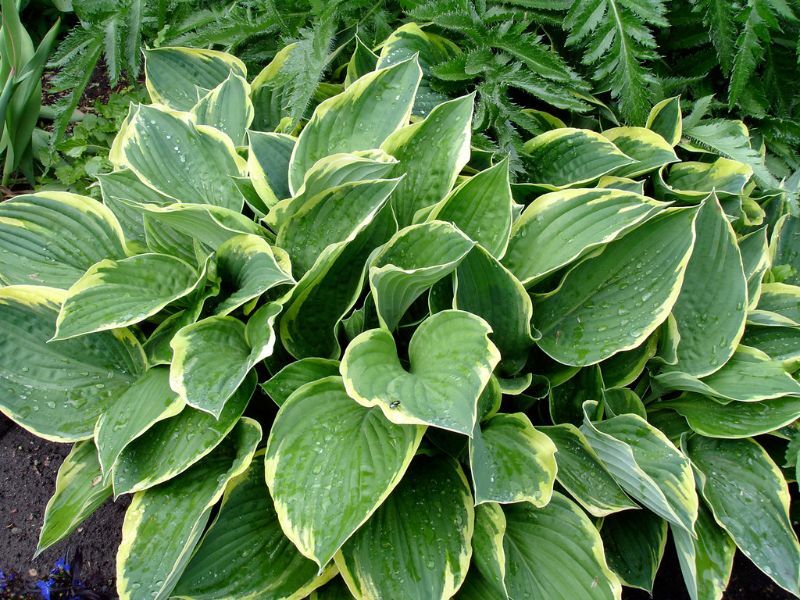
Spring division takes place over a four-week period. The window of opportunity to make your move begins when the hosta eyes pop up and before they begin to unfurl.
The fall division has a four-week timeframe as well. In northern climes, September is the best time to divide hostas, while in southern climates, the best time is later in October. You desire cool, humid weather. Make your decision based on the weather forecasts for the next few days.
Lifting and dividing hostas might set them back several years in terms of maturity. The amount of root system lost in the process determines how far you set them back. So, before you go ahead and divide your hostas, ask yourself this question: How many plants do you need and how far back in maturity are you ready to set them?
What is the purpose of dividing hosta? I bring this up because I get the impression that certain consumers divide them too frequently.
Some of the enormous or jumbo hosta cultivars take five years to mature, and they continue to improve in look as the clump becomes larger. Hostas may reach a growth limit and slow down, although they rarely die due to a lack of room. If they’re in decline, it’s probably a bad location for that cultivar. They should be moved to a more appropriate area.
There are various options for getting more plants of a specific hosta cultivar to satisfy your garden design needs.
- Lifting a clump and dividing it into quarters or thirds is something I do frequently.
- It gives this hosta a larger appearance, and by summer, you won’t be able to tell it was divided.
If you want to give a friend a portion of your favorite hosta plant, you can usually do so without disrupting the main clump by cutting off one of the outermost eyes.
- It’s a good idea to water the day before you divide your hostas if the soil isn’t damp from rain.
- Keep in mind that the fewer roots you cut off, the easier the transplant will be.
- Sink your spade into the earth all the way around the clump, far enough away to avoid cutting off much root, depending on the size of the clump.
- I like to place the cluster on a tarp on the ground nearby. After splitting clumps, this makes cleanup a breeze.
Assuming you’ve lifted a large clump of eyes, say 30 or more, there are numerous approaches you can take.
- You can accomplish this without setting your hosta behind much by halving, thirding, or quartering a large cluster.
- You can progressively shake off soil and eventually either pull the clump apart or get a hefty knife into the clump and not lose any hosta eyes if you have the patience.
So, should you chop a clump of 30 eyes into three or thirty pieces? To each his or her own, according to their need. I use old kitchen knives to chop the hosta into individual eyeballs. I use a sturdy straight spade when halving or quartering.
When resetting your hosta plant divisions, make sure they’re the same depth as they were before you divided them. This is the best time to add plenty of compost to your soil, and don’t forget to soak them after planting. This will aid in the removal of air pockets and ensure that the now-reduced root system remains wet.
When should hostas be divided?
It’s ideal to split hostas in the spring or early fall. Divide hostas as soon as the spring or fall rains arrive, if possible. Hostas suffer the most when they lose their roots, therefore dig as much of the rootball as possible while transplanting them.
When can you separate hostas and replant them?
Late summer is the optimum time to divide hostas (August or early September). If you forget, don’t worry: you can divide hostas at any time from spring to fall.
Can hostas be split anytime?
Hello, everyone! This is Scott from Spring Hill Nurseries, and we’re talking about dividing hostas today on step-by-step gardening. Hostas, as you may know, are one of the greatest perennials for a shady garden. Because Hostas grow quickly, it’s important to divide them regularly to maintain them healthy. They grow from spring to fall, so early spring or late fall are the best times to divide. Exactly like today! Making ensuring you have the correct instrument is the first step in separating your hostas. Instead of a pointed spade, you’ll need a decent flat bottom shovel. The roots of your hostas might be damaged by a sharp spade. So it’s pretty simple while you’re digging your hole. Simply dig a hole three to five inches from the base of the plant all the way around it. Let’s have a look at what we’ve got. So there you have it, my hosta. We’ll extend around three to five inches beyond the base. We’ll go all the way around so we can get that plant out all at once. Let’s get to work on that hosta. So, now that I’ve dug out the plant, let’s get it out of here. Okay, have a look at this plant; it’s quite attractive. This is going to be fantastic and simple to divide. You can divide in a handful of different ways. You might use a large knife, such as a bread knife, or a saw. You could even be able to use your hands. I find that using the shovel is the most convenient option. Let’s split it up now. So, just move your foliage here a little bit so you can see the plant’s center, and then put your shovel in there, okay? Let’s see what we’ve got after a nice chop. Okay, this is going to work out perfectly. Come in and take a good look at this. Each of these is known as an eye root, and each of these eye roots could be a separate plant, resulting in a large number of new hosta plants. If you’re only dividing it to keep it healthy, like we did today, one split exactly in the middle would enough. All that’s left is for you to grow another hosta plant. Let’s go pick a suitable location. So, it’s finally time to plant the hosta. This is the most straightforward phase. All you have to do is dig a hole twice as large as the root mass. Mine is already dug. You’ll want to put around two tablespoons of plant food per square foot in the hole, okay? That should be mixed along with your healthy soil-compost mix. Simply place the plant in the hole and backfill it with dirt. After that, all you have to do is give it a good sip of water, sprinkle a little mulch around the planting place, and you’re done! That is all there is to it. So, splitting hostas is simple and beneficial to the plant. Simply dig it up, split it in half, and plant it. I’m Scott, and I’m here to help you with Spring Hill Nursery’s step-by-step gardening. Thank you for coming along with me.
Do hostas get bigger every year?
Hostas are perennials, which means they will return year after year, bigger and better. In Zones 3 to 9, most hostas thrive. These adaptable shade plants generate a pile of leaves, but each variety has its own characteristics, such as plant size, leaf shape, and leaf color.
How do you thin out hostas?
Hostas (Hosta spp.) are shade-loving plants in USDA plant hardiness zones 3 through 9. They are prized for their green variegated leaves and white, purple, or lavender blooms that radiate from the cores of the plants. Hostas that thrive over time can grow to be quite huge. Divide the clump into separate portions to thin a hosta plant, each of which can be transplanted to start a new plant. Though you can divide a hosta whenever the ground is workable, it’s ideal to do so in the spring, just as the leaves emerge from the ground, or in the fall, approximately six weeks before the first frost.
Can you transplant hostas in June?
When transplanting Hostas, lessen the shock. The best time to transplant hostas is in the spring, but because they’re so hardy, any time from spring through summer should suffice. Avoid transplanting hostas during the hottest months of the year, as this can cause stress to the plants if not done correctly.
Do hostas like sun or shade?
A. Hostas are low-maintenance plants with a wide variety of types to pick from. Even though they are shade-tolerant, most of them will not survive in deep shadow. When given some sun, such as early sun with afternoon shade, many hostas become more strong and show their best colors. The sun is less bright in the morning than it is in the early afternoon. It will most likely be OK in the late afternoon sun.
How do you split a large hosta?
Begin by digging up the entire root clump of the hosta plant. To observe the root structure better, pull it up and shake off any loose soil.
Hostas have a clumping root structure, so just cut through the clump with a knife from the crown down to divide a plant. Garden tools can also be used to pry apart the root clump, but this will not provide as much precision. Cutting through the roots is acceptable because the roots of hostas recover quickly once transplanted.
You can divide a single plant into multiples, even if each division only has one bud. Remember that the fewer buds in each division, the less probable the new plant will bloom in the first year or two following transplantation. Of course, if you’re dividing your plant to resize it, this won’t be an issue.
What is a hosta eye?
A sprouting shoot from the crown that can support anywhere from one (rare) to twelve (perhaps) leaves. Early in the spring, the new eyes appear as conical projections from the crown. Also known as divisions, but this might be misleading when referring to a newly divided plant. Hosta farmers will discuss the amount of eyes on their hostas, but keep in mind that a hosta with three little eyes may have less presence in the garden than one with one enormous eye.
How do you thin hostas in the spring?
To divide a plant, knot or tape the leaves together and then dig out the entire plant. After that, you can cut off your division and replant the plant and division together. Keep the tape or thread on the plant for at least a week and make sure it gets enough of water. This will make it seem nicer and prevent the leaves from weeping and dying.