
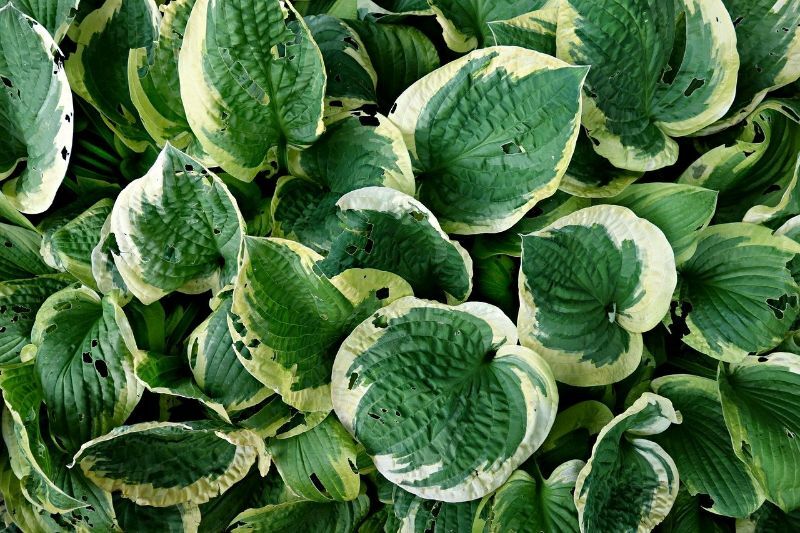
Hostas are perennials, which means they will return year after year, bigger and better. In Zones 3 to 9, most hostas thrive. These adaptable shade plants generate a pile of leaves, but each variety has its own characteristics, such as plant size, leaf shape, and leaf color.
Where should I plant hostas?
Choose a location that receives partial to full shade when planting hostas. Hostas can survive morning sun but prefer to be in the shade. It’s crucial to understand that these perennials thrive in lush, organically rich soil. Hostas should not be planted in heavy clay soil since the drainage will be inadequate. Place hostas where snow tends to pile up in places that get a lot of snow in the winter to preserve stems and leaves.
When Does It Bloom?
It has little bell-shaped flowers on a tall stem that grows up from the center of the plant throughout the mid to late summer. The leaves will turn brown after it blooms.
When Does It Come Back Up?
Hostas do not die in the winter, although they do suffer from winter dieback (also known as dormancy). The plant appears to have croaked when the leaves fall off, but it’s really only conserving energy while waiting for temperatures to warm up again. In the early spring, it will sprout again.
Do hostas die off in winter?
Autumn may be a strange time for hosta fans, as your favorite plants begin to fade into dormancy and you know it will be another 5 months before you see them again. It is, however, a good time to start thinking about next year and how you may improve the appearance of your hostas.
Hostas begin to seem a little run down toward the close of summer and the beginning of autumn, with brown markings appearing on the edges of the leaves and colors fading. During this time, many blue kinds become green and can resemble altogether different varieties. All of this is entirely typical and is part of the winter shutdown procedure.
The leaves will turn yellow as the evenings grow longer and the temperature decreases. Many newcomers to hostas may believe something is wrong, yet this is totally typical.
Hostas will have entered its dormancy stage by Winter, with all of their leaves having died back. Over the winter, you don’t need to do anything with your hostas; they’re entirely hardy and don’t need to be brought inside or protected from frost.
We recommend cleaning the dead leaves off in late winter so that the leaves come away neatly and no rough strands remain. There are a few reasons why it is important to clean the tops of your plants. Slugs will occasionally lay their eggs under the shelter of dead leaves in the Autumn, so by removing these, you can also remove the eggs and young slugs, preventing slug damage when your hostas are out in the early season. Birds will find it easy to eat any slugs or eggs that have been placed in or near your plants as a result of this. Another reason to do this is because fungus that is widespread at the end of the season when the weather is damp and warm can overwinter in the fallen leaves, affecting new growth that emerges in the spring.
Whatever kind of slug protection you choose, time is critical, and it will vary depending on the method. Before the fresh shoots sprout in March, general protection should be in place. We recommend that you start thinking about this in mid-February. If you don’t secure your hostas early on, controlling the slugs will be considerably more difficult, and you’ll probably have to do it by hand.
Hostas can be fed at any time in the spring, but we usually do it right before they bloom in March. Fish, Blood, and Bone are excellent top dress feeds. This would not be an issue if you did not feed your hostas; they are hardy plants that can thrive without any assistance.
Do hostas spread?
Hostas bloom late in the season, yet they swiftly spread out to fill their designated area. They grow slowly, taking two to four years to reach full size, with the largest species and cultivars taking much longer. Allow lots of space while planting to accommodate their eventual size. Small variations spread out three times their height. Larger kinds are at least twice as wide as they are tall, while medium-sized types are twice as wide as they are tall.
Hostas are disease-resistant, but slugs and snails can’t stand their succulent leaves. Keep an eye on the sprouting leaves and eliminate the intruders as you come across them. Use exclusion measures such as ash rings around the plants or beer saucers as bait in moist, humid areas.
Should hostas be cut back for winter?
Hostas are a perennial plant, which means they lose their leaves in the winter. This easy-to-care-for plant is known for its huge waxy leaves that produce long stalks with blossoms, although it will need to be pruned down in the fall. It is critical to prepare the hostas for winter in order to ensure strong blooms in the spring. Pests like slugs and bunnies can nibble the leaves and make them seem ragged as the weather becomes cooler. The leaves of the hostas also start to droop and die back. Trimming the hostas after the first hard freeze is beneficial.
Are hostas poisonous to dogs?
Hostas are well-known for their low-maintenance nature. They grow quickly and require very little care. If you have a pet, though, you must keep an eye on them around your Hostas. Hostas is harmful to pets because of the poisons glycoside saponins.
How long do hostas take to grow from bulb?
Bulbs of Hosta are being planted. According to Walters Gardens, Hosta rhizomes need four to ten weeks of temperatures below 35 to 40 degrees Fahrenheit to grow successfully the following growing season.