
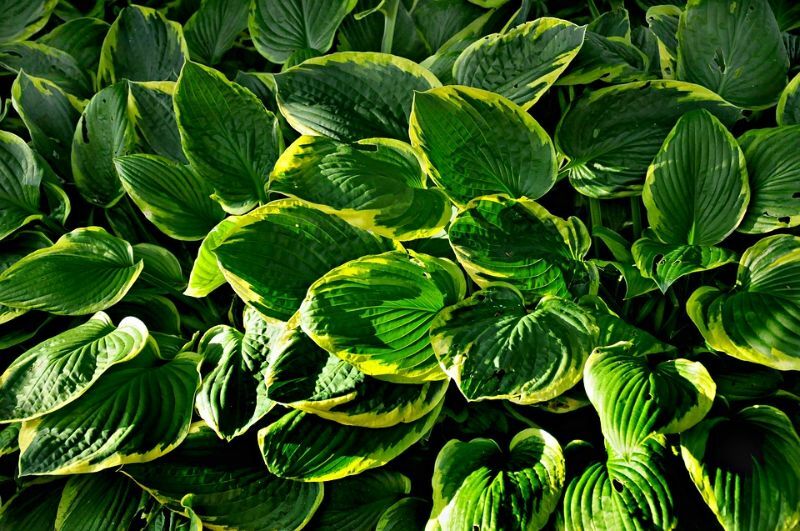
Hosta leaves can become yellow for a variety of reasons, and it’s critical that you figure out which one relates to your plant.
Hosta Leaves Turning Yellow from Scorch
When yellow hosta leaves suggest too much sun, it’s probably the easiest problem to fix. Hosta are shade-loving plants that thrive in partial or full shade. In fact, they’re a common sight in the shade garden. Yellow hosta leaves can be expected if grown in full sun. The leaves turn yellow and burn at the edges. Hosta scorch occurs when the leaves of a hosta plant become yellow as a result of too much sun.
If the plant is also cultivated in poor soil, the scorch will be significantly worse. The plant prefers moist soil that is rich in organic materials. The hosta leaves turn pale and burn when they are dried out in full light during a drought. You can provide temporary relief to the plant by watering thoroughly early in the day, but a better and more permanent option is to relocate the hosta to a shaded location with high organic matter soil.
Yellowing Leaves on Hosta Indicating Disease
When yellow hosta leaves signal disease, the treatment options become more limited. Petiole rot, caused by the fungus Sclerotium rolfsii var. delphinii, can produce yellowing leaves on hosta plants. Yellowing and browning of the lower leaf edges are the first signs of the disease. Your plant most likely has this disease if you notice brown, mushy decay with white fungal threads or fungal fruiting structures around the size of mustard seeds near the base of the petiole.
How do you treat brown leaves on hostas?
In the fall, Hostas naturally turn brown and die back. After the leaf margins begin to yellow or brown, cut back all of the foliage. Remove all of the foliage from the plant’s base and discard or compost it. Once the foliage turns dormant, Hostas don’t need to be watered. To insulate the roots in the winter, replenish the mulch layer to 2 inches, but avoid covering the plants’ crowns.
Should I cut brown leaves off hosta?
Hostas should be pruned back in the late fall as a general rule. Starting with wilted or brown leaves is a good place to start. Healthy leaves can stay a little longer to aid in the storage of energy by the roots. If 25 percent or more of the hostas are dying, it’s time to prune them back. Following the first frost, all of the leaves should be cut off. Slugs and bunnies will be less likely to make your plant their winter home if you do this.
Why are the leaves of my hosta turning brown?
When the temperatures rise or the sun is too harsh, brown leaf edges are prevalent on hostas and other shade-loving plants.
When a plant loses more water than is available or faster than it can absorb, brown leaf edges, also known as scorch, develop. Grow shade-loving plants like hostas in shaded regions away from the scorching midday and afternoon heat to reduce the danger of this condition.
Improve the water-holding capacity of fast-draining sandy soils by adding organic matter. The plants should be watered properly and frequently enough to keep the soil moist.
To keep the soil cool and evenly moist, mulch it with shredded leaves, evergreen needles, or other organic debris. Yes, I realize that this also provides the ideal climate for slugs. If a slug problem arises, use a shallow can of beer to catch the slimy parasites.
If slugs are a problem, consider adding additional slug-resistant hostas to your garden. Like the 2014 Hosta of the Year, Abiqua Drinking Gourd, these feature thicker leaves.
Will hosta leaves grow back?
In the correct conditions, Hosta leaves recover quickly, and these tough plants are desperate to survive. After the initial deer attack, though, guard your hostas. If hostas are repeatedly eaten, they are far less likely to recover.
Can hostas get too much water?
A gardener is unlikely to overwater a hosta; but, if the soil has a lot of clay and drains slowly, the hosta can acquire the fugal disease root rot.
Hostas require moist soil that drains away excess water so that the soil does not become soggy for long periods of time.
The ideal soil for hostas is permeable, allowing water to run away but still retaining moisture, allowing the roots to draw water as needed.
It’s far easier to plant hostas in pots in clay soil gardens than it is to alter the soil to allow hostas to grow.
Key Takeaways:
- Water hostas as needed to maintain a regular moisture level in the soil. The foliage of Hostas requires a regular supply of moisture to preserve its structure and look.
- In warmer weather, larger hostas that are exposed to direct sunlight may require daily watering (with more then a gallon of water). Water small and medium-sized hostas every three days with a generous amount of water (half a gallon).
- Before plating hostas, amend the soil with moisture-retaining organic matter, and add mulch in the early spring to help preserve water.
- Water your hostas first thing in the morning to give them a jump start on the day. Slugs and snails enjoy the conditions that slugs and snails prefer, therefore avoid watering in the evening.
- Hostas in pots need to be watered more frequently because pots dry up much faster. Water your plants twice a week, and more frequently during the hotter months of the year.
- Before planting, amend slow-draining clay soils to allow excess water to drain away from the roots and to maintain the proper moisture balance for the roots.
How often should you water a hosta plant?
Small or medium plants will require a good soak once a week once they have established themselves. Hostas tolerate drought but need moist, well-drained soil. Increase the watering frequency to three times per week if the weather is warm. Large hostas should be watered twice a week in the summer and daily in the winter, especially if they get a lot of sun.
Growing Hostas in pots necessitates more frequent watering. Because pots drain faster than gardens, giving the plant the slow sip it requires can be difficult. Water the pot every three days during the summer months. If the soil still appears to be too dry, it may need to be watered on a daily basis.
Can hostas thrive in full sun?
Instead of functioning well on your site, the best you can hope for is a hosta that can tolerate it. In full sun, Hosta cultivars with a lot of white colouring or thin leaves are more likely to burn. Hostas with fragrant flowers, gold or yellow foliage, or slight white variegation, in general, prefer shade, whilst those with fragrant flowers, gold or yellow foliage, or slight white variegation can handle more sun.
Do hostas need a lot of sun?
Let’s start with this one because it’s usually the first perennial that springs to mind when considering shady gardening. It’s for a good reason: hostas adore being in the shadow. They do, after all, prefer the cool of the afternoon sun, so your shaded setting will be ideal for them.
Hostas, on the other hand, require a steady supply of moisture to flush out their large, gorgeous canopy of foliage, so planting them in hard, dry clay beneath your trees is not ideal.
When planting hostas, amend the soil to provide them with nutrient-rich, loamy soil in which to spread their vast roots. Investing the time and effort will benefit your hostas far more than planting them in poor soil and having to fertilize them every month to compensate for the poor soil.
Hostas are hardy in zones 3-9. They grow well in all but the hottest sections of the country. They are, however, a favorite diet of deer, so if you have these four-legged friends in your garden, you might want to browse lower down this list for alternative shade-tolerant perennials.
Recommended Hostas:
- The dazzling blue and radiant gold edged leaves of ‘Autumn Frost,’ one of the best hostas for spring color, will light up your landscape and containers with exuberant color.
- ‘Empress Wu’This massive green hosta might be better named “Wow You,” since it will undoubtedly impress all your friends when it reaches its mature height of 3-4ft tall by 5-6ft broad in around five years.
- ‘Wheee!’
- With a name like this, what hosta could be more entertaining?
- You’ll want to reach out and touch its very ruffled foliage, and when you do, you’ll be impressed by its thick leaf material. The slugs, on the other hand, will be less impressed and will seek out simpler prey.
Can I use Miracle Grow on my hostas?
A slow-release NPK 10-10-10 fertilizer is the greatest hosta plant feeding. The amounts of Nitrogen, Phosphorus, and Potassium in the fertilizer are represented by those three digits. When it rains or the plant is wet, slow release fertilizers feed the plant. Because the granule can burn the leaves, apply this fertilizer in the spring before they grow.
You can use a regular release fertilizer, but keep in mind that nitrogen levels in these fertilizers are important to consider. Too much nitrogen in a short period of time might cause the leaves to curl or become brown. Hostas grow in soil that is rich in compost. It is more vital to have healthy soil than to use fertilizer. Using a solution like Miracle Grow can feed your hosta rapidly and keep it looking beautiful for a short period of time. However, Miracle Grow does not increase soil health.