
The beauty of red on a hosta is subtle and may not be visible at first glance, yet it catches your eye. As seen from above, this contrasting color is especially noticeable on scapes and seed pods. The easiest way to see red stemmed hosta is to grow it on an elevated planting bed. Consider a rock retaining wall with a border of red stemmed hosta!
Are there really red hostas?
Bob expressed his inspiration for having a red hosta that can be seen in your garden right now, after introducing over 50 hostas and attempting to create the elusive red hosta for several years. Many hostas generate crimson or purple bud sheaths as they emerge from their winter dormancy, and some have red or purple leaf tips as they emerge. Although these colors fade as the plant grows older, their presence lends promise to the prospect of a red hosta.
Anthocyanins, the same red pigment found in leaves in the fall, are the source of these red pigments. Although scientists disagree regarding the use of this pigment, Bob believes that hostas employ it as a sunscreen. Hosta leaves emerge before the trees have fully leafed out, exposing them to harsh sunlight until the tree’s shade or other vegetation emerges.
From locating genes to the ability to create anthocyanins, many genes are involved in the formation of a red hosta, but Bob is certain that someday breeders (if not himself) will develop a red hosta. He’s seen a hosta that has purple pigment throughout the leaf blade, not only in the veins. Unfortunately, you won’t find this plant on the market because the leaves curl and turn brown on the first warm day. This is not an attractive addition to any garden.
During the spring, Bob has introduced some selections with red coloration on the plant. As all hostas??green-up?? in the summer, the coloring fades. During the summer.
Are colored hostas real?
Hosta is a broad genus that includes more than 70 species as well as hundreds of hybrids and cultivars. It belongs to the Asparagaceae family. Despite the fact that these herbaceous shade-loving perennials are mostly grown for their foliage rather than their flowers, hostas offer a remarkable range of color. Blue, yellow, or green leaves are possible. Sometimes a beautiful combination can be found, such as when just enough yellow and green are present to make chartreuse. In addition to a wide range of colors, these foliage superstars are frequently variegated.
Hostas are commonly thought of as shade-loving plants, and they do an excellent job of it. Hostas are wonderful ground-cover plants for big shady garden areas, blanketing the ground with gentle color while keeping weeds at bay. Few plants are easier to care for, yet they are vulnerable to snail and slug leaf damage. Hostas are extremely easy to propagate once established by dividing root clumps in the spring or fall.
What colors do hostas come in?
Hosta leaves come in a variety of colors, from light buttery yellow to deep forest green to powdered blue, and there are also variegated varieties. Red coloration in the stems and leaves has recently been bred for by hosta breeders.
Is there a pink hosta?
Question: I’ve read about pink hostas in periodicals, but I’ve only seen seeds for them from a few online seed suppliers. Could you elaborate on the situation?
Yes, there are fly-by-night seed companies claiming to sell hosta seeds with brilliant pink leaf, but this is not the case. It’s just a ruse. Most likely, the provider, who claims to supply mixed hosta seed, finds that extensively doctoring a photo of an ordinary hosta, something that is surely easy enough to accomplish with Photoshop or comparable software, to make it look brilliant pink, helps their seeds sell much better. The resulting viral photo is unmistakably eye-catching. In fact, the plant in the photo is so vibrant that it would be difficult to resist the urge to purchase seeds. Of course, the new plants will almost certainly all be plain green, though there is a chance of various shades of green and even some variegation… just not pink variegation.
Sometimes these kind of vendors simply take your money and disappear, but more often than not, they will send you a packet of seeds, but what kind of seeds? Hostas, perhaps, but anything from weeds to salad greens have emerged from packs of seeds from such dishonest providers in other comparable instances. They can keep the fraud going longer if they send you seeds of something. After all, it takes a few years for a hosta to reach its full size and color, proving that it isn’t pink at all.
When there are too many complaints, these types of vendors can close up shop and reopen elsewhere under a new name, then repeat the trick.
Is there a purple hosta?
Purple Sensation has rich purple flowers that are bordered and striped in pristine white, unlike classic hosta cultivars that have pale lavender or soft white flowers. Hostas are excellent ground coverings and attract helpful pollinators with their bell-shaped blossoms, making them the ideal companion for your spring-blooming bulbs.
What is a blue hosta?
Blue hosta types aren’t blue in the traditional sense. The leaves of the plants are covered in a waxy covering that gives them that blueish tint. This is also known as “glaucous,” which is Latin for greyish blue and is used to describe plants that have those tones or are blue-green in color.
While the color blue in the variety name is a decent indicator of the color you’ll get, there are lots of others whose names don’t even hint at the foliage color.
The blue tint of the hosta leaves may fade throughout the season, depending on the environment and where they’re placed in the garden, as sun exposure, heat, and strong rains can wear it away, revealing more of a green color. Planting your hosta in part shadow, where it only receives a small amount of the chilly morning sun, can help it retain its color. The foliage can also be affected by direct sunlight, which causes the edges of the leaves to burn and turn brown.
Blue hostas have thicker leaves than other hostas, which can help protect the plant against slug damage. Other pests, such as groundhogs, rabbits, and deer, are nevertheless attracted to them. They may also be subject to slug damage if the summer is particularly wet.
How do I know what kind of hosta I have?
To examine the margins, run your fingers around the edges of the leaves. All hostas have smooth, complete borders that are never toothed, sliced, serrated, or lobed. The veins of the leaves may cause some to appear somewhat crumpled. Hosta leaves contain characteristic vein patterns that follow the contour of the leaf and are more noticeable on the underside.
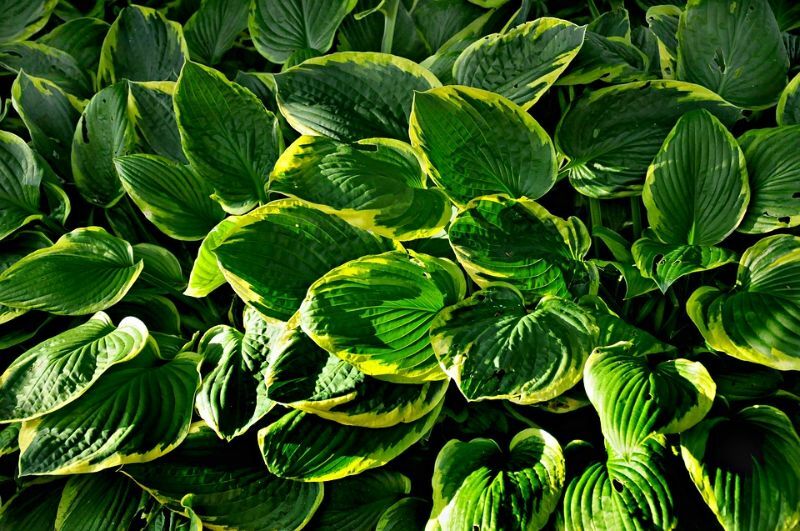
Take a look at the leaves’ surface. Hosta leaves are never hairy and are either smooth or puckered. Their surfaces might be matte, shiny, or waxy, but they are most commonly satiny. Although most hostas have green leaves, others have lighter green, white, or yellow stripes or rims.
Which hosta has purple flowers?
ventricosa. This one has heart-shaped leaves with a gleaming sheen to them. The blossoms are a rich purple color and will produce a large number of seed pods. This hosta is the most likely choice if you find a hosta growing in your woods because it can easily spread by seed.
What plant has red flowers?
Poppies are a well-known red flower that can be grown. Annual poppies include (Papaver rhoeas, Papaver commutatum, and Papaver somniferum), while Papaver orientale is the most prominent perennial poppy. Everyone enjoys a place in the sun.