
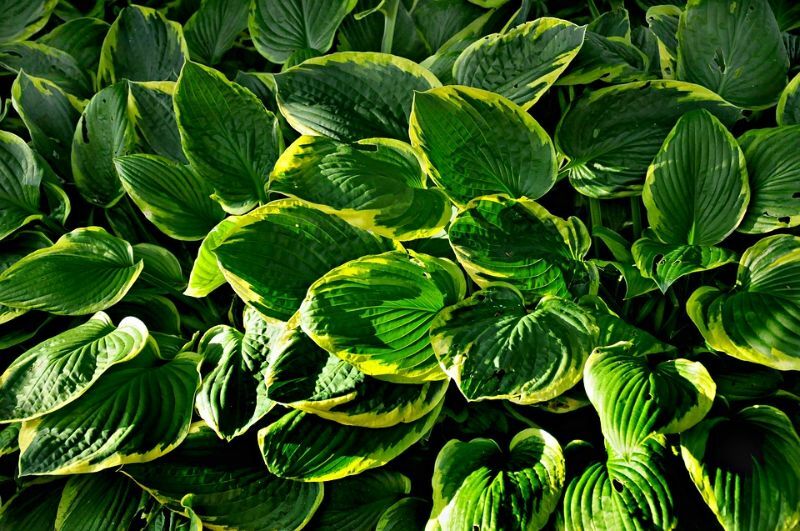
Mulch protects the roots of the plant against temperature changes. Swings that can induce severe freezing and thawing, causing plants to be injured or even killed.
Mulching also prevents weed seeds and competing weeds from blowing in and taking over.
(For further information, see Mulching Fall Flowerbeds and How to Prevent Next Year’s Weeds Now.)
Begin by applying a light layer of compost (1 inch) to the crowns of each plant for fall mulching. Then, all around the plant, apply a two to three inch layer of conventional mulch.
What is the purpose of the compost? Not only will the compost help as insulation, but it will also work as a gradual release fertilizer for the plants in the spring. The addition of nutrients in the spring is especially beneficial for new divisions and transplants.
Here’s to properly putting your hosta plants to bed for the winter and having healthy blooming plants next spring!
Do hostas need to be cut back in the fall?
Hostas should be pruned back in the late fall as a general rule. Starting with wilted or brown leaves is a good place to start. Healthy leaves can stay a little longer to aid in the storage of energy by the roots. If 25 percent or more of the hostas are dying, it’s time to prune them back. Following the first frost, all of the leaves should be cut off. Slugs and bunnies will be less likely to make your plant their winter home if you do this.
Divide Them
It is not typically necessary to divide hostas for their health. When grown near together, they will naturally grow slower with no negative consequences. Dividing, on the other hand, can assist create a neater appearance and can be utilized to make two plants from one.
With the help of a sharp spade, you may split a hosta cluster in half. Remove the plant’s crown, leaving at least one “eye” on each piece. Alternatively, you can extract the entire clump and slice off the desired area. Keep as much of the roots as possible intact, as this will ensure that the new plant survives. Plant them at the same depth as the original soil and water them in. Continue to water the new planting place well until the plant has established itself.
It’s better to divide them before the first frost in the early fall. Allow them to take root before the first frost of the season, which will put the plants into dormancy.
Cut Them Back
You may help prepare your leaves for winter by cutting them back. Hostas have a natural tendency to die back and wither, making the plant appear to die. However, this is a natural part of their life cycle, and in the spring, they will emerge stronger than ever, bursting with new leaves. While you can let the plant to complete this dormancy preparation on its own, it will benefit from your help.
Do you need to do anything to hostas in the fall?
If you’re compiling a list of fall tasks for the year, you might be wondering what to do with your hostas, if anything at all. In the fall, you’ll be relieved to hear that hostas take virtually little attention. They’re undoubtedly one of your landscape’s most low-maintenance plants.
After the first heavy frost of the season, cut the entire plant back to the ground. Some gardeners find it difficult to dramatically reduce the size of their plants. But don’t worry; in the spring, you’ll have gorgeous plants again.
What happens to hostas in the winter?
The annual life cycle of hosta (Hosta spp.) variety exemplifies the occurrence of dormancy, or winter dieback. According to North Carolina State Extension, hostas can be cultivated in USDA plant hardiness zones 3 through 9, depending on the species and cultivar. Hostas look ugly in the winter because the plant leaves wither and collapse, giving the impression that the plant has perished. The plant stores energy in its crown during dormancy so that it may grow again when the weather warms again. Hosta, like deciduous trees and perennial shrubs, awakens from its winter hibernation with new growth that signals the arrival of spring.
Will hosta leaves grow back?
In the correct conditions, Hosta leaves recover quickly, and these tough plants are desperate to survive. After the initial deer attack, though, guard your hostas. If hostas are repeatedly eaten, they are far less likely to recover.
Can I cut back hostas in September?
Hosta plants can be found in a variety of shady garden locations. Hosta is a perennial herbaceous plant, which means the leaves die down to the ground in the winter. When, though, should hostas be pruned?
Late in the fall, hostas should be pruned. Early in the fall, healthy hosta leaves can be kept on the plant to gather much-needed energy, but after the first frost, all leaves should be cut off to prevent slugs and other pests from making your hosta their winter home. Use a pair of pruners that are clean and sharp, such as the Fiskars SoftGrip or Felco Premium Bypass Pruners. Remove the leaves as soon as possible before the snowstorm.
When it comes to fall hosta trimming, there are a few things to keep in mind. Here’s what I’ve discovered about hostas.
Will hostas grow back after winter?
Hostas are low-maintenance, shade-loving woodland perennials that grow back year after year with minimal effort. While they are generally low-maintenance plants, some basic hosta winter care should be performed in the fall.
Can you transplant hostas in October?
When should you transplant your hostas? Spring or early autumn are the best times to visit. If you can time it correctly, you can transplant hostas before the seasonal rains arrive in most areas. Rains will keep the soil moist, allowing young plants to establish more quickly. Because the soil is still warm from the long summer days, early fall is probably the best time to transplant hostas because the roots will grow swiftly. Spring transplanting is also possible if you wait until the soil has warmed up a little.