
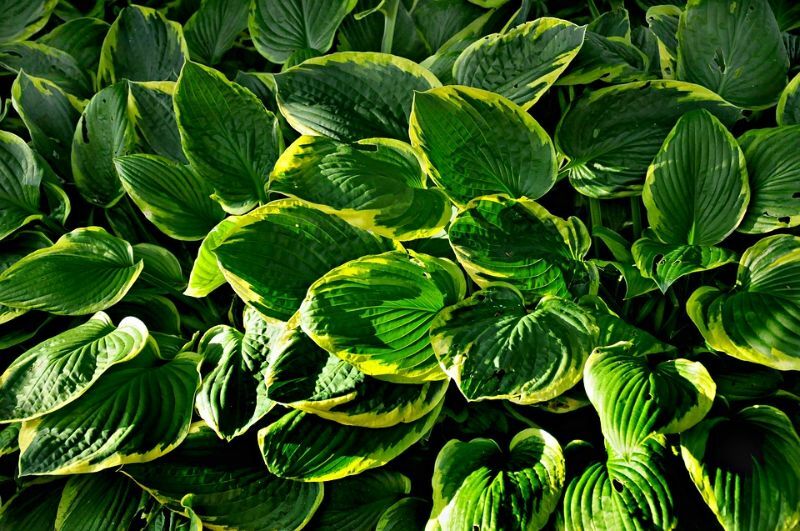
Do you want to produce a plant that gets people talking? Then give the ‘Empress Wu’ hosta a try. This large hosta reaches a height of 4 to 5 feet and a width of 6 to 8 feet. A single leaf can grow to be 28 inches long and 25 inches wide. If you enjoy the low-maintenance beauty of hostas, you’ll appreciate ‘Empress Wu.’ This beauty looks terrific with very little effortand is sure to get rave remarks from everyone who sees it.
‘Empress Wu’ hosta, like many other hosta types, prefers light to full shade. Some gardeners grow their ‘Empress Wu’ hosta in northern climates where it gets a few hours of early sun, but in most cases, this plant behemoth thrives when it’s kept out of direct sunlight.
Because the ‘Empress Wu’ hosta produces such enormous leaves, it’s critical to keep the plants well-watered. Make sure the soil you’re planting ‘Empress Wu’ in can hold moisture. To improve the soil’s water-holding ability, add plenty of organic matter. If you garden in an area where summer drought is a regular occurrence, you might also consider using a soaker hose or drip irrigation on the soil surface.
In temperate climates, where summer rainfall is sufficient for most plants, you might even consider employing these watering strategies. Rain has a hard time penetrating through the layers of ‘Empress Wu’ hosta leaves and reaching the soil because the leaves are so wide. If rainfall only flows off leaves and hits soil along leaf margins as the plant spreads five feet or more, little water reaches soilor rootsnear the plant’s top.
With ‘Empress Wu’ hosta, a continuous mulch layer is essential for retaining soil moisture. A 2- to 3-inch layer is ideal (use the thicker layer in warmer regions). Mulch is especially crucial when hosta varieties are new to the garden and are still forming root systems. In chilly winter locations, mulch can help avoid frost heave, which happens when freeze-thaw cycles in the soil push plants out of the ground.
Mulch provides a hiding place for slugs, so start using slug bait or traps as soon as hosta shoots sprout in early spring. Clean up all dead hosta leaves from plants at the end of the growth season. If dead leaves aren’t easily removed, clip them. This will prevent insects and snails from overwintering in your yard. You’re likely removing slug eggs as well as leaf litter.
The leaves of the ‘Empress Wu’ hosta are dark green and heavily veined. Leaves have a blue-green tinge when they first unfold. The color changes to green in the summer. Early in the summer, flower stalks emerge above the foliage. A lavender bloom emerges from each bud on the stalk. The flower stems can easily reach a height of five feet. In the garden, they put on a spectacular show, and a single flower stalk looks gorgeous in a vase indoors.
In 2005, this magnificent behemoth was granted a patent. The name ‘Empress Wu’ honors Wu Zetian, the only female empress in Chinese history (624 AD to 705 AD).
How long does it take for Empress Wu hosta to grow?
- The broad, corrugated green leaves of this semi-upright plant produce a magnificent mound.
- ‘Empress Wu’s’ wavy green leaves are said to be the largest hosta leaves ever!
- If grown in an ideal site with healthy soil and sufficient moisture retention, it can grow larger than the given size.
- With this hosta, be patient. It grows in size over time, but not suddenly. It will take 5 to 8 years for the plant to achieve maturity.
Can Empress Wu hosta tolerate sun?
Hostas are excellent foliage plants that thrive in full to moderate shade. However, if provided a constantly wet environment, several types will endure full sun. They make excellent accent plants and, when mass planted, may produce a striking show.
How big does Empress Wu get?
According to legend, ‘Empress Wu’ is the largest hosta ever commercialized. It will eventually reach a height of 4-5 feet and a width of 6-8 feet, with massive, strongly veined, cordate-based green leaves measuring 28 inches long by 25 inches wide.
How long does it take for a hosta to grow to full size?
Hostas bloom late in the season, yet they swiftly spread out to fill their designated area. They grow slowly, taking two to four years to reach full size, with the largest species and cultivars taking much longer. Allow lots of space while planting to accommodate their eventual size. Small variations spread out three times their height. Larger kinds are at least twice as wide as they are tall, while medium-sized types are twice as wide as they are tall.
Hostas are disease-resistant, but slugs and snails can’t stand their succulent leaves. Keep an eye on the sprouting leaves and eliminate the intruders as you come across them. Use exclusion measures such as ash rings around the plants or beer saucers as bait in moist, humid areas.
Do hostas get bigger every year?
Hostas are perennials, which means they will return year after year, bigger and better. In Zones 3 to 9, most hostas thrive. These adaptable shade plants generate a pile of leaves, but each variety has its own characteristics, such as plant size, leaf shape, and leaf color.
What is the fastest growing hosta?
Empress Wu, Sum and Substance, Vulcan, Island Breeze, and Royal Wedding are some of the faster growing hostas. Growers should be aware that hostas that haven’t been vernalized yet often look different than mature plants that have been treated with cold.
What kind of fertilizer do hostas like?
A slow-release NPK 10-10-10 fertilizer is the greatest hosta plant feeding. The amounts of Nitrogen, Phosphorus, and Potassium in the fertilizer are represented by those three digits. When it rains or the plant is wet, slow release fertilizers feed the plant. Because the granule can burn the leaves, apply this fertilizer in the spring before they grow.
You can use a regular release fertilizer, but keep in mind that nitrogen levels in these fertilizers are important to consider. Too much nitrogen in a short period of time might cause the leaves to curl or become brown. Hostas grow in soil that is rich in compost. It is more vital to have healthy soil than to use fertilizer. Using a solution like Miracle Grow can feed your hosta rapidly and keep it looking beautiful for a short period of time. However, Miracle Grow does not increase soil health.