
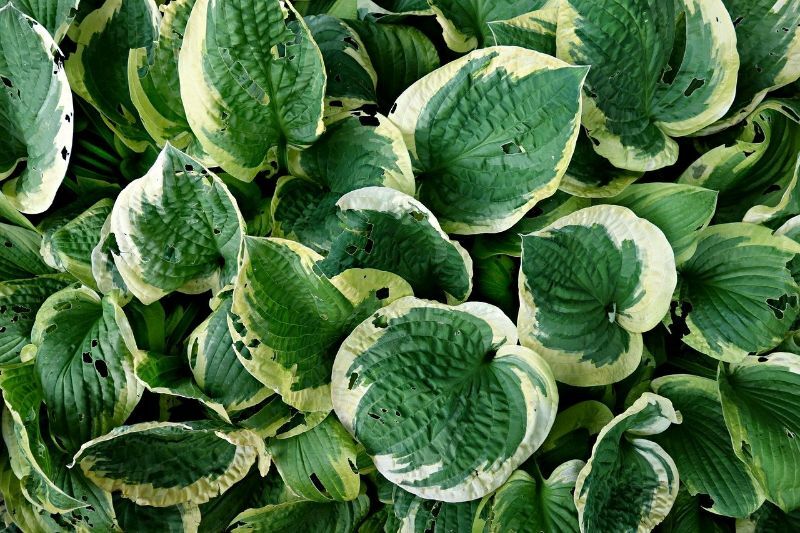
Throughout the growing season, Hostas require a consistent supply of nutrients. Feed them Miracle-Gro Shake ‘n Feed All Purpose Plant Food a month after planting, following the guidelines on the label. Your hostas will be fed for up to three months with this.
What is the best fertilizer for hosta plants?
A slow-release NPK 10-10-10 fertilizer is the greatest hosta plant feeding. The amounts of Nitrogen, Phosphorus, and Potassium in the fertilizer are represented by those three digits. When it rains or the plant is wet, slow release fertilizers feed the plant. Because the granule can burn the leaves, apply this fertilizer in the spring before they grow.
You can use a regular release fertilizer, but keep in mind that nitrogen levels in these fertilizers are important to consider. Too much nitrogen in a short period of time might cause the leaves to curl or become brown. Hostas grow in soil that is rich in compost. It is more vital to have healthy soil than to use fertilizer. Using a solution like Miracle Grow can feed your hosta rapidly and keep it looking beautiful for a short period of time. However, Miracle Grow does not increase soil health.
What does Epsom salt do for hostas?
Epsom salt enhances chlorophyll levels in hostas, reducing stunted development and making their leaves greener and thicker. It also promotes bushier plant growth and increases disease and insect resistance.
Get Rid of Slugs
The most prevalent pests that attack hostas are slugs. Slugs can be deterred by placing a tablespoon of Epsom salt in the shape of a ring around hostas. Their bodies will be irritated by the sharp crystals of Epsom salt, and they will avoid getting near your plants. For optimal results, apply once a week.
For Yellowing Hosta Leaves
Magnesium insufficiency might be indicated by yellow hosta leaves. Once a month (or more frequently if necessary), sprinkle a spoonful of Epsom salt around the base of your hosta plant per 12 inches of height until it begins to look green again.
For Lush and Healthy Hosta Plants
Even if your soil is not magnesium deficient, factors such as acidic soil, low soil temperature, soil cation exchange capacity, high potassium, and salt can all impede Magnesium uptake by plant roots.
In that case, foliar feeding your hosta plants with Epsom salt solution is a good idea:
- During the rapid growth period, mix 2 teaspoons Epsom salt in 1 gallon of water and sprinkle on the foliage once a month.
- Reduce the amount to 1 tablespoon as growth slows. Your hostas will stay lush and healthy with the foliar treatment.
Mix Epsom Salt with Fertilizer
To improve the efficiency of the all-purpose liquid fertilizer, mix a pinch of Epsom salt with it before feeding the hosta plants, then apply according to the recommendations on the fertilizer’s packet.
What do you feed hostas in pots?
Slugs and snails adore hostas, so remove any you discover or use organic slug pellets containing ferric phosphate to treat your pot, especially as new leaves emerge in the spring.
Do hostas like used coffee grounds?
Perhaps we should share the rest of the pot with our houseplants and use leftover coffee to water any prima donna garden plants. On second thought, the border belles would probably prefer that we prepare them their own particular batch of coffee rather than take secondhand or second-best coffee.
Starbucks makes used coffee grounds available to consumers in North America on a first-come, first-served basis all year. Grounds come in re-usable coffee bags with clear instructions for utilizing them in the garden or compost pile.
Slugs and snails can be discouraged by using coffee-ground mulch. One student said she regularly mulched her hostas with coffee grounds every day and had never understood why they were never disturbed by slugs until she took a recent session.
Slug-friendly plants, such as hostas, ligularias, and lilies, can be mulched with coffee grounds. They’re also good for daffodils and other spring bulbs. Slugs and snails can also be deterred by making instant coffee two to three times stronger than usual. If you spray this concentrated coffee where slugs are free to roam, you’ll notice a significant reduction in damage.
Recent investigations have shown that when slugs or snails walk over soil or pathways where a powerful caffeine solution has been sprayed, the caffeine is absorbed by their slimy foot, resulting in death. In theory, you could also kill slugs with tea, but you’d need a considerably more concentrated pot than you’d consider drinking.
Tea has more caffeine than coffee pound for pound, but a pound of tea creates a lot more cups than a pound of coffee. To acquire a strong enough caffeine concentration to discourage bugs, you’d have to drink a lot more tea than is practicable. The stewed ends of the teapot, on the other hand, are well worth splashing around in the garden. Tea, like coffee, contains a number of chemicals that aid plant growth. Tea leftovers, including paper wrappers and tea bags with strings, are commonly used to mulch houseplants, and all types of tea leftovers, including paper wrappers and tea bags with strings, can be put into the compost with impunity. Metal (such as tea bag staples) and non-breakable plastic coated wrappers are the only materials to avoid.
Can you use Miracle Gro on hostas?
How to Care for Hostas. Throughout the growing season, Hostas require a consistent supply of nutrients. Feed them Miracle-Gro Shake ‘n Feed All Purpose Plant Food a month after planting, following the guidelines on the label. Your hostas will be fed for up to three months with this.
How do you keep hostas healthy?
Hosta care becomes a simple issue of maintenance once your plant has established itself. Fertilize your growing hostas with an all-purpose garden fertilizer each spring to keep them healthy. Additional summer fertilization may be beneficial, but it is not required. Nutrients in the form of granules should never be applied to the leaves.
Hosta plants are disease-free, with the exception of crown rot and leaf rot. Deer find them appetizing, so if you live in an area where deer are a problem, try planting daffodils around your hosta to keep them away from the new shoots.
Slugs, which produce unsightly holes in the leaves, are another issue with hosta maintenance. A little sprinkling of sand around your plants can deter them.
Hosta plants are a lovely addition to any landscape and can be grown in a variety of sizes, from a few inches to four feet (1.2 meters). Hostas are simple to care for, and now that you know how to cultivate them, you’ll find them to be a pleasant addition to your yard.
What causes yellow leaves on hostas?
Plants affected with petiole rot cannot be saved. Prevent the problem by carefully checking young seedlings before planting them. In addition, any contaminated plants should be removed and destroyed, and the soil should be removed and replaced to an 8-inch depth (20 cm.).
Other fungi, rots, and virus illnesses that produce yellowing leaves on hostas are similarly difficult to treat. All you can do to treat fusarium root and crown rot, bacterial soft rot, hosta virus X, and other viruses is remove and destroy the plants while avoiding spreading the disease to other plants.
Because fungal diseases thrive in the soil and attack hosta at or below the soil’s surface, you may need to solarize the soil using black plastic to kill the fungus. Make sure your garden tools are clean, the area is free of debris, and unhealthy plants aren’t transplanted. Other fungal infections, such as root and stem rot, are usually fatal and are caused by excessive moisture. Make sure the plants aren’t overwatered and that air circulation isn’t hampered by crowding. To keep the leaves dry, water your hosta at the soil level.
Pests Causing Yellow Hosta Leaves
Foliar nematodes are tiny worms that dwell within the leaves. The symptoms begin as a yellow discoloration that progresses to brown streaks between the leaf veins and are usually initially detected in early summer. To prevent the pests from spreading, keep an eye on the plant and remove any infected leaves as soon as possible.
Hosta Leaves Turning Yellow Naturally
Hostas will naturally begin to go dormant once the growing season is over. You may see yellowing hosta leaves if this happens. This is completely normal and causes no concern. You can prune the plant back once the leaves have entirely died back in the fall.
How often should you put Epsom salt on plants?
Do you want to know how to use Epsom salts to water your plants? It’s simple. Simply use it once or twice a month in place of regular watering. Keep in mind that there are a variety of formulations available; choose the one that works best for you.
However, before using Epsom salt, have your soil tested to see if it’s magnesium deficient. You should also be aware that many plants, such as beans and green vegetables, may thrive and produce in low-magnesium soils. Plants such as roses, tomatoes, and peppers, on the other hand, require a lot of magnesium and are consequently frequently watered with Epsom salt.
Epsom salt is easily absorbed by plants when diluted with water, especially when used as a foliar spray. Once a month, sprinkle most plants with a solution of 2 tablespoons (30 mL) Epsom salt per gallon of water. Reduce this to 1 tablespoon every other week for more regular watering (15 mL).
Apply a foliar spray of 1 tablespoon per gallon of water to each foot (31 cm) of the shrub’s height on roses. Apply in the spring as soon as the leaves show, and then again after the flowers have bloomed.
Apply 1 tablespoon Epsom salt granules around each transplant or spray (1 tbsp. or 30 mL per gallon) during transplanting and again after the first bloom and fruit set for tomatoes and peppers.
Do I need to feed hostas?
In dry spells, water Hostas in the ground keep the soil at least slightly damp to a depth of 15cm (6in) check by digging down nearby if necessary.
Summertime necessitates frequent watering of container plants, since they dry out rapidly. Plants that have dried out will have brown leaf edges.
Feeding
In borders, an annual mulch of garden compost or well-rotted manure is all that is required in fertile soils. Apply a general purpose fertilizer, such as Growmore, according to the manufacturer’s instructions in early spring on poorer soils, and then mulch. This, combined with sufficient moisture, will result in huge, robust foliage.
In containers, use a general-purpose liquid fertilizer such as Phostrogen, MiracleGro, or Seaweed feed once a month when it’s growing.
Deadheading
The flower stalks can be left in place until late autumn, when the leaves naturally die back, when the plants are tidied up. They can also be removed once the blooms fade to prevent the plants from wasting energy on seed production.
Overwintering
Hostas are entirely hardy, although their foliage dies back in late autumn, and the plants inactive until mid-spring. Frosts can destroy new leaves that emerge in the spring. If frost is expected, 2 or 3 layers of horticultural fleece can be used to protect the plants, although this is really only for the most dedicated grower.