
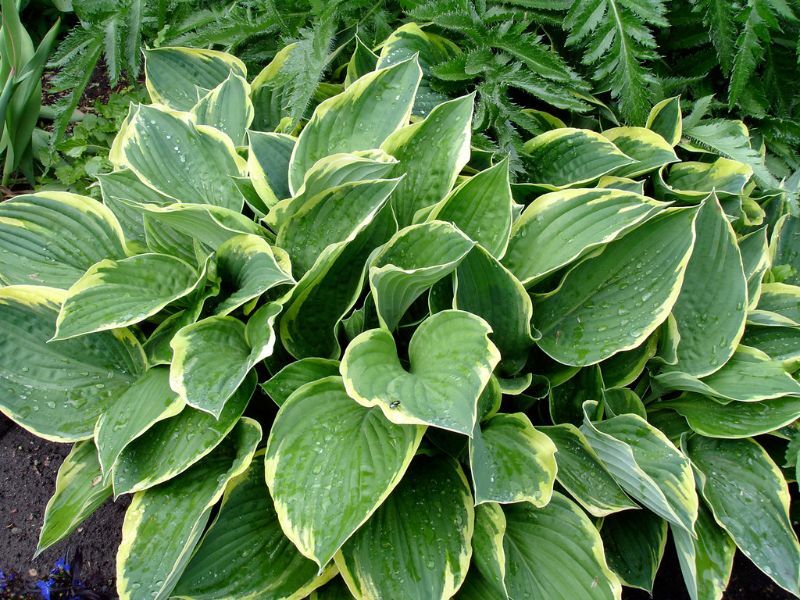
The unsung heroes of the shady garden are the hostas. Hostas come in 70 different species and over 3,000 different cultivars, so you’ll have enough to choose from. They are grown mostly for their lovely foliage, which adds intriguing texture and color to the garden throughout the season.
TYPES OF HostaS
Many kinds, including Hosta plantaginea, sometimes known as the August lily, have beautifully fragrant blooms. ‘Aphrodite,’ for example, is famed for its very fragrant white blossoms. Its double petals fragrant the evening air long after the other hostas’ blossoms have gone. My August lily is still in bud, despite the fact that August is finished. I’m hoping it will bloom soon!
Every year, I travel to the New Hampshire seacoast to see the plants in Prescott Park. They have a demonstration garden with numerous All-America Selections plants and other well-marked favorites, which allows me to see how they’re doing in this dry summer. It also features lovely formal gardens and a particular collection of hostas donated by Birchwood Farms’ Anna Kay.
Despite the fact that it has been so hot and dry this season, the majority of the hostas are in excellent condition. Color and leaf form differences have always piqued my interest. The names add to the amusement. What do you call a hosta with serrated edges and narrow leaves? ‘Hacksaw’ comes to mind. ‘Curly Fries,’ a plant with thin leaves and ruffled edges, was selected the 2016 Hosta of the Year.
‘Rich Uncle’ is a gold plant with thick, broad leaves that appear quilted. ‘Paradigm’ is textured in a similar way, but it’s gold with large green margins.
‘Titanic’ and ‘Blue Mammoth’ are two other large-leaved variants. The tiniest hostas, such as the 10 inch tall, practically white ‘Vanilla Cream’ and the 3 inch tall miniature hosta ‘Pandora’s Box,’ are on the other end of the scale.
With its pointed, heart-shaped leaves, ‘Eternal Flame’ has to be my favorite. It has a sense of movement about it.
Growing HostaS
Hostas are low-maintenance plants that endure for a long time. Your plants will be well-fed with an inch or two of compost sprinkled in the spring before the shoots sprout. They can shade out the majority of weeds, reducing upkeep to a bare minimum. Unfortunately, the same wet, rich soil and cool shade that bring out the best in a hosta also provide the perfect setting for slugs. Hostas with textured leaves are more resistant to slugs than those with smooth foliage.
Made in the Shade
Plant coleus, New Guinea impatiens, torenia, begonias, fuchsia, and sweet potato vine alongside other shade-loving plants like coleus, New Guinea impatiens, torenia, begonias, fuchsia, and sweet potato vine to prevent the “hosta ghetto” look in your shady garden.
Hostas are also ideal for planting alongside spring flowering bulbs since their late-emerging leaves will cover the tired-looking bulb foliage. Hostas make ideal foundation plants for a shady deck or porch where ice and snow would damage shrubs because they die back to the ground in the winter.
Is there a purple hosta?
Purple Sensation has rich purple flowers that are bordered and striped in pristine white, unlike classic hosta cultivars that have pale lavender or soft white flowers. Hostas are excellent ground coverings and attract helpful pollinators with their bell-shaped blossoms, making them the ideal companion for your spring-blooming bulbs.
What is the largest variety of hosta?
Hostas exist in a variety of forms and sizes, so you can grow them till they’re bigger than you if you really want to!
The largest widely available hostas are Empress Wu, Sum & Substance, and Gentle Giant Hostas, which normally grow to a spread of 5-6 wide. After five years, giant hostas reach their full size, though it may take longer if they don’t get enough nutrition and sunlight. Fortunately, there are a few methods for ensuring that your extra-large hosta variety grows to its full potential.
Continue reading to learn about the several types of huge hostas and how to nurture them into lovely, blooming perennials.
What are the most common hostas?
Here are 17 of the most well-known Hosta varieties.
- Frances Williams is the hostess. Growing in partial or full shade, this is one of the most popular Hostas.
Is there such a thing as a red hosta?
The beauty of red on a hosta is subtle and may not be visible at first glance, yet it catches your eye. As seen from above, this contrasting color is especially noticeable on scapes and seed pods. The easiest way to see red stemmed hosta is to grow it on an elevated planting bed.
Is there a pink hosta?
Question: I’ve read about pink hostas in periodicals, but I’ve only seen seeds for them from a few online seed suppliers. Could you elaborate on the situation?
Yes, there are fly-by-night seed companies claiming to sell hosta seeds with brilliant pink leaf, but this is not the case. It’s just a ruse. Most likely, the provider, who claims to supply mixed hosta seed, finds that extensively doctoring a photo of an ordinary hosta, something that is surely easy enough to accomplish with Photoshop or comparable software, to make it look brilliant pink, helps their seeds sell much better. The resulting viral photo is unmistakably eye-catching. In fact, the plant in the photo is so vibrant that it would be difficult to resist the urge to purchase seeds. Of course, the new plants will almost certainly all be plain green, though there is a chance of various shades of green and even some variegation… just not pink variegation.
Sometimes these kind of vendors simply take your money and disappear, but more often than not, they will send you a packet of seeds, but what kind of seeds? Hostas, perhaps, but anything from weeds to salad greens have emerged from packs of seeds from such dishonest providers in other comparable instances. They can keep the fraud going longer if they send you seeds of something. After all, it takes a few years for a hosta to reach its full size and color, proving that it isn’t pink at all.
When there are too many complaints, these types of vendors can close up shop and reopen elsewhere under a new name, then repeat the trick.
Do hostas do better in sun or shade?
A. Hostas are low-maintenance plants with a wide variety of types to pick from. Even though they are shade-tolerant, most of them will not survive in deep shadow. When given some sun, such as early sun with afternoon shade, many hostas become more strong and show their best colors. The sun is less bright in the morning than it is in the early afternoon. It will most likely be OK in the late afternoon sun.
Will hostas grow in total shade?
Let’s start with this one because it’s usually the first perennial that springs to mind when considering shady gardening. It’s for a good reason: hostas adore being in the shadow. They do, after all, prefer the cool of the afternoon sun, so your shaded setting will be ideal for them.
Hostas, on the other hand, require a steady supply of moisture to flush out their large, gorgeous canopy of foliage, so planting them in hard, dry clay beneath your trees is not ideal.
When planting hostas, amend the soil to provide them with nutrient-rich, loamy soil in which to spread their vast roots. Investing the time and effort will benefit your hostas far more than planting them in poor soil and having to fertilize them every month to compensate for the poor soil.
Hostas are hardy in zones 3-9. They grow well in all but the hottest sections of the country. They are, however, a favorite diet of deer, so if you have these four-legged friends in your garden, you might want to browse lower down this list for alternative shade-tolerant perennials.
Recommended Hostas:
- The dazzling blue and radiant gold edged leaves of ‘Autumn Frost,’ one of the best hostas for spring color, will light up your landscape and containers with exuberant color.
- ‘Empress Wu’This massive green hosta might be better named “Wow You,” since it will undoubtedly impress all your friends when it reaches its mature height of 3-4ft tall by 5-6ft broad in around five years.
- ‘Wheee!’
- With a name like this, what hosta could be more entertaining?
- You’ll want to reach out and touch its very ruffled foliage, and when you do, you’ll be impressed by its thick leaf material. The slugs, on the other hand, will be less impressed and will seek out simpler prey.
How often should you split hostas?
When your hostas become overcrowded and the center of a clump begins to die down, it’s time to divide them. To keep the plants at their healthiest, divide them every three to four years as a general rule. Slow-growing cultivars may require longer time to mature before being divided.
Do hostas get bigger every year?
Hostas are perennials, which means they will return year after year, bigger and better. In Zones 3 to 9, most hostas thrive. These adaptable shade plants generate a pile of leaves, but each variety has its own characteristics, such as plant size, leaf shape, and leaf color.
What pairs well with hostas?
Hostas are ideal for shade gardens, adding a hint of the tropics to otherwise barren areas of the yard. When selecting companion plants, aim for those that, like your hostas, prefer bright morning sun and cool afternoon shade. Hostas go well with astilbe, ferns, geraniums, and shady-friendly bulbs. Bleeding hearts and heuchera are two of our faves.
The delicate blossoms and elegant, arching branches of bleeding heart (dicentra) plants are the perfect contrast to bold, flashy, or variegated hosta plants. They also blossom early in the spring, enabling the flowers of your hostas to take center stage later in the summer.
Heuchera, often known as coral bells, is cultivated for its leaf, which may provide a splash of crimson, purple, or silver to your shade garden. Take a colorful bunch of flowers and turn it upside down: For a garden full of rich, vibrant leaves and light-colored flowers, combine red or purple heuchera with marbled or striped hosta species.
Learn how to plant, grow, and care for hostas from our experienced gardeners.