
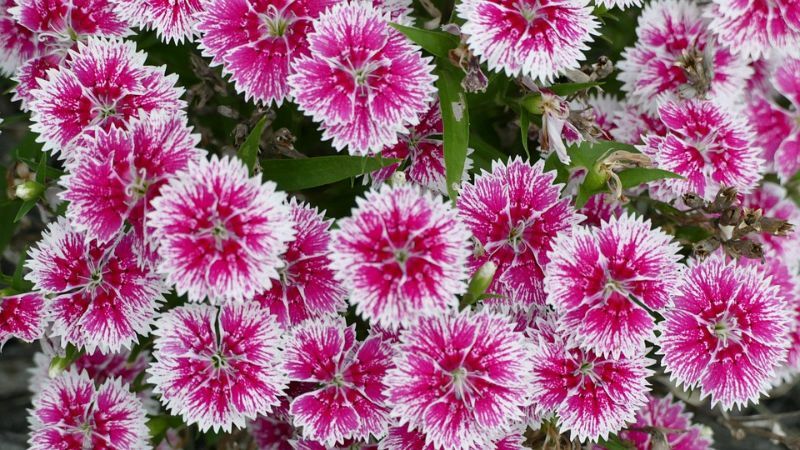
Annual dianthus tolerates minor frost well, but strong freezes can be damaging. Dianthus can be grown as a winter annual in milder climates.
Will dianthus come back every year?
These plants are perennials with a short life span, although they are commonly planted as annuals in Missouri and other colder climates. Annuals have a single growing season. Many Dianthus types, on the other hand, self-seed every year. That is to say, they re-grow each spring.
How do you take care of dianthus in the winter?
Plant hardiness varies depending on the species in the genus. The vast majority of Dianthus species grow well in the home garden and are ideal for planting and growing in USDA zones 3 to 9.
If you’re not sure whether the plants will make it through the winter, grow seedlings or take cuttings from the plant for the following season. During the growing season, most carnations reach a height of 24-inches, but sweet Williams only reaches 18-inches.
Pinks grow into 6- to 10-inch-high mounds, and alpine pinks are the smallest species in the genus, reaching only 4 to 6-inches in height. Dianthus alpinus is an excellent choice for rock gardens.
Short pinks that form mounds in the yard, as well as in window boxes and rockeries, create a captivating accent. Tall sweet Williams and carnations are best used in flowerbeds further back, where they can tower over other flowers and bushes, adding a layer of color to the area.
All Dianthus species thrive in locations of the garden that receive direct sunlight throughout the day. Gardeners who plant in places with afternoon shade may notice that their plants flower later and with less vigor.
Dianthus prefers well-drained soil since it doesn’t like getting its “feet wet,” and overly saturated soil can lead to disease and root rot. Gardeners should also make sure the plant gets enough airflow through the leaves and flowers to keep disease like white powdery mildew and rust at bay.
Work some rich compost into the soil in the flowerbed before planting your Dianthus, loosening it down to a depth of 12-inches and working it in thoroughly. When spring arrives, add another 1-inch top-dressing around the base of the plant to drive additional nutrients into the soil to help the plant with the flowering period.
Gardeners should water their new Dianthus plants at least once a week, allowing the soil to dry between waterings. Fertilize your Dianthus using a 20-10-20 ratio all-purpose liquid plant fertilizer, or a slow-release granular fertilizer around the base of the plant in late spring.
Gardeners must ensure that dead flowers are snipped or pinched off to prevent seed formation and encourage a second round of blooming before the end of the growth season, and that flower stems are trimmed back to the ground after the growing season has ended.
Place a 4-inch layer of mulch around the base of your Dianthus before the first frosts reach the earth, then remove the mulch after the last frosts pass, allowing the plant to begin the growing season.
How cold can dianthus survive?
Whether you have perennial or annual dianthus will determine this. Perennial dianthus is very cold hardy, ranging from -20 to -30 degrees Fahrenheit depending on cultivar. The leaves of perennial dianthus are silvery gray in tone and resemble grass blades. The leaves of the annual dianthus are dark green and flat. Annual dianthus is only hardy to about 30 degrees Fahrenheit. Many people, however, believe it is perennial. It isn’t the case. The reason they get plants again the following year is because they reseed, not because they come back from the roots, as perennials do. If planted in a window box or pot, a plant that is normally cold hardy to zone 0 (zone 7) must be hardy to zone 6. Your first line of defense against cold damage is water. You could also use a sheet, burlap, or another cloth instead of plastic. At Walmart, every annual product has a UPC that is highlighted in red. A UPC was outlined in purole on every perennial product. Whether at Walmart, Lowe’s, or Depot, all plant tags should clearly state “Annual” or “Perennial.” If it doesn’t, it may have fallen out; examine other pots in the vicinity of the one you wish to buy. If none of them have it, the tagging process at the supplier may have been overlooked. The UPC also includes the names of all suppliers. If your plant doesn’t have a tag, you can call the supplier with a full description and they should be able to tell you if it’s an annual or perennial.
Does dianthus live through the winter?
Except for China pinks, most dianthus can withstand sub-zero temperatures. You may still stimulate the best flowering by shielding the plants from drying winds and cooler temperatures in the winter. You should also stop fertilizing and water sparingly if freezing conditions are expected.
Do you have to deadhead perennial dianthus?
- To produce the most amount of flowers throughout the year, the plant will require full sun. It’s possible that the plant won’t produce as many blooms if it doesn’t get enough sunlight (if any at all).
- Deadheading annual dianthus is extremely crucial to keep the plant from generating seeds and spreading. Do not deadhead if you want to collect seeds to develop more plants or if you want the plant to spread spontaneously in your garden.
- Using rubbing alcohol, sterilize the shears or scissor. This reduces the danger of disease transmission from plant to plant.
- You may decide to trim the blooms before they become sad-looking. That’s fine, and you’ll be able to appreciate the cut flowers in an arrangement!
Do I cut back dianthus in the fall?
When the dianthus plants start to die back naturally in the fall, prune them back. Remove the foliage from each plant and cut it back to within 1 to 2 inches of the earth.
Is Firewitch dianthus a perennial?
With highly fragrant rose-pink flowers and gorgeous gray-blue evergreen foliage, Dianthus Firewitch is a wonderful Garden Pink. The Perennial Plant Association (PPA) had its annual meeting in 2005. Perennial plant that is drought resistant or tolerant (xeric).
Is dianthus annual or perennial?
Dianthus are plants with feathery silver-green or blue-gray leaves that form a tight mound or mat and can be perennial, annual, or biennial. Dianthus flowers range in height from two inches to two feet above the foliage, leaning a bit lazily toward the light. The blossoms are normally only about an inch across and have a ruffled edge that appears like it was trimmed with pinking shears, yet vigorous plants produce dozens of stunning flowers at once. Snow white, blush pink, brilliant magenta, or bicolored dianthus blooms with a flamboyant contrasting center or picotee edge are all possibilities. The delicate blue of ‘Diana’s Blueberry Hybrid’ is beautiful.