
Special scissors with saw-toothed blades are employed because woven material frays when cut. Fraying is prevented by the zig-zag cut, which limits the length of each thread.
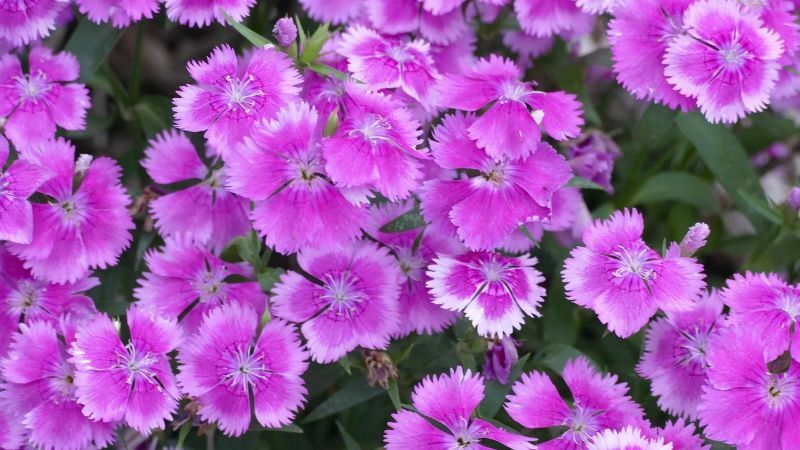
These “pinking scissors” are called after the pink plant of the Dianthus genus, not the color pink. The Dianthus petals’ ragged edges appear to have been trimmed with pinking shears.
The delicate red color known as pink may have come from one of the most familiar colors of garden pinks, just as lilac became synonymous with a light purple color despite the fact that lilacs exist in a variety of colors such as white or deep red.
Carnations (Dianthus caryophyllus) and Sweet William are examples of annuals, biennials, and perennials of the Dianthus genus (Dianthus barbatus). The majority of carnations are small, usually just 10 to 20 inches tall, while some can grow to be three feet tall.
Pinks (Dianthus plumarius) are easy to grow and resistant to deer. The fragrant blossoms are available in a variety of colors and make great cut flowers. Start Pinks (Dianthus) seeds inside six to eight weeks before your last frost date for the earliest flowering. They normally blossom the first year after being started inside.
Once the earth has warmed up and all danger of frost has passed, you can put Pinks seeds straight in the garden. Pinks will most likely not flower till the following year if planted immediately in the garden. In full daylight, sow the seeds one-eighth-inch deep in light, well-drained soil. They thrive in rich, slightly alkaline soil with a pH of 6.75. Add crushed dolomitic limestone to your soil if the pH is below 7.0. Add wood ashes to your soil to lower the pH if it’s too acidic.
Pinks can also be propagated by taking cuttings or dividing existing clumps.
Softwood tip cuttings should be taken in the spring or early summer. Plant the cuttings in flats or pots after coating them with rooting hormone. Keep your seedlings damp but not waterlogged, and by fall, they should be fully rooted and hardy enough to plant in the garden.
Pink clumps that are older can be separated and replanted. Dividing old clumps rejuvenates the plants already present. It’s simple to divide them in the early spring, when they’re just starting to sprout. Simply dig up the entire clump, roots and all, and pull it apart gently with your hands. If the clumps are too large or strong, cut into the heart of the clump using two gardening forks, then slowly peel the plant apart. Each piece should have roots and be able to be replanted right away. Dividing your Pinks every three to four years is a smart idea. Watering once a week is sufficient unless the soil is really dry.
Pinks have a crown of leaves at the top of the root structure, therefore never bury or mulch any portion of the stems or crown to prevent rot.
Remove all wilted flowers as they die to maintain blooms coming throughout the season. You can allow some of the flowers go to seed to maximize next year’s blooms because pinks commonly reseed themselves.
Cut the plants back to just an inch or two above the soil line after the first killing frost in the autumn. Pinks work nicely in pots, as well as in the front of mixed borders, as a cutting garden, and in cottage gardens.
Steep the nutmeg-scented blooms in wine, then coat them in sugar to use as cake decorations or toss them in salads. Pinks are one of the hidden ingredients of Chartreuse, a French liqueur.
Pink is a flower, a hue, and a mood, so much so that a band called Tea Set went on to sell over 250 million records and influence David Bowie, Queen, Phish, Radiohead, and Yes, but only after changing their name.
Pink Floyd was formed by combining the names of blues performers Pink Anderson and Floyd Council. Gardeners who enjoy music were ecstatic about this.
What is eating my dianthus?
Dianthus plants, as well as other host plants such as dahlias, lilies, petunias, and sweet peas, are attacked by brown garden snails. Slimy, slithering bodies are covered with a spherical shell with spiral bands on these parasites. When grown, the shells turn a chestnut-brown color with yellow mottling and measure around 1 inch in diameter. These garden pests are most active at night, but they will occasionally come out during the day to feed.
What flowers will deer Absolutely not eat?
Let’s be honest: there are no plants that are completely deer-proof. Deer have been known to consume practically anything if food is scarce. Deer will be most active from October to February, when they will be browsing the most.
However, there are several plants that are unappealing to deer. As a result, we want to develop plants that aren’t the deer’s first pick.
It’s worth noting that “In the first few weeks following planting, when their leaf tissue is extremely nitrogen-rich, “resistant” types can be vulnerable. If you have a lot of deer in your yard, we recommend spraying new plants with a deer repellent 3 to 4 weeks after planting to keep them from getting nibbled and harmed. Even if they are devoured, the plants should survive as long as their root systems are not harmed.
Deer-resistant plants have been identified through research and can be designated “Deer-repellent.” Take a look at the list below.
Which Plants Do Deer Like to Eat?
Some plants are referred to as “deer candy.” We surely don’t want to be squandering our hard-earned cash on a deer smorgasbord.
- According to University of Rhode Island researchers who researched white-tailed deer damage to nurseries, animals have a special liking for hostas, daylilies, and English ivy.
Which Plants Do Deer Dislike?
- Poisonous plants are avoided by deer, which is understandable. Deer avoid daffodils, foxgloves, and poppies because they are harmful to them.
- Deer also have a great aversion to fragrant plants with strong odors. Deer dislike herbs like sages, decorative salvias, and lavender, as well as flowers like peonies and bearded irises.
- Would you like to eat a spiky plant? Deer, on the other hand, don’t do it (unless they’re desperate). Plants like lamb’s ear aren’t on their list of favorites.
Deer-Resistant Plants for Shade
- Bleeding hearts are one of our favorite deer-resistant perennials (Lamprocapnos spectabilis, aka Dicentra spectabilis).
- Astilbe is a deer-resistant plant that thrives in the shade. The combination of Astilbe ‘Bridal Veil,’ ‘Visions,’ and ‘Fanal’ is lovely.
Deer-Resistant Plants for Sun
- The butterfly-friendly Coreopsis verticillata ‘Zagreb’ blooms from May to September and attracts butterflies but not deer.
- Blazing Star (Liatris spicata ‘Kobold’) is another sun-loving perennial that isn’t a favorite of the deer.
- Echinacea purpurea is a pollinator magnet and one of our favorite native flowers.
- Finally, the popular Leucanthemum x superbum ‘Becky’ is a deer-resistant variant of Shasta Daisy.
List of Top Deer-Resistant Plants, Flowers, and Shrubs
Here’s a list of common plants that deer rarely or never harm. Remember that the first rule of deer-proofing is that there are no plants that are entirely deer-proof.
Do dianthus plants come back every year?
These plants are perennials with a short life span, although they are commonly planted as annuals in Missouri and other colder climates. Annuals have a single growing season. Many Dianthus types, on the other hand, self-seed every year. That is to say, they re-grow each spring.
What animals eat dianthus?
Over 27,000 cultivar names have been recorded in the Dianthus genus. Annuals, biennials, and evergreen perennials are all grown.
Flowers are fragrant, 5-parted, pink-lilac, pink-purple, or white, and have picotee borders. The term ‘pinks’ refers to the fringed or ruffled border that appears to have been trimmed with ‘pinking shears’ rather than the color.
Dianthus thrives in full sun, although it can also thrive in partial shade. To avoid root rot and fungal diseases, you’ll need well-drained soil and excellent air circulation. Dianthus grows in a variety of soil conditions, preferring neutral to slightly alkaline soils but tolerating mild acidity.
When cultivated organically, the petals of Dianthus flowers are edible and are frequently crystallized with sugar and used to decorate desserts. The leaves, on the other hand, might induce mild gastrointestinal upset and mild dermatitis if eaten or touched.
Do rabbits eat dianthus?
Rabbits are infamous garden destroyers, annihilating ob entire plot of vegetables in an instant, but vegetables aren’t the only thing rabbits eat. Flowers are also eaten by rabbits. According to New Mexico State University, rabbits will eat just about anything if they are hungry enough, including carnations (Dianthus caryophyllus), which may be deadly to rabbits.
What plants do deer hate the most?
Deer-Resistant Plants (24 of them)
- Marigold (French Marigold) (Tagetes) French marigolds are a favorite of gardeners globally since they come in a rainbow of vibrant hues and bloom for a long time.
How many years do dianthus last?
How long does dianthus last? Year after year, these plants will come back. Deadheading on a regular basis can help to promote this growth. The plant’s blossoms, on the other hand, usually only survive 8 weeks.
Do deer like geraniums?
The last thing you want to deal with after painstakingly and carefully developing a geranium garden is a deer invasion destroying all of your hard work. Deer are opportunistic mammals who will eat anything they come upon, including grass, shrubs, and practically any sort of plant. Continue reading if you’re concerned about deer encroaching on your flower beds and want to learn how to avoid this from occurring to you.
Geraniums aren’t a deer’s favorite flower, but they will consume them in a variety of situations. Deer are usually deterred by the strong scent and slightly fuzzy texture, although this is not always the case. Your geraniums may become a dinner item if food is scarce or if they are surrounded by plant life that deer find interesting. A variety of approaches can be used to prevent this from happening.
I’ll show you how to effectively save your geraniums from deer in this quick guide to deer and geraniums. You’ll also discover what other pests enjoy these blooms and how to keep them away before all of your hard work is eaten up.