
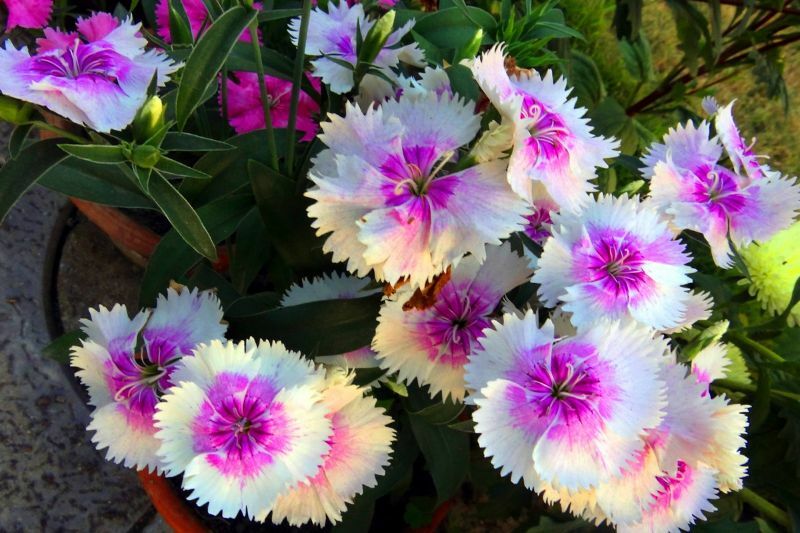
Pinks can be grown in full sun, medium shade, or any location with at least 6 hours of sunlight.
Where does dianthus grow best?
Pinks can be grown in full sun, medium shade, or any location with at least 6 hours of sunlight. The plants require alkaline soil that is rich and well-drained. When planting dianthus, wait until the threat of frost has gone and plant them at the same level as they were in the pots, with 12 to 18 inches between them (30-46 cm.)
Do dianthus come back every year?
Pinks should be grown in full sun in well-drained compost. To stimulate a second flush of blossoms, cut back after flowering and feed with a liquid tomato feed. In the autumn, reshape the plant.
Dianthus are short-lived plants that get woody at the base and seem straggly after a few years. However, cuttings may be easily propagated, allowing you to grow new plants every year.
Wait until the buds have somewhat opened before picking pinks as a cut flower; if you pick them while the buds are closed, the aroma won’t be as intense. In a cool room, they can last for a number of weeks.
Types of dianthus:
The majority of plants are perennial, however others are biennial or annual. Pink perennials are evergreen or semi-evergreen perennials. The common name comes from the frilly edges of the petals, which resemble pinking shears when cut. Sweet William is a perennial that is usually grown as a biennial or annual. Florists love carnations because of its long stems and long bloom duration.
Color and characteristics:
Flowers with frilly petals are solitary, semi-double, or double. They’re available in almost every color except blue, as well as patterned bicolors. The foliage is strappy and grass-like, with green, blue-green, or silver-green hues.
Toxicity:
Some people may have slight skin irritation from Dianthus foliage, which normally lasts only a few minutes. If swallowed, the plants might be somewhat hazardous to pets.
Will dianthus bloom all summer?
Drought-tolerant dianthus plants are ideal for sunny places near the edge of a flower border or a sidewalk. The plants freely take up residence in the fissures of a rock wall, where their roots can remain cold. Pinks stretch out in small flower pots to form a lovely spectacle. They thrive in the cool spring and fall conditions, but they are remarkably flexible. They endure heat and thrive in areas with excessive rainfall and humidity as long as they are planted in well-drained soil. Dianthus blooms bloom profusely in early spring and summer, but if you clip the blossoms off as they fade, many dianthus will rebloom later in the gardening season. Hedge shears will suffice, leaving a tufty mound of greenery behind. Mulch away from your Dianthus as much as possible.
Should dianthus be cut back?
Dianthus Pruning Some mounding dianthus plants should be pruned back to help keep their structure and encourage healthy branching. During the summer growing season, any excessive or leggy stems growing from the plant can be trimmed back.
Can dianthus be divided?
Dianthus plants that have reached maturity can be easily divided. Early spring is the optimum time to do this because the plant will be actively developing but not producing blossoms. If you wait until after the plants have blossomed for the first time, you can deadhead them so that the energy isn’t squandered on flower production and can be used to create new root systems following transplanting. Plants should not be divided late in the growth season because they will not have enough time to create new roots before going dormant for the winter. The optimum time to divide the plants is in the morning, when the roots are more hydrated and less prone to injury.
A day or two before chopping the plant up, give it plenty of water. So the plant doesn’t stay out of the earth for too long, prepare the new spot ahead of time. Allow for at least 12 square inches of growing space for the new plant. To avoid the transmission of bacteria, use clean tools. Dianthus has a robust root structure that can withstand a lot of abuse. Dig at least 6 inches beneath the plant and try to get as much of the root ball as you can. Cut the plant into new plants of equal size, and place the newly generated root balls in the holes that have already been prepared. For the first month, water the young plants at least once a week to aid in their establishment.
Is dianthus poisonous to dogs?
Carnation poisoning symptoms differ from person to person. Among the signs and symptoms are:
The carnation is a member of the Caryophyllaceae family and the genus Dianthus. There are many different kinds of carnation, but when consumed, they all cause gastrointestinal discomfort in dogs. Pinks, sweet William, and wild carnation are all common names for the carnation. The most common carnation species seen in gardens is Dianthus caryophyllus.
When can I plant dianthus outside?
Pinks are resilient, but they thrive when planted in the spring. Before you plant them, make sure they’ve gotten used to the outside temps. Plant in direct sunlight.