
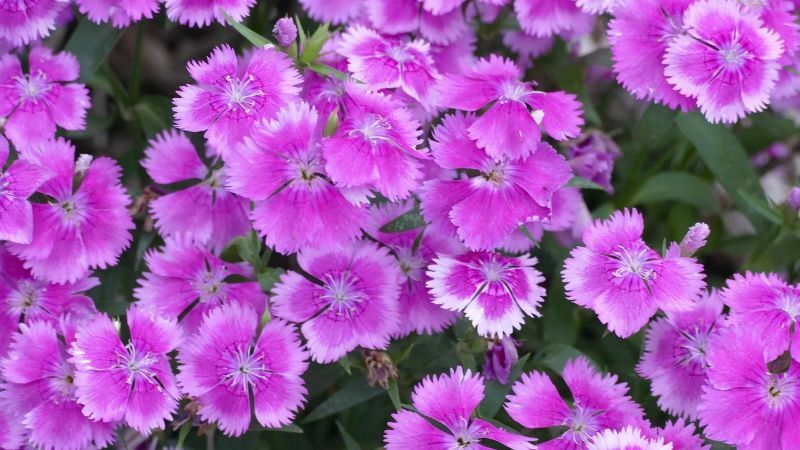
Pinks are the blooms of the Dianthus genus (Dianthus spp.). They are members of the carnation family and are distinguished by the spicy scent that their blooms emanate. Dianthus plants are hardy annuals, biennials, and perennials that are commonly used in borders and potted displays. A simple guide on how to grow dianthus illustrates the flowering plant’s ease of maintenance and flexibility.
What is dianthus used for?
The normal dianthus plant has gray-green leaves and green stems and grows to a height of 8-12 inches. It has a delicate, pleasant odor and blooms with either single or double flowers in a variety of colors, including red, white, yellow, and pink. It thrives in temperate climates, but it may also thrive in warm climates with enough of sunlight and well-drained soils. Dianthus is commonly used as an attractive plant in gardens and landscapes in the United States. It does, however, have a wide range of medical applications. Herbal treatments are made from the stems.
Anthochanin and many types of saponins are among the chemical substances found in Dianthus.
According to studies, dianthus chinensis can be used as a short-term diuretic.
The effect of dianthus extracts on uterine contractions is dose-dependent, meaning that the more dianthus a person consumes, the longer and more severe the uterine contractions become.
Dianthus is bitter and frigid in traditional Chinese medicine, and it is related with the Bladder, Heart, and Small Intestine meridians.
It encourages urine, dispels blood stasis, and removes wet heat from the bladder.
How much dianthus should I take?
Dianthus is usually taken as a decoction, tablet, or powder at a dose of 3-10 grams per day. Some doctors advise taking a slightly higher amount (6-12 grams).
What forms of dianthust are available?
Dianthus comes in tablet, powder, and decoction form. Concentrated dianthus extracts are also available in some herbal stores. Dianthus seeds can be purchased and grown in a garden at some nurseries, however they should only be used for decorative purposes.
What can happen if I take too much dianthus?Are there any interactions I should be aware of?What precautions should I take?
Long-term uterine contractions can be caused by large dosages of dianthus. Women who are pregnant or have recently given birth should avoid dianthus since it can induce uterine contractions. There are no documented medication interactions with dianthus as of this writing. However, before taking dianthus or any other herbal treatment or nutritional supplement, please consult with a professional health care provider.
- Chinese Materia Medica Editorial Committee China’s State Drug Administration. Shanghai Science and Technology Press, 1998, Chinese Materia Medica.
- 1997 Flower Seed Trials, Ewart LC. Thompson and Morgan, Michigan State University, 1997.
What is the common name for dianthus?
Dianthus is a flowering plant genus that includes annuals, evergreen perennials, and subshrubs with slender, generally silvery-grey leaves and spectacular blooms with notched petals. Carnation (Dianthus caryophyllus), Pink (Dianthus plumarius and related species), and Sweet William are some of the common names (Dianthus barbatus). The flowers of most Dianthus types are fragrant and come in pink, red, or white hues. There are so many different types of Dianthus that there is bound to be one for your garden. Deer resistant, proliferating ready, and fantastic for cut flowers, there is bound to be one for your garden.
Do dianthus plants come back every year?
These plants are perennials with a short life span, although they are commonly planted as annuals in Missouri and other colder climates. Annuals have a single growing season. Many Dianthus types, on the other hand, self-seed every year. That is to say, they re-grow each spring.
How do you use dianthus?
Flowers from the Dianthus genus are edible and frequently used in cuisine. Salads, sandwiches, and pies can all benefit from their fresh petals (petals should be removed from the calyx and their bitter white base should be removed). The essential oil extracted from flowers is widely used and enjoyed in perfumery, and it is credited with a variety of therapeutic effects. The dried flower heads are used to manufacture fragrant sachets, macerated oil, and other cosmetics.
Can u eat dianthus?
The flavor of dahlia can range from water chestnut to spicy apple to carrot, depending on the environment and growing conditions. One thing is certain: a dahlia-enhanced dish is an Instagram-worthy lunch. Salads with this sunflower relative are particularly attractive. You may also use the flowers to adorn your favorite dish or to float them in a drink.
Dianthus
Edible dianthus can be used to dress up your next recipe. Dianthus, sometimes known as pinks or carnations, has a clove-like flavor. The blossoms are versatile and can be soaked in wine, sugar, or used to decorate delicacies. Ice cream, sorbet, fruit salad, and even seafood and stir-fries will benefit from the addition of dianthus. Scatter the petals in drinks, salads, or soups for a colorful garnish.
Is Dianthus a ground cover?
Dianthus gratianopolitanus has lovely gray-green evergreen leaves and incredibly stunning, frequently fragrant blooms that cover the plant in a stunning display of color for a long time. It makes an excellent groundcover, especially on dry slopes.
Are Dianthus and sweet william the same?
Sweet William (Dianthus barbatus) is another name for the dianthus plant, which has a cinnamon or clove scent. The plants are tiny, growing to a height of 6 to 18 inches (15-46 cm). Pink, salmon, red, and white are the most common colors in Dianthus blooms. On thick stems, the foliage is thin and sparingly scattered.
Until 1971, when a breeder discovered how to develop forms that did not set seed and hence had a longer bloom time, Dianthus had a limited flowering season. Modern kinds bloom from May to October on average.
Are Dianthus safe for dogs?
Carnation poisoning symptoms differ from person to person. Among the signs and symptoms are:
The carnation is a member of the Caryophyllaceae family and the genus Dianthus. There are many different kinds of carnation, but when consumed, they all cause gastrointestinal discomfort in dogs. Pinks, sweet William, and wild carnation are all common names for the carnation. The most common carnation species seen in gardens is Dianthus caryophyllus.
Types:
The majority of plants are perennial, however others are biennial or annual. Pink perennials are evergreen or semi-evergreen perennials. The common name comes from the frilly edges of the petals, which resemble pinking shears when cut. Sweet William is a perennial that is usually grown as a biennial or annual. Florists love carnations (Dianthus caryophyllus) because of their long stems and long bloom time.
Color and characteristics:
Flowers with frilly petals are solitary, semi-double, or double. They’re available in almost every color except blue, as well as patterned bicolors. The foliage is strappy and grass-like, with green, blue-green, or silver-green hues.
Toxicity:
Some people may have slight skin irritation from Dianthus foliage, which normally lasts only a few minutes. If swallowed, the plants might be somewhat hazardous to pets.