
First and foremost, safety! When working with this plant, use gloves because it releases a deadly sap! Look for a container with a diameter of 1 to 2 inches (2.5-5 cm) larger than your previous one. To give the desert rose the dry roots it wants, make sure the container you choose has sufficient drainage.
Thick-walled, bowl-shaped containers are recommended since they not only allow the roots to fan out but also have a shallowness to them, allowing the soil to dry more quickly. You can use any type of pot, including clay, ceramic, and plastic; however, clay pots may be a good choice because they absorb excess moisture from the soil and reduce the risk of root rot.
Use a cactus or succulent-specific potting mix or standard potting soil combined with equal parts perlite or sand to create a well-draining soil. If you’re repotting a desert rose, make sure the soil is completely dry before gently removing the plant from its container. If you prop the container on its side and try wiggling the plant loose with a tight grip on the plant’s base, the extraction may be easier.
If the container is pliable, such as plastic, gently squeeze the sides to assist coax the plant out. After that, spend some time scraping the old soil from around and between the roots while holding the plant by its base. Remove any unhealthy roots you find and apply a fungicide to the cuts.
It’s now time to relocate the facility to its new location. The ultimate goal with a desert rose is to have an exposed engorged caudex above the soil level, as this is the plant’s distinctive feature. A thick, swelling portion of the stem near the soil level is known as the caudex.
“Lifting” refers to the process of encouraging an above-ground bulbous caudex. However, you should wait until your plant is at least three years old before lifting and exposing the caudex. If your plant is of the appropriate age, you should position it an inch or two (2.5-5 cm) higher above the soil line than it was previously.
If you’re going to expose the caudex, keep in mind that the freshly exposed area is prone to sunburn, so gradually expose the plant to direct sunlight over several weeks. Place your plant in its new container, then backfill it with soil, spreading the roots out as you go. After repotting, don’t water the plant for a week or so to allow any damaged roots to heal properly, then gradually resume your regular watering schedule.
How do you plant a desert rose in a pot?
Follow these procedures to grow a desert rose in a pot: To increase drainage even more, place a shallow layer of pebbles or “crocks” in the pot’s base. Use only the best cactus and succulent potting soil. Place your desert rose in the pot so that the base of its caudex is at or just above the potting mix’s top.
Do desert rose like to be pot bound?
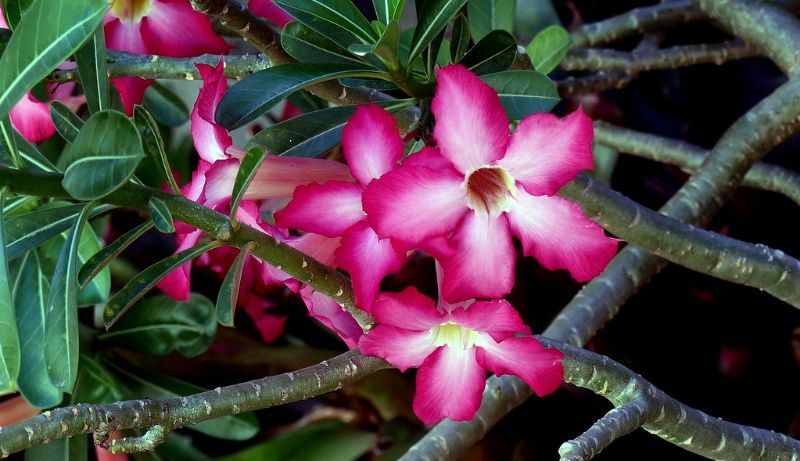
The desert rose produces huge, funnel-shaped pink, red, white, purple, yellow, orange, or bicolored flowers at the terminals of its thick, grayish branches in the spring and summer, depending on the cultivar, and glossy-green, oval leaves. Despite becoming dormant in the winter and suffering partial to entire leaf drop, some varieties flower year-round in reliably warm temperatures. Even if the desert rose has been pot bound in its container for years, blossoming will not be delayed.
What is the best potting mix for desert rose?
Yes, if you start with a high-quality potting mix, you’ll simply need to add elements that improve drainage and acidity levels to make the potting material acceptable for your Adenium.
You can use a combination of coarse sand, perlite, pumice, or vermiculite to improve the drainage of the soil mix.
Coconut coir or peat moss can be used to boost acidity while also helping to improve water retention. Peat moss has the ability to retain more water than the other two.
Follow these general recommendations to turn these elements into a viable soil mix for your Desert Roses:
It is crucial to note, however, that Adenium does not require actual soil. These plants thrive exceptionally well in a soilless environment.
Two Soilless Adenium Recipes
Make a base substrate of equal parts ground fir bark and peat moss for a mature plant (or coconut coir). This is a superb base for both tropical and desert cacti potting mixtures. Both of the recipes that follow rely heavily on this foundation.
Instructions
Combine all of the ingredients in a large mixing bowl. To make a smooth and easy-to-work-with mixture, break up any large lumps or clods.
Before using the potting substrate, soak it completely. Allow for at least an hour of soak time before draining any surplus water.
You should be able to squeeze moisture out of the mixture, but it should not feel moist.
How often do you water desert rose?
Depending on how dry your climate is, they should be watered 2 or 3 times a week. Dunking healthy plants in a container of spring water or old tap water is a good idea. I frequently use aquarium water because it is chlorine-free and has a decent amount of nutrients. Make careful to shake out any extra water from your plants, since any water left in the plant’s base can cause it to decay.
Tillandsias need a lot of air movement, especially shortly after they’ve been watered. The glass globes don’t often allow for a lot of air movement. They also have a tendency to collect water that has drained from the plant after it has been irrigated. This, too, can lead to the plant’s demise.
If your air plant appears to be dry, soak it for 30-60 minutes in a jar of water. Remember to shake off the excess water after soaking.
Make sure your plant receives plenty of bright, filtered sunshine. Because glass magnifies the effects of the sun, it may require less sunlight if it’s in a glass globe.
Why are the leaves falling off my desert rose?
Because the desert rose requires more water during the months when it is actively growing, if it does not receive adequate hydration, it will drop all of its leaves and return to dormancy. Overwatering, on the other hand, can lead to root rot. Grow your desert rose on sandy, fast-draining soil to avoid either problem. Water it whenever the soil is dry two inches below the surface during the growing season.
Is Epsom salt good for desert roses?
Epsom salts are highly recommended by rose producers in particular. It not only makes the foliage greener and lusher, but it also generates more canes and roses, according to them. To apply Epsom salt to existing rose plants, either mix 1/2 cup of the salts into the soil surrounding the bush and water well, or dissolve 1/2 cup of the salts in water and use to moisten the soil around the rose bush. This is best done in the spring, when the buds are just beginning to open.
Can a desert rose grow indoors?
Desert rose (Adenium obesum), a native of eastern and southwestern Africa and the Arabian Peninsula, with a woody, bulging stem called a caudex that helps it store moisture during dry periods. It features large, brilliant red, pink, and coral blooms that bloom throughout the wet seasons in its native climate. Desert rose can be grown outside in USDA plant hardiness zones 11 to 12, or it can be grown indoors as a houseplant.
How do I know if my desert rose needs water?
In USDA zones 10 to 11, the desert rose has become a popular ornamental garden plant. The remainder of us in colder climates will have to grow Adenium indoors, giving the plant a break on the patio or deck during the summer. Plant care for desert roses can be tough and requires some understanding of the species’ life cycle.
For healthy plants with large crowns of brilliantly colored tubular blooms, follow these fundamental Adenium desert rose growing recommendations.
Adeniums are tropical succulent plants. They are distinguished from the rest of the class by the development of a caudex, or enlarged trunk. Succulent plants, whether they have leaves, stems, or roots, have some type of water storage mechanism. The trunk of a desert rose expands to preserve rainwater during droughts. Plant health is indicated by a thick trunk. A thin stem could signal that the plant needs more water.
The natural similarity of the desert rose plant to a bonsai plant, with a low stature when mature and a tidy canopy sitting atop the graded stem, is an interesting bit of desert rose plant information. Many gardeners seem to struggle with desert rose bushes, but they are actually rather simple to care for if you bear in mind Adenium’s water, temperature, and lighting requirements.
- Plant bug scales come in a variety of shapes and sizes. If you discover that your plant is infested with one of these pests, a treatment with neem oil insecticides should suffice.
- Adenium may also be harmed by oleander caterpillars. If you see caterpillars on your plant, take them off by hand (use gloves) and treat the plant as soon as possible with Bacillus thuringiensis (Bt). These caterpillars can quickly defoliate your plant, so don’t be alarmed if this happens. Once the caterpillars have been eradicated, the plant will immediately regrow fresh dark green leaves.
- Anthracnose, a fungal disease, is sometimes a concern for Adenium. Anthracnose is most likely the cause of tan lesions on your plant’s leaves, which later become yellow and fall off. Don’t become discouraged. This illness usually strikes in the early summer or autumn and goes away on its own. Reduce the amount of water you use and rake up the fallen leaves to get rid of the fungus spores. Your plant should make a full recovery.
A single specimen of one of these tough, long-lasting plants can provide a lifetime of gardening pleasure. They can be used in the landscape, in containers, as bonsai, grafted together, grafted with oleander, and even planted upside down to produce visually interesting forms and displays.
Long-lived Desert Rose is one of those plants that becomes a family member. These plants can survive and grow for decades in the wild and under optimal conditions.
The care that these fascinating plants require provides a touchstone for the change from season to season in regions with cooler climates.
The plant blooms in the spring, relaxes in the summer heat, blooms again in the autumn, and hibernates in the winter. You’ll grow to consider of this unique botanical specimen as a dear friend as you care for and appreciate it over the seasons and years.