
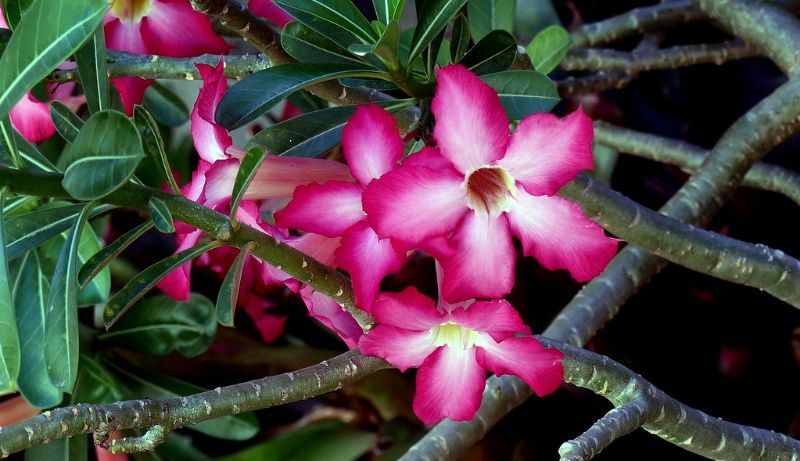
From plucking fresh flowers to getting pollen in, there are seven processes. Later on, we’ll look at another way. Let’s get started with step one.
Step 1: Pick a Newly Bloomed Flower
The higher the possibility of fertilization, the fresher the flower. Some people even believe that pollination a flower that is only a day or two old is optimal.
Flowers that have only been in bloom for a few hours may not be completely viable. Allow the pollen to grow for a few days indoors before collecting it.
Step 2: Tear the Flower
They’ve done a nice job cutting the flower, but you can tear it however you want. You’ll see some hairy pink stripes and a white cone within after breaking it apart.
Step 3: Remove the Anther Cone
By ripping down the pink, hairy strips, we may now remove one component of the cone. The pollen and stigma will then be visible inside the flower.
That small white grain is pollen. It’s quite soft, like tiny potato chunks. The stigma can be seen below. The receptive surface is located directly beneath the stigma. This is where we’ll be transmitting our tiny pollen grains.
It’s worth noting that pollen isn’t found in every flower. Some may have pollen within, while others may be empty. Pollen can also differ in size.
Step 4: Collect the Pollen
Lift the pollen using a wet-tip toothpick and gather it. This is the most difficult element to see because it’s so small. The pollen is as follows:
Once you’ve gathered a significant amount of pollen, it’s time to move on to the step we’ve all been waiting for:
Step 5: Pollinating
To ensure that the pollen is evenly distributed on the receptive surface, swirl your toothpick around. This increases the likelihood of successful pollination.
After that, all you have to do is tape or rubber band the flower together. Make certain that no rain, snow, or sunlight can get inside. Plants should be placed in a shaded region. We may now start playing the waiting game.
You’ve just witnessed pollination among members of the same species. Instead of dropping the pollen inside the same bloom, you might carry it to a flower of a different species if you want to cross-pollinate. The procedure is much the same.
How do you breed a desert rose?
While cultivating a desert rose from seed is pretty simple, most gardeners have greater luck growing them from cuttings. They will not only start readily and rapidly from cuttings, but they will also maintain the actual nature of hybrid plants, as hybrids will revert if grown from seed. As a result, you might be asking yourself, “How can I grow a desert rose from cuttings?”
Take a clipping from the branch’s tip. Allow a day or two for the cutting to dry before wetting the end of the desert rose cutting and dipping it in rooting hormone. Place the cutting in a well-draining growing medium, such as perlite or sand and soil. Water the cuttings on a daily basis, making sure the water drains away from the soil. Mist the cuttings with a spray bottle on a daily basis.
It is possible to grow a desert rose from seed or cuttings. You can have your own desert rose plant for your home with a little patience.
Can adenium self pollinate?
To analyze the structure of a flower, cut it vertically in half after it has been open for 3 to 4 days (Fig.1). Remember to bring a nice magnifying glass with you! Look for the with a magnifier.
Pollen, gel cap, and receptive surface are the three most crucial structures to understand while hybridizing. Inside the flower’s cone, look for pollen-laden anthers. These are the structures that hold the pollen, which is described as “white to light yellow, gritty, and resembles microscopic fish eggs in masses.” Some Adenium generate a lot of pollen, whereas others yield none. The reason we use older flowers is that the anthers are better separated from the stylus, making the receptive surface easier to see. Pollen will be more ripe as well. Next, search the blossom for the gel cap. Just below the pollen is a whitish-looking gel cap (style head). It protects a part of the body known as the stigma. Its purpose is to prevent pollen from falling into the stigma. It, in a nutshell, prevents self-pollination. The receptive surface for pollen is behind the gel cap. The underside of the style head is what it is. Apart from the gel cap, there are two “fake” rudimentary stigmas atop the real one, which explains why the receptive area is so low in the style head. Adenium Handbook, G. Rowley, 1983. Self-pollination is a huge no-no for Mother Nature! In the Advanced Technique, we’ll return to another really ingenious usage of the “sticky gel.” A nail clipper, toothpicks, Scotch tape, and a nice head lamp to put light inside the flowers while leaving your hands free are all required.
1. Harvest pollen by picking blooms from your favorite plants. Using a toothpick with a wetted tip, pick up the pollen. Use a magnifier to make sure the pollen is on the tooth pick until you can see pollen (masses) with your naked eyes.
2. Cut the corolla (throat) of the receiving flower to 3/4″ or 1.5 cm and peel it backwards to open it.
3. Cut 1/2 or the entire anther (cone side) off to reveal the gel cap and responsive surface.
4. Gently touch the tip of the toothpick on the receiving flower’s receptive surface to deposit pollen.
5. Use adhesive tape to tape the bloom closed (Fig.3).
You’ve completed your task. Seedpods should appear in 7 to 11 days if all went correctly. Seed pods normally grow in pairs and resemble horns as they extend outwards from the base.
Do all desert roses produce seed pods?
Mature desert rose plants will produce seeds with a lot of patience and a little luck. These grow inside a seed pod that looks like a bean. The seeds are tiny and cling to fluffy pappus, similar to dandelions. The seeds from these plants might drift away with the wind when the pods burst open.
Gardeners who want to save seeds for propagation should leave the pods on the plants until they are fully mature. Instead of selecting the pods, wrap them in wire or place them in a net bag.
How long does a desert rose plant live?
The desert rose can live for more than 500 years. It has distinguishing qualities that allow it to last for decades. For example, its stem has a bloated base that continues to inflate over time and can grow up to two meters in diameter. The stem stores critical nutrients that the plant uses to nourish the other parts of the plant as the weather changes.
Measure the diameter of the stem to determine the age of a desert rose. Every millimeter symbolizes one year for this slow-growing plant. It’s a seasonal succulent that sheds its leaves when the season isn’t right. Surprisingly, the plant receives sufficient nutrients even when other plants begin to die due to extreme weather conditions.
How often should I water my desert rose?
Depending on how dry your climate is, they should be watered 2 or 3 times a week. Dunking healthy plants in a container of spring water or old tap water is a good idea. I frequently use aquarium water because it is chlorine-free and has a decent amount of nutrients. Make careful to shake out any extra water from your plants, since any water left in the plant’s base can cause it to decay.
Tillandsias need a lot of air movement, especially shortly after they’ve been watered. The glass globes don’t often allow for a lot of air movement. They also have a tendency to collect water that has drained from the plant after it has been irrigated. This, too, can lead to the plant’s demise.
If your air plant appears to be dry, soak it for 30-60 minutes in a jar of water. Remember to shake off the excess water after soaking.
Make sure your plant receives plenty of bright, filtered sunshine. Because glass magnifies the effects of the sun, it may require less sunlight if it’s in a glass globe.
How long does it take for a desert rose to bloom?
Depending on the culture circumstances, the desert rose will blossom seven to eight months after sowing. Make sure your plant gets at least six hours of sunlight each day and fertilize at least once a month during the spring and summer to increase blooming.
Do bees pollinate lemons?
Lemon tree pollination is accomplished outside by bees buzzing from blossom to flower, scooping up yellow pollen and transferring it to other flowers. However, if you want to keep your lemon tree indoors, you’ll have to hand-pollinate it. This is known as the pistil, and it houses the flower’s feminine components.
Is Epsom salt good for desert roses?
Epsom salts are highly recommended by rose producers in particular. It not only makes the foliage greener and lusher, but it also generates more canes and roses, according to them. To apply Epsom salt to existing rose plants, either mix 1/2 cup of the salts into the soil surrounding the bush and water well, or dissolve 1/2 cup of the salts in water and use to moisten the soil around the rose bush. This is best done in the spring, when the buds are just beginning to open.