
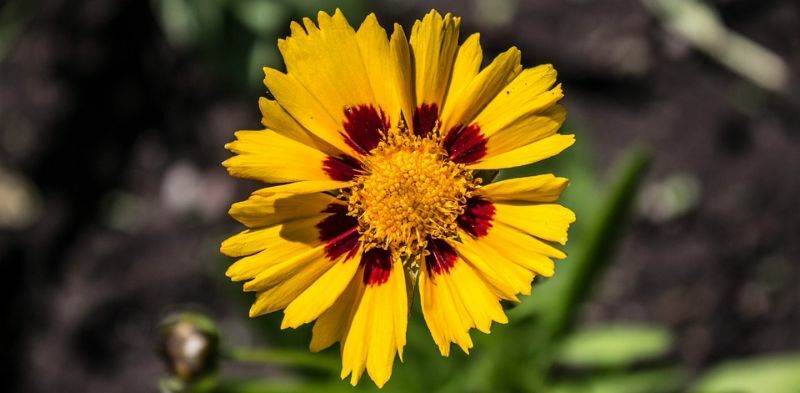
This is one of the most popular Coreopsis kinds, measuring 12 to 18 inches tall with gorgeous lemon-yellow blooms. Moonbeam Tickseed blooms for a long time, from early summer to late summer. This plant prefers well-drained soil and consistent hydration.
How long does it take for coreopsis to flower?
Early in the season, sow Coreopsis seeds and cover lightly with coarse or sandy soil. Keep the soil moist until they germinate, which can take anywhere from one to two weeks. The plants will be spaced around 12″ apart in the end. About 60 days after sowing, the plants will blossom.
What month does coreopsis bloom?
Coreopsis blooms in the early summer and then blooms intermittently until frost. After the first flowering, clip off the spent flower heads or just cut back the entire plant to encourage reblooming. Coreopsis grandiflora and coreopsis verticillata are both self-seeding and spread by rhizomes.
Does coreopsis bloom all year?
Coreopsis has only one flaw: it is short-lived and unreliable in terms of perenniality. Many gardeners lament the fact that it only lasts two or three years. Others have seen that some varieties self-seed all over the garden and grow up in unexpected locations. Despite these drawbacks, this perennial favorite remains popular and is regularly planted or replanted year after year.
In order to improve Coreopsis, famous plantsman Darryl Probst and others instituted a number of hybridization programs.
Plant trials, including a three-year trial undertaken at the Mt. Cuba Center botanical garden in Delaware between 2012 and 2014, show that these hybridization efforts have improved the species.
With so many highly hybridized selections on the market these days, it’s a good idea to take a step back and learn about Coreopsis kinds and species.
Coreopsis is a genus of roughly 100 annual and perennial plants belonging to the Asteraceae (aster or daisy) family.
They can either form clumps or spread by rhizomatous roots.
The majority of Coreopsis species are clump forming.
Unfortunately, these are usually short-lived, and several of the members of this group are best handled as annuals.
Rhizomatous species have a longer lifespan and are more dependable perennials.
The following are some of the clump-forming and rhizomatous Coreopsis species commonly found at garden centers around the Mid-Atlantic:
- Coreopsis auriculata (Lobed or Mouse-Eared Coreopsis) Coreopsis auriculata (Lobed or Mouse-Eared Coreopsis) Orange-yellow blooms and oval-shaped leaves characterize this rhizomatous species. When in bloom, it develops spreading clumps that grow 2 to 3 feet tall and spreads quickly by rhizomes and seeds. A dwarf cultivar, ‘Nana,’ is half the size and one among the best in the genus. ‘Jethro Tull’ and ‘Zamphir,’ two popular C. auriculata cultivars, with open-ended, fluted ray blooms.
- C. grandiflora (Large-flowered Coreopsis) This clump-forming plant blooms early in the season and then blooms again later in the season.
- Although it is not a true perennial, lasting only 2 or 3 years on average, it has a strong ability to self-seed and may appear as a pleasant surprise throughout your garden.
How do you care for Moonbeam coreopsis?
Care for Moonbeam Coreopsis
- Light. These perennials enjoy full sun, although in hotter climates, they will take partial shade.
- Water. Once established, this plant requires little water and is drought tolerant.
Does coreopsis bloom the first year?
My coreopsis didn’t flower from seed, so what went wrong? If sown early, ‘Early Sunrise’ will bloom from seed the first year; otherwise, coreopsis blooms the second year after sowing. In addition, the plant need full sun and a well-drained soil to thrive, and it should not be overfertilized.
Is it true that coreopsis attracts pollinators? Butterflies, in particular, are fond of coreopsis.
Is it necessary for me to deadhead coreopsis? Yes, deadheading will extend the bloom time of coreopsis.
Why is my coreopsis not blooming?
We chose one we know is native to your area and one of our favorites from the 27 species of the genus Coreopsis in our Native Plant Database because you didn’t identify which one you have. Examine Coreopsis lanceolata (lanceleaf tickseed) to see why your plant hasn’t blossomed. We need to know when you planted your coreopsis and whether it is in full light. Did you use a seed or a bedding plant to start your garden? Was it blooming when you bought it, if it was a bedding plant? When, if by seed, did that happen? This is not an exam, and you are not required to submit answers in order to receive a mark; instead, we are attempting to compare the conditions in which it is growing to the conditions in which it should bloom.
Okay, depending on whatever section of the country they are native to, different Coreopsis species bloom at different times. From February through July, a California native blooms. The one we picked to discuss blooms in the months of April, May, and June. According to what you say, it hasn’t bloomed this year at all. If it bloomed and you didn’t deadhead it to stimulate more blooming, it’s most likely done for the year. If it never blossomed, we can only assume it was started from seed last fall. The majority of perennials don’t consistently bloom until the second year after being planted from seed. If you bought a bedding plant from a nursery and it was in bloom when you got it, it could have had its blooms forced to make it more appealing for sale. The plant will have been grown in a greenhouse, pressed into bloom, then transferred to a retail location once this is completed. The blossoms usually perish as soon as you get it home and put it in the ground or a pot. Even the toughest plant will succumb to transplant shock in these conditions. Every ounce of energy that could be extracted from that plant has gone into those eye-catching blossoms. It will take a year to recover; it has very few roots and will require gentle, loving care, no fertilizer until it has begun to recover from the stress, but perhaps a little more shade from the midday sun and/or a little extra water.
According to the information in our Native Plant Database, this is a very hardy plant that can bloom in almost any sun exposure and grow in a variety of soils. It is not thought to be a perennial, but it will come back from seed. We’ve exhausted all possibilities for why your Coreopsis isn’t flowering or hasn’t bloomed. We suppose we would cut our losses and find something different for that space if you continue to have the same problem with the same plants. Just keep in mind that whatever the flowering period is, like as April to June, there is no magic potion that will make them blossom in your yard at any other time of year.
What can I plant with Moonbeam coreopsis?
The delicate, precisely cut leaves adds texture and contrast to the surrounding perennials. Coreopsis is a slow-growing perennial that can be utilized as a native planting on a sunny bank or in a traditional border. Echinacea or Campanula go well with Coreopsis Moonbeam. Tolerant to road salt.
How do you keep coreopsis blooming?
- By mixing Miracle-Gro Garden Soil for Flowers with the native soil in your garden bed, you can create a perfect habitat for plants to take root.
- Plants should be watered thoroughly at the time of planting and as needed during the season.
- Feed Miracle-Gro Shake ‘n Feed Rose & Bloom Plant Food to your plants for huge blooms and loads of color.
Should coreopsis be cut back?
After the summer growth season, trim back Coreopsis cultivated as a perennial. Reduce the plant’s height by one-third to one-half. According to the University of California Cooperative Extension, pruning should not reach into the older brown woody growth, as this could destroy the plant.
Will coreopsis bloom twice?
Plants in the coreopsis family grow slowly and should be planted in the spring after all dangers of frost have passed. Annual types begin flowering in early summer and continue to bloom throughout the fall, whilst perennial varieties bloom the second year after planting.