
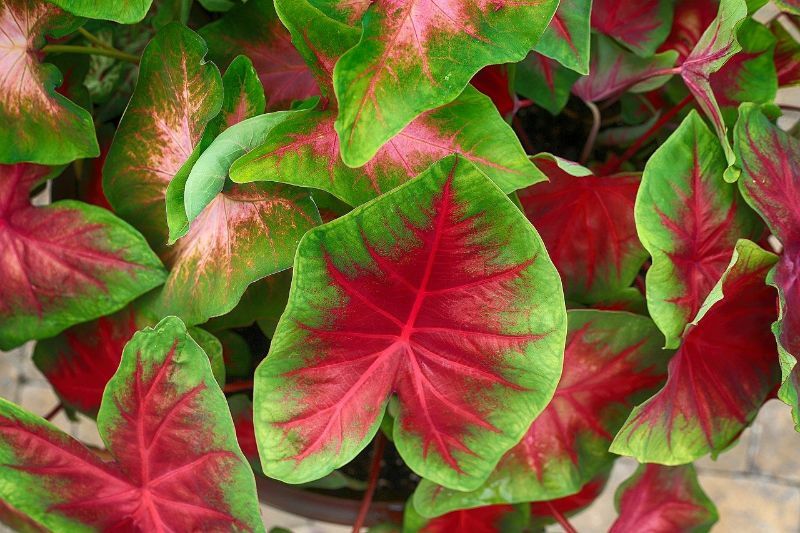
Caladiums are USDA zone 9 winter hardy, which means they should be able to survive the winter outside. Even in these places, caladiums should be mulched heavily with 3 inches (7.5 cm) of mulch in the winter to prevent them from dying in the cooler temps.
Winter maintenance for caladium bulbs in USDA zones 8 and lower is digging them out and bringing them inside to go dormant.
Can caladiums live indoors over winter?
Caladiums can technically be grown indoors, but it is a challenging task. During the winter months, they require a natural dormant phase, so it’s best to let them rest.
Do caladium come back every year?
Caladium plants (Caladium spp.) grow from bulbs and are hardy in USDA zones 9 and 10. The bulbs will return each year in warmer climates. Because cold weather can easily destroy the tubers, you can dig them up for the winter and transplant them in the spring.
How cold is too cold for caladium?
Caladiums can only thrive in warm weather and will die soon if temperatures dip below freezing. Caladiums should only be planted outside after all danger of frost has gone and the soil temperature has reached 70 degrees Fahrenheit. Caladiums can survive temperatures below 70 degrees Fahrenheit, but they will not grow as well or as large. They can withstand temperatures as low as 45 degrees Fahrenheit, but they thrive when the average daytime temperature is above 70 degrees Fahrenheit and the average nightly temperature is above 60 degrees Fahrenheit.
When should I overwinter caladiums?
It seems a shame that such a magnificent plant only produces color for one season. Fortunately, if you remember to dig out the tubers and bring them indoors to store for the winter, you can enjoy the same plants the following year.
I say remember because, just as you must wait until the ground is warm before planting them in the spring, you must also dig them up before the temperatures drop below 55 degrees in the fall.
This is something I’ve learned the hard way. I had a few wonderful clumps of caladiums that I knew I’d have to remove out of the ground as soon as possible in the fall.
I became preoccupied and forgot about them until the temperatures fell below 50 degrees for several weeks. When I went out to pull them up, I couldn’t find a single caladium…not a shriveled leaf…not a shriveled stem. There was no evidence just a plain area of ground.
If, unlike me, you remember the plants before the frost, you can save them using this method:
- Wait till the leaves begin to fall and turn yellow. Remove the entire plant.
- Remove the leaves and set the tubers in a pot filled with peat moss or sphagnum moss.
- If you have many varieties, label them and store them in a cool, dry place until spring.
One thing I discovered is that when gardening professionals advise that the lower limit for caladium temperatures is 50 degrees, they truly mean 50 degrees!
Caladium tubers are hardy in zones 9-12 and do not need to be dug up to survive the winter. Simply leave the tubers in the ground until the plants begin to develop again in the spring.
The tubers will overwinter and return to give you another spectacular exhibition next spring as long as the ground does not freeze.
Overwintering Caladiums in pots
Plants grown in containers can be brought indoors and overwintered straight in their pots. Watering and fertilizing should be avoided during the winter, when the plant is dormant.
Note from the admin: This piece about caladium plant care first published on the blog in December of 2012. I’ve updated the page with a lot of fresh photographs, maintenance tips, and a video for you to watch.
How do you keep caladiums alive in the winter?
Q: I’m trying to keep things as simple as possible, and caladiums are one of my favorite flowers. I put the bulbs in a planter in my basement last winter, but they rotted. Is there anything else I could try? Atlanta’s Megan Hart
A: You’re accurate, the corms most likely deteriorated due to rot. Caladiums are native to South America and are extremely sensitive to soil temperature and moisture while growing and storing. The easiest approach to keep them alive in a container is to cut the leaves shortly before the first frost and keep the pots warm all winter in an upstairs closet. In March, bring the pots outside, set them in a sunny window, and water them. The time it takes for new growth to emerge above the soil is five weeks. It should be warm enough to put them outside by then.
Do caladiums come back after winter?
Caladiums tolerate a lot of shade, and some cultivars even do well in full sun, but they grow best in part-shade to part-sun in organically rich soils that are kept equally moist.
Your caladiums should have produced nice-sized tubers by this time, as big as or bigger than the ones you planted, if you gave them the growing conditions they prefer this summer.
These tubers are worth conserving since they can be used to develop caladiums the following year, whether they are left in the ground or saved and replanted.
The tubers may have lost ground over the summer if the growing conditions were not optimal, especially if they were growing in dense, heavy shade or in dry conditions. They may also be too little to perform well next year if the growing conditions were not right. If this is the case, you may want to toss them out and replace them with new tubers next spring.
If the bed where the caladiums are planted is reasonably undisturbed and drains properly, you can just leave the tubers in the ground. This winter, keep the area mulched to protect the tubers in case of extreme cold. They will live and come back up next year because the earth here does not freeze.
The tubers may decompose in the cold, moist soil if the bed stays wet over the winter. It would be advisable to dig and store them in this situation. Heavy rains in December ruined a number of the tubers that had been left in the ground a few years ago. Many gardeners in the New Orleans area discovered that caladiums that had been dependably returning for years did not return the following spring.
The tubers should be raised and removed if you wish to replace the space with cool-season bedding plants like pansies. This will allow you to prepare the bed for the new bedding plants.
When the leaves turn yellow and most of the foliage looks “weary” and falls over, it’s time to dig caladiums.
Do not wait until the entire foliage has turned yellow or brown. The foliage will vanish before you know it, and you’ll have a hard time discovering the tubers. This increases the likelihood that you will accidently dig into and damage the tubers when digging them up, as well as the likelihood that you will miss some tubers and leave them behind.
Caladiums are commonly dug between late September and mid-October. Caladiums planted later in the season tend to stay longer in the landscape, according to my observations.
Lift the tubers with a shovel or a garden fork, being careful not to injure them. Leave the foliage on the tubers, shake and brush off the soil, and put them out to dry in a rain-free spot (such as a garage or under a carport). You can alternatively store them in a bucket or large pot, tubers down, to save space while they dry. Don’t cram too many of them in.
Allow the tubers to dry until the foliage appears to be tan and papery. This usually takes between 10 and 14 days. The foliage will readily detach from the tubers at that point, leaving a healed scar.
After that, the tubers can be cleaned in water. Brushing them off is sufficient unless there is a significant amount of soil sticking to them. If the tubers are washed, they should be air-dried for several days in a well-ventilated area until the moisture has evaporated from the surface.
They’re ready to store for the winter once they’re dried. Any tubers that look to be rotten or have soft patches should be discarded. Tubers that have been harmed accidently during digging can be rescued if they have healed well and feel substantial.
Fill an old nylon stocking, a mesh bag (such as an onion or crawfish sack), a paper bag, or a cardboard box with the healthy tubers. The container should be able to “breathe,” according to the concept. Do not keep the tubers in a plastic bag since they will decay.
Make sure the tubers are kept in an indoor setting with temperatures above 70 degrees. Occasionally inspect the tubers and discard those that show indications of decay or have shriveled up.
It’s a good idea to keep track of the different sorts of tubers you’re cultivating and keep them separate while drying and storing them. This will allow you to set groupings of individual colors where you want them to go next year in the landscape. It’s a good idea to write the name of the cultivar and the color of the tubers on the bags in which they’ll be stored. If you don’t know the cultivar name, at the very least label the tubers by color.
Caladiums produce small, weak tubers in poor growing conditions, particularly in areas of heavy shadow, and these tubers may not return well, whether left in the ground or dug and stored.
What do you do with caladiums in the winter?
You have two options at this point: leave the tubers in the ground or dig them up, store them, and replant them next year.
Caladiums tolerate a lot of shade, and some cultivars even do well in full sun, but they thrive in part-shade to part-sun in well-drained beds that are rich in organic matter and maintained evenly moist.
Your caladiums should have produced nice-sized tubers by this time if you gave them the growing conditions they prefer this summer (as big as or bigger than the ones you planted). These tubers can be left in the ground or preserved and transplanted the next year to grow caladiums.
You might just leave the tubers in the ground if the beds where the caladiums are planted would remain reasonably undisturbed through winter and drain nicely. Keep the area mulched to protect the tubers in the event of a particularly cold spell. They will live and come back up next year because the earth here does not freeze.
The tubers may rot if the bed stays damp over the winter, which is common in our rainy winters. In general, digging and storing caladium tubers over the winter has proven to be more reliable than leaving them in the ground. But don’t be afraid to give it a shot.
If you want to transplant the area with cool-season bedding plants like pansies, you’ll need to remove the tubers to make room for the new plants. Alternatively, excavate them if you simply want to make sure they’ll be safe over the winter.
When a number of leaves turn yellow and most of the foliage appears “weary” and falls down, caladiums should be dug. If you wait until all of the leaves has vanished, you may have difficulty locating the tubers. As a result, it’s more probable that you’ll harm the tubers or leave some behind.
What month do caladiums come back?
The more “eyes,” or growth points, a tuber has, the bigger it is. These tubers will develop into larger, fuller plants as they mature. Potato tubers are consumed for their carbohydrate energy source. Caladium tubers supply energy stores for tubers to go into winter hibernation and grow again in spring when the days lengthen and soil temperatures rise in the correct hardiness zones, just like potato tubers do when we consume them.
When should I bring my caladium inside?
The tubers need to rest for about five months, usually from late fall to early spring. Many home gardeners and commercial greenhouses start the tubers indoors in early spring to get a head start on the growing season. Caladiums are infamous for taking a long time to germinate when first planted.
Is caladium cold hardy?
Caladium tubers do not survive cold winters because they are tropical plants. A long growing season is also required for the plants to produce huge, plump tubers. If you live in USDA zones 3-7, your caladiums should be treated as annuals.