
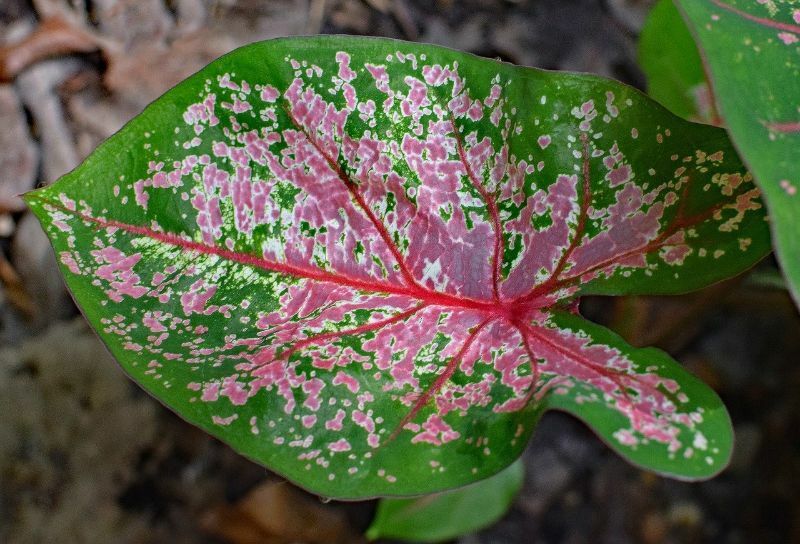
Wildlife pests of caladiums include squirrels, chipmunks, voles, rabbits, and deer. Even if caladiums are put in containers, squirrels, chipmunks, and voles dig up tubers to eat. Digging activity is discouraged and tubers are inaccessible by layering chicken wire or hardware cloth in the planting holes below caladium tubers and also on the soil surface above caladium tubers. Deer and rabbits feed on fragile new shoots. Their presence is difficult to manage unless you can keep them out by enclosing your garden in a fence.
What is eating holes in my caladiums?
Caladiums (Caladium x hortulanum) brighten up any garden, but when huge holes form in their leaves, it’s cause for concern. Slugs and snails are infamous for nibbling holes in caladiums, causing considerable damage in a matter of hours. Caladiums thrive best in the warm, humid areas of USDA plant hardiness zones 8 to 11, while slugs and snails thrive in the same conditions.
How do I get rid of caladium pests?
Caladium plant troubles can also be caused by too much water or fertilizer around the tubers. Caladium issues can be avoided if irrigation and fertilization are done properly.
Caladium Plant Pests
Caladium plants are rarely bothered by insects, but caladium plant pests do occasionally nibble on their leaves or cell sap. Aphids and caterpillars can be an issue.
Vigilance is your best defense against caladium plant pests. Look for the creatures and handpick them off the plants if you notice ragged borders on the foliage. If the infestation is out of hand, apply Bacillus thuringiensis, also known as “Bt,” a caterpillar-killing bacteria.
Aphids can be a nuisance, but they normally do not pose a serious harm to plants. Wash them away with the hose or, if necessary, control them with horticultural soap or neem oil.
Diseases of Caladium Plants
Caladium plants are made up of tubers, and the diseases that affect them are tuber diseases. Typically, fungal infections such as Rhizoctonia and Pythium species cause these illnesses. These are sometimes seen in dormant tubers.
If you want to start preventing caladium fungus problems, soak the tubers in hot water at least 122 degrees Fahrenheit (50 degrees Celsius) before planting or storing them. To kill hazardous fungi, leave them in for 30 minutes. Make sure the tubers are completely dry before using them.
Do slugs like caladiums?
Some of the leaves (particularly caladiums) will be eaten by slugs, snails, and pill bugs, but they can be readily managed using bait or even beer traps.
Should you fertilize caladiums?
Caladiums thrive in the shady understory of open, high-branched trees. In full shade, they will do pretty well, but the color may not be as vibrant. Caladiums have traditionally required shelter from direct sunlight for optimal development and color, but some of the newer cultivars may tolerate a few hours of direct sunlight every day. When cultivated in the sun, most pink-leaved caladiums turn brownish and burned.
Caladiums prefer damp, warm soil. It is preferable to have a minimum soil temperature of 70°F. Cool soil temperatures cause tubers to decay before sprouting if they are planted too early in the spring. Some gardeners choose to start tubers inside in a shallow flat or flower pot with damp peat moss or potting soil. Cover the tubers with just enough soil and place the container in a warm, well-lit area. Tubers should be started indoors four weeks before being planted outside.
Caladiums should be planted in well-drained soil with a pH of 6.0 to 6.5 for optimal growth. To improve soil aeration, drainage, and organic matter content, add a 2- to 3-inch layer of pine bark mulch or compost to the soil. Unless the soil is thoroughly aerated, root and leaf growth will be limited. Add a complete fertilizer, such as 8-8-8, at a rate of 1 to 2 pound per 100 square feet of bed area (2 tablespoons per square foot). Small tubers should be planted 2 inches deep and 8 inches apart, while giant tubers should be planted 12 inches apart. From the top of the tuber, both roots and shoots emerge; place the knobby side up.
To conserve moisture and keep the soil cool, mulch with a 2- to 3-inch layer of organic material. Leaves with more green color and less of the highly sought, vivid colors may result from soil temperatures above 85°F. Nitrogen fertilization at high amounts can have the same effect. Caladiums are heavy feeders of potash and phosphate, and they require enough of moisture and fertilizer throughout the summer to produce healthy tubers for the following growing season. During the growing season, use 1 tablespoon of 5-10-10 fertilizer per square foot every 4 to 6 weeks. Use a heaping tablespoonful for individual plants; a level teaspoon per pot for plants grown in containers. Allow no fertilizer to come into contact with the leaves. To avoid fertilizer burn, water properly after fertilizing. Caladiums are drought-resistant and need to be watered frequently.
Plants will occasionally produce a bloom that resembles that of a Jack-in-the-Pulpit or a calla lily. The flower pulls energy away from the leaves and reduces tuber size, thus most home gardeners choose to remove it.
How is neem oil used for plants?
Neem is a pesticide that is produced naturally from the seeds of the neem tree (Azadirachta indica). Tropical woods in Burma, India, and Sri Lanka are home to neem trees. For hundreds of years, the tree’s natural range has been employed as a botanical insecticide. Neem products have become fairly easy to purchase at most garden centers, thanks to a growing interest in organic and less-toxic pesticide solutions. Many gardeners may now reach for it first when they have a pest problem. If you understand how neem works and simply apply items according to label instructions, it can be a valuable component in an integrated pest management strategy.
One of two active components is commonly found in neem products. Azadirachtin, a chemical obtained from neem seed oil, is primarily responsible for insect killing and repellence. The residual material is known as clarified hydrophobic neem oil after the Azadirachtin is extracted from neem oil. Azadiractin is exclusively found in commercial insecticides and is used to alter the hormones that control insect growth and reproduction. The active ingredient in ready-to-use neem oil sprays that may be purchased at a garden center is clarified hydrophobic neem oil.
Neem oil can be used to treat a variety of insect and fungal diseases. It suffocates insects by coating their bodies in oil, which clogs their breathing holes. It works best on insects that are still juvenile. Adult insects aren’t usually killed when they reach maturity, so they can continue to feed and reproduce. As a result, timing a neem oil spray requires constant monitoring of insect lifecycles.
Even if you apply neem to immature-stage insects, don’t expect to see results right away. It takes time to work, and it may be necessary to reapply to totally reduce bug populations. Pests handled by neem pesticide products include aphids, beetle larvae, caterpillars, lacebugs, leaf hoppers, leafminers, mealy bugs, thrips, and whiteflies. Make sure to identify insects precisely, and only use neem oil if the pest is indicated on the label. Both beneficial and pest insects can be harmed by neem.
Powdery mildew is one of the fungal diseases that can be treated with neem oil. It acts by preventing fungus spores from germinating and penetrating leaf tissue. Although neem won’t “cure” a plant sick with a fungal disease, it can assist limit the illness’s spread to good tissue.
Products containing neem oil are frequently labeled for a variety of crops, including herbs, vegetables, fruits, nuts, and decorative plants. Neem oil can harm plants by burning their foliage, regardless of the type of plant being treated. Use with caution on newly transplanted or stressed plants. Though neem oil must thoroughly coat plants to be effective, it is a good idea to try the product on a limited area first. If there are no toxicity signs in that area, the entire plant can be treated.
This article’s use of specific brand or trade names is only for educational reasons. The University of New Hampshire does not recommend one product over another with similar ingredients, and it does not guarantee the efficacy or quality of any product. The user is responsible for only using pesticides according to the label’s instructions and in accordance with the law. Product availability is subject to vary based on the state of New Hampshire’s registration status and other considerations.
How do you make natural insecticidal soap?
Inspecting your flowers, fruits, or vegetable plants for illness or insect infestation is an important part of keeping them healthy. Plant-eating insects can spoil a harvest or strip a flower plant of its blooms if not treated quickly. Fortunately, using insecticidal soap to destroy the intruders will protect the plants. Some queries are inevitable for people seeking a safer, more environmentally friendly alternative to pesticides.
Can I make my own insecticidal soap?
Certainly! You may make a gallon of insecticidal soap by mixing 2.5 tablespoons vegetable oil and 2.5 tablespoons pure liquid soap with 1 gallon of distilled water and spraying plants in flowerbeds or the vegetable garden securely.
Will Dawn dish soap hurt plants?
Many gardeners effectively use Dawn as the liquid soap in their insecticidal soap solution, although Dawn contains artificial colors and chemicals, unlike pure soaps like castile. While using a soap without perfumes or other artificial components may not harm plants, it may be a more environmentally responsible decision.
Why are my caladium leaves dying?
Caladiums are famed for their broad, colorful leaves, so it’s a cause for concern when they start to become mushy and brown. Brown soft leaves frequently appear when the plant has been overwatered or exposed to cold conditions. When the plant is actively growing, water when the top 25% of the soil is dry.
Why are my caladium leaves curling?
Caladium leaves curl due to overwatering, the improper soil pH, too much sun and wind, pests, and the inappropriate temperature. Caladium will return to normal if only watered when the soil is dry, pests are treated with neem oil, the soil pH is 6.0 to 6.5, and the leaves are kept out of direct sunlight.
Overall, curled leaves indicate that the caladium plant is stressed. The way the leaves curl provides a decent indicator of what’s causing them to curl. Here’s a quick rundown for your convenience:
I’ll show you how to fix each of these problems, as well as the accompanying symptoms of each problem, so that your caladium’s leaves are firm, flat, and attractive.
Do deer eat caladiums?
So, here’s a plant I wholeheartedly support. Caladiums are show-stoppers, with some of the most appealing foliage of any deer-resistant annual. Caladiums produce heart-shaped leaves in a magnificent array of hues and variegations in partial to full shade. When you have leaves like these, who needs flowers? I’ve been growing caladiums in my shade containers for years, and every season I try a few different varieties; I’ve yet to encounter a caladium that I don’t enjoy! They’re perennial in tropical climes, but they’re grown as annuals in the north. In the fall, dig out the tuber and store it in a peat moss box in the garage.