
Asclepias syriaca, or common milkweed, is a perennial plant that can be found in a variety of settings, including roadsides, fields, and gardens. It is a North American native that reproduces mostly via seed. It can spread from its rhizomatous root system after it has established itself. The stems of common milkweed are covered in opposing, oval-shaped leaves. The pink, clustered flowers have a strong scent that attracts a variety of insects, including bees and butterflies. The blossoms eventually give place to rough seed pods, which split open and release silky-haired windborne seeds.
White, latexy sap rich with deadly cardiac glycosides can be found in all parts of the plant. The poisonous chemicals in milkweed prevent most predators from eating it. The monarch butterfly is one of the few exceptions, having evolved the ability to ingest and accumulate the poison in its body as a protective strategy. Monarch butterflies are so dependent on milkweed for survival that they cannot complete their life cycles without it.
Common milkweed is sometimes too aggressive and weedy in the landscape to be commonly used in beds and borders. It thrives in field edges or thickets that aren’t well-kept. If you currently have common milkweed in your garden, remove immature seed pods to prevent further spread. Because milkweed is a perennial, it will reappear in the same location the following season, but its expansion will be limited.
Individual plants can also be hand-pulled or treated with herbicide on a regular basis, but don’t be too hasty this season. Female monarchs have most likely placed their eggs on the undersides of the leaves or are in the midst of doing so. Only one egg is placed per plant on average, and it can be difficult to see. The Monarch caterpillars, which are already active in many areas, are more visible. Feeding marks on the leaves, as well as evidence of frass, are clear indicators of their existence. Their yellow, white, and black banded bodies, as well as black tentacles on the front and back ends, make them highly identifiable. Wait until the butterflies have emerged from their crysalids, or until late spring, before the butterflies arrive, to remove milkweed plants.
If you decide to remove all of the common milkweed from your garden, try replacing it with other native milkweed species that are less invasive. Swamp milkweed (Asclepias incarnata), butterflyweed (Asclepias tuberosa), and whorled milkweed (Asclepias verticillata), all of which grow in bunches and are suitable candidates for perennial beds, will also attract monarch butterflies. Leave some common milkweed on the margins for the ultimate butterfly habitat.
Do milkweeds grow back every year?
Plant milkweeds that are natural to your area whenever possible. Perennials, or plants that come back year after year, are native milkweeds. Their aerial portions (flower, leaves, and stem) die back in the winter, but their rootstock survives.
Is Asclepias tuberosa Hardy?
A fantastic hardy perennial with a lengthy season of appeal for wildlife gardens. The vibrant blossoms are also a unique and eye-catching cut flower.
How big does Asclepias tuberosa get?
It blooms in clusters (umbels) of brilliant orange to yellow-orange flowers on erect to reclining, hairy stems with narrow, lance-shaped leaves, and grows in clumps to 1-3′ tall.
Does milkweed bloom the first year?
Milkweed species have varied growth tactics, so it all relies on which one you have. Milkweed, in general, does not flower in its first year of growth since it is concentrating its efforts on developing a strong root system. Milkweed may not flower if there is too much nitrogen in the soil, so don’t fertilize it. Finally, if the plant is stressed, such as by drought or severe heat, milkweed may not blossom. Fortunately, monarch butterflies will deposit their eggs on milkweed even if it isn’t in bloom. Because the caterpillars consume the plant’s leaves, your milkweed can still serve as a host plant even if it doesn’t have flowers. Milkweed can also expand by its root system (depending on the species), thus even if it doesn’t flower or go to seed, the plant can spread that way.
Will Asclepias tuberosa bloom the first year?
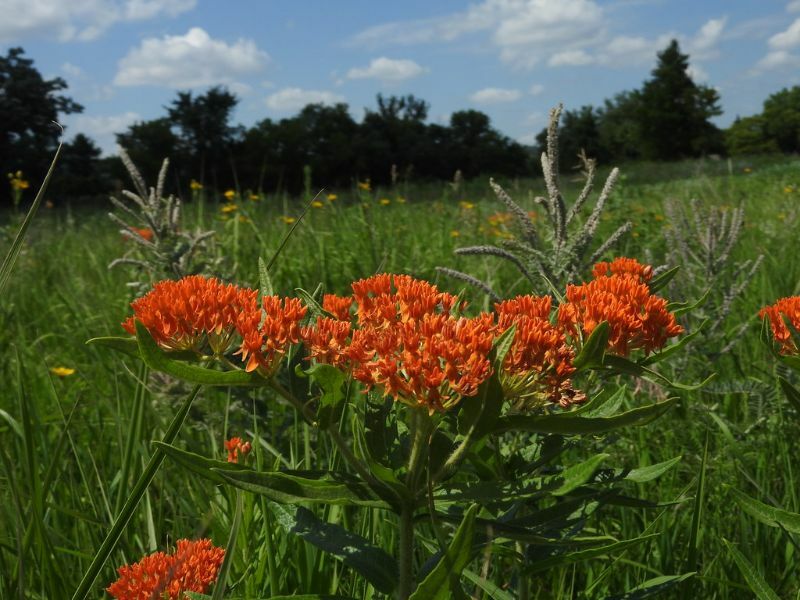
Milkweed, also known as asclepias, is native to North America, and one of them, Asclepias tuberosa, has been named Perennial Plant of the Year by the Perennial Plant Association this year. This plant, sometimes known as butterfly weed or butterfly milkweed, has bright orange flowers that attract a variety of butterflies and bees with nectar and pollen. Butterfly weed’s leaf isn’t a favorite meal of monarch caterpillars, but it can help them survive. This drought-tolerant plant prefers a dry, sunny environment and is hardy in Zones 3 to 9.
Upright stems with clusters of bright orange flowers contrast attractively with the shiny green leaves of butterfly weed. Unlike other members of the genus, the stem sap is not milky. This milkweed is not invasive since it does not spread by runners like common milkweed (Asclepias syriaca). Although deer are not attracted to butterfly weed, aphids can be an issue in gardens and greenhouses.
This plant is expected to be in great demand in the next years. Butterfly weed blooms readily the first year after seeding, but there are a few crucial elements to remember if you want to grow it professionally.
This species displays some of the most extreme photoperiod reactions we’ve ever seen. It’s an obligatory long-day plant, which means it has to flower during long days. When grown at an average of 68° F, plants develop quickly under photoperiods of 14 hours or more, and begin flowering about eight to nine weeks after transplant. Plants that are exposed to photoperiods of 12 hours or less, on the other hand, die dormant after a few days (Figure 1, pictured above). Leaves droop, shoot growth appears to stop, and existing flower buds may suffocate (Figure 2). Unfortunately, simply reverting to longer days will not return the plants to active growth. A nine-week or longer cold treatment is required to break this dormancy; in our testing, all dormant plants treated to 41° F for 15 weeks bloomed.
It is critical to provide long days to plants in order to keep them actively growing. We propose at least 16 hours of daylight or four hours of night disruption illumination. A minimum intensity of 2 molm2s1 should be delivered by photoperiodic illumination. Use incandescent lights or LED bulbs intended to control blooming that emit both red and far-red radiation. Maintain these extended photoperiods for plants until natural daylengths reach at least 14 hours.
Butterfly weed has a huge tap root, making transplanting or dividing established plants difficult. It’s critical to utilize a well-drained medium in container production, so consider adding more perlite to a standard peat+perlite mix. During production and cold treatments, be careful not to over-water. The taproot attracts fungus gnat larvae, so keep an eye on the roots if your plants aren’t doing well.
Butterfly weed can grow up to 3 feet tall in the wild, but in container production, our plants were only 12 to 18 inches tall when they first bloomed. Sprays of daminozide (e.g., B-Nine, Dazide), paclobutrazol (e.g., Piccolo, Bonzi), and uniconazole (e.g., Piccolo, Bonzi) are apparently helpful for height management (e.g., Sumagic, Concise). To help fill out containers, use many plugs per pot or squeeze seedlings soon after transplant.
Should I cut back my milkweed?
During the fall and winter months, trim the milkweed stems to about 6 inches in height to dissuade monarchs from establishing winter-breeding colonies. Cutting back the milkweed will also aid in the removal of any OE spores that may be present. As the leaves re-sprout, re-cut the milkweed every several weeks. Because tropical milkweed dies back naturally when it freezes, it may offer fewer problems in the northern monarch breeding region.
These instructions do not apply in south Florida (south of Orlando), where a distinct, non-migratory monarch population has existed for many years. In this location, however, native milkweed planting is still recommended.
What month does milkweed come back?
There are milkweeds that grow well in practically every hardiness zone, with over 140 different varieties. Winter milkweed care varies depending on your zone and the type of milkweed you have.
Milkweeds are herbaceous perennials that flower in the summer, set seed, and then die back in the fall before sprouting again in the spring. To extend the blooming duration of spent milkweed blooms, deadhead them in the summer. When deadheading or pruning milkweed, however, always keep a watch out for caterpillars, which eat the plants throughout the summer.
Milkweed requires very little winter maintenance in general. In cold climes, however, certain garden types of milkweed, such as butterfly weed (Asclepias tuberosa), will benefit from additional mulching. In fact, if you wish to offer your milkweed plant’s crown and root zone some extra winter protection, it won’t mind.
Pruning can be done in the fall, but it isn’t required for winterizing milkweed plants. It’s entirely up to you whether you prune your plants in the fall or the spring. Birds and small animals use the natural fibers and seed fluff of milkweed plants in their nests in the winter. As a result, I like to prune back milkweed in the spring. With clean, sharp pruners, trim last year’s stems back to the ground.