
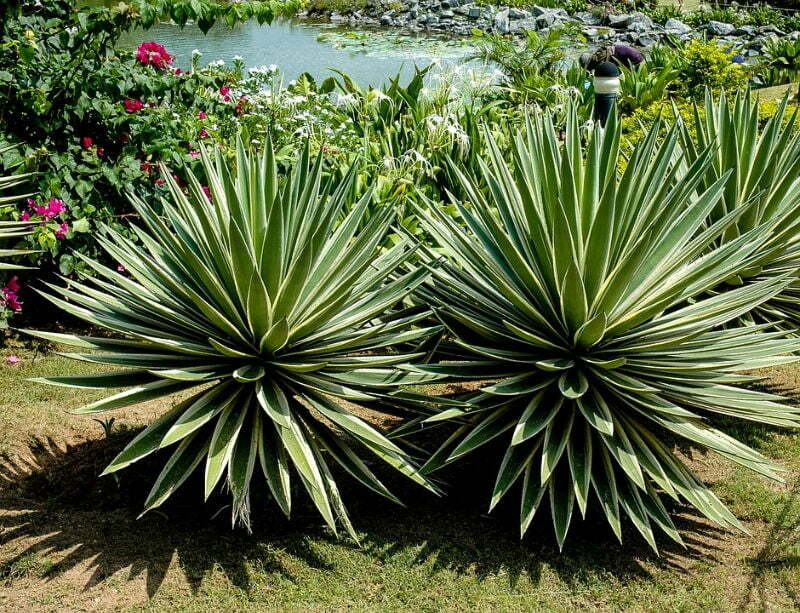
Agave syrup is a sweet brown liquid made from the sap of the agave plant (a species of cactus native to Mexico). Agave is a popular sugar substitute that is now widely used as a substitute for sugar, honey, and maple syrup. After the plant’s juice has been extracted, it is filtered, boiled, and condensed into a syrup. It has a molasses-like flavor, and the darker the color, the richer the flavor.
Is agave better for you than sugar?
Agave is less toxic and more natural, but it should be avoided by persons who are regularly monitoring their blood glucose levels. The high sugar level can lower insulin sensitivity and wreak havoc on the liver. Agave is also a sweetener with more calories than table sugar.
People with diabetes should avoid adding sugars to their food and instead use fruit as a sweetener.
Is agave healthier than honey?
Honey comes out on top. Honey and agave nectar, on the other hand, are calorie sweeteners with little nutritional value. Honey is superior to agave nectar in the following ways:
Although agave nectar is advertised as having a low glycemic index, its high fructose level negates any potential benefits. The differences between the two aren’t large enough to merit making the switch if you don’t like honey’s taste or are a staunch vegan who doesn’t eat honey.
Finally, it’s not so much about the type of sweetener you use as it is about how much you ingest. Honey, like all other sweeteners, should be used cautiously. Excess sugar consumption can result in the following:
Added sugars such as agave syrup, corn syrup, honey, cane sugar, or brown sugar should be limited to six teaspoons (24 grams) for women and nine teaspoons (36 grams) for men per day, according to the American Heart Association.
Is agave nectar healthy?
Agave nectar is probably not the way to go if you need to add sweetness to your diet. Natural sweeteners like stevia, erythritol, and xylitol are far better alternatives. In reality, agave nectar may be the world’s least healthful sweetener, making normal sugar appear healthy in comparison.
What is agave sugar made of?
- Agave syrup is made from the agave plant, a succulent endemic to Mexico’s dry regions.
- Agave syrup is mostly made up of fructose and glucose, with a little amount of additional carbs, fat, polyols, vitamins, and minerals thrown in for good measure.
- Agave syrup is sweeter than table sugar and has a lower influence on blood glucose levels due to its high fructose content.
- The Nutrition Facts labeling criteria for single-ingredient sugars like pure agave syrup, honey, and maple syrup have been developed by the US Food and Drug Administration.
- Although agave syrup is not healthier than other sugars, it does have a few advantages that make it a desirable option for some.
Sugars come in a variety of forms, including viscous liquid sweeteners such as corn syrup and maple syrup. Agave syrup is a form of syrup that has recently gained popularity among consumers. Agave syrup is a form of carbohydrate that is mostly made up of the simple sugars (monosaccharides) fructose and glucose.
Where does agave syrup come from?
Agave syrup is made from the agave plant, a succulent endemic to Mexico’s dry regions. It is largely derived from two agave varieties: blue and salmiana. Tequila is made from blue agave, which is well-known (see its scientific name, Agave tequilana).
Inulin, a non-sweet, non-digestible water-soluble polysaccharide, as well as other carbs and sugars, are found in the agave plant. Agave syrup is made by heating, juicing, filtering, and evaporating the agave plant’s core (which resembles a pineapple and is known as the “pia”), which gives the liquid sweetener.
Is agave syrup a natural or added sugar?
When ingested on its own, when added to meals or beverages, or when used as an ingredient in foods or beverages, agave syrup is regarded an added sugar, just like pure maple syrup and pure honey. Despite the fact that pure agave syrup contains naturally occurring sugars and is produced without the addition of sugars, ingesting agave syrup adds extra calories to one’s diet without contributing nutrients, earning it the moniker of “empty calories.” “I’ve added sugar.”
The standards for how sugars are labeled on food product Nutrition Facts labels in the United States aim to address this ambiguity. Single-ingredient sugars, such as pure agave syrup, honey, and maple syrup, are not required to indicate their sugar level, according to the US Food and Drug Administration “Sugars that have been added.” Their sugars, on the other hand, can be listed as “Sugars in Total.” However, there is a “On the Nutrition Facts label, the ” symbol must appear alongside the % Daily Value (DV). This symbol points to a footnote in the Nutrition Facts label box that describes the gram quantity of sugar contributed to the diet by one serving of the food, as well as its contribution to the % DV for added sugars. Here’s an example of what I’m talking about “Symbol declaration: “One serving contains 17 grams of sugar, which accounts for 34% of the Daily Value for Added Sugars.”
Despite the fact that the amount of added sugars consumed by Americans has dropped over the previous two decades, roughly six out of ten persons in the United States consume more added sugars than is advised.
How is agave syrup digested?
A tablespoon of agave syrup has around 60 calories and 15 grams of sugar. Monosaccharides (mostly fructose and some glucose), water, and trace amounts of other carbs, fat, polyols, vitamins, and minerals make up agave syrup. The Mexican government has established agave syrup guidelines that specify exact minimum and maximum fructose and glucose values. In agave syrup, fructose makes up around 80% of the sugars, while glucose makes up 20%. In comparison, the sugars in simple syrup (i.e. sucrose (table sugar) dissolved in water) are split evenly between two monosaccharides: 50% fructose and 50% glucose.
When we eat agave syrup, our bodies break it down for energy in the same manner that other sugars are broken down. Glucose is absorbed by our cells with the help of insulin, but fructose is metabolized by the liver and does not require insulin for absorption. Agave syrup has a lower impact on blood glucose levels than most other sugars due to its higher fructose concentration.
When eating excessive amounts of fructose, some people have problems absorbing it, and others are unable to absorb it at all. It is recommended that affected individuals monitor or limit their fructose intake, or avoid it totally in the case of the uncommon genetic condition known as hereditary fructose intolerance (HFI). Every year, about one in 20,00030,000 persons is born with HFI. Foods and beverages containing fructose, sucrose, or the sugar alcohol sorbitol must be avoided by people with HFI because they cannot metabolize fructose.
Does agave syrup have health benefits?
Although agave syrup is not inherently healthier than other sugars, it does have a few advantages that make it a desirable option for some. Agave syrup, for example, has a thinner viscosity than honey and is thus more soluble in liquids, allowing it to blend easier into cold beverages. Agave syrup is also sweeter than other sugars with a better balanced fructose-glucose ratio. Because agave syrup is sweeter, it requires less calories to equal the sweetness of sugars like sucrose.
Because of its higher fructose concentration, agave syrup elevates blood sugar less than most other carbohydrates. Despite this, because fructose is digested differently than glucose, there has been disagreement over the years over the influence of fructose on health. According to certain studies, fructose may be particularly harmful to one’s health. More recently, a systematic review and meta-analysis of controlled human trials published in 2018 indicated that the harmful health effects of fructose-containing sugars were caused by sugars’ contribution to ingesting excess calories, rather than fructose.
The American Dietary Guidelines do not specify which types of added sugars should be consumed. Instead, they advise restricting all added sugars, including agave syrup, to less than 10% of total daily calories.
Is tequila agave based?
Tequila and mezcal are both created from the agave plant’s extracted core, often known as the “pia.” The parallels in manufacture, however, cease there. Tequila is usually made by heating the agave in industrial furnaces and then distilling it twice or three times in copper pots. Mezcal, on the other hand, is distilled in clay pots after being heated in earthen pits lined with lava rocks and filled with wood and charcoal. While some large-scale mezcal producers have adopted modern processes, artisanal mezcal producers continue to use the more traditional approach, which is what gives mezcal its smokiness.
Is tequila made from agave?
3.What is the process of making tequila? To liberate sugars for fermentation, the fructose-rich pina or heart of the agave succulent, which resembles a pineapple, is roasted or steamed. Mezcals and tequilas are both distilled spirits made from agave.
4. What method is used to gather it? A pina can grow to weigh up to 200 pounds and take up to 12 years to mature. The harvesters, known as jimadores or campesinos, will obtain a pina using a tool known as a coa de jima, which consists of a circular blade and a wooden handle. Over the course of six hours of hard labor, a well-coordinated and competent crew of jimadores can walk across a plantation and collect between three and four thousand kg of agave.
5. How can I tell if it’s tequila or not? On your bottle label, look for 100 percent agave tequila. Only bottles containing tequila without added sweeteners are eligible for this classification. A mixto tequila is made when sugar or corn syrup is added to a fermenting tank along with the agave.
6.What does it mean to be “anejo”? Expect richer, woodier, tannic notes like black tea and cocoa layered over the agave flavors when you see anejo or extra anejo stated on the bottle. These tequilas have been aged in barrels for a longer period of time.
7. What does it mean to be “reposado”? That implies it’s time to unwind. A bottle of reposado tequila is spirit that has spent two to eleven months maturing in a cask, gaining subtle vanilla, caramels, and other wood-related characteristics.
8. What does it mean to be “blanco”? According to Valencia, blanco or silver tequila is undoubtedly the most popular among enthusiasts “back home.” Blanco tequila is unaged tequila that has never been exposed to wood, resulting in the purest agave notes.
9. Yes, but where does the worm fit in? Tequila’s bottle does not include a worm. The worm, sometimes known as gusano, is linked to mezcal. A few businesses began a marketing tactic in the 1940s, attributing aphrodisiac and magical properties to the worm and the person who shot it. As you might expect, consuming the worm has no effect on desire, and premium bottles of tequila or mezcal are not marketed with worms in them.
What’s the healthiest sweetener?
That’s why we asked dietitian Anna Taylor, MS, RD, LD, CDCES, to rank the best and worst sweeteners so you can figure out which is best for you and how to (finally) break your sweet tooth.
Fresh or frozen fruit
Using fresh or frozen fruit is the number one technique to sweeten your food and beverages.
Fruit contains no unnecessary calories, making it a great sweetener, according to Taylor.
Try adding banana or applesauce to oatmeal, berries to plain Greek yogurt, or frozen fruit to smoothies to sweeten them. Natural flavorings like vanilla or almond extract, cocoa powder, and spices like cinnamon and clove are another option.
“I grew raised on a high-sugar diet. “I started enjoying the natural sweetness of fresh berries and melon when I cut back on additional sweets and sweeteners,” Taylor explains. “My sugar cravings began to fade at that point.”
Sugar substitutes
Not only does stevia-based sweetener have no calories, but it is also natural rather than artificial. Stevia combined with erythritol (Truvia), a sugar alcohol, works well in low-carb baked goods as well. Taylor recommends combining 1 teaspoon of the sweetener with plain Greek yogurt and peanut butter for a quick and easy sweet treat.
Artificial sweeteners and stevia are better than real sugar if you have prediabetes or diabetes.
“Artificial sweeteners do not spike your blood sugar as quickly as real sugar,” Taylor explains.
Is agave anti inflammatory?
You may have heard of the Blue Weber Agave plant, which is a miraculous plant. Not just because it is the only component permitted in 100% de Agave Tequila (such as Tres Agaves), but also because it is the only ingredient permitted in 100% de Agave Tequila (such as Tres Agaves).
Agave nectar is made entirely from the Blue Weber Agave plant. The nectar is made by crushing the pias of the agave plant to extract the juices, which are then cooked and filtered to produce the simple sugar fructose, which is then concentrated into a syrup. Despite the fact that agave syrup requires more steps than, example, honey from a beehive, it is still considered a healthy alternative. Agave nectar contains the following ingredients:
- You won’t have high blood sugar levels because honey has a low glycemic index (19-27 vs. 83 and 89 in honey and high fructose corn syrup, respectively).
- Saponins found in agave have anti-inflammatory and immune-boosting qualities (think quinoa and ginseng)
The probiotic inulin is also found in the agave plant. Numerous studies have suggested that inulin can help ease constipation and aid weight reduction by acting as a meal for specific gut bacteria.
Where Agave Comes From
Agave nectar and blue agave nectar are both made from the agave plant, a succulent that grows all over the world in hot, dry climates. Each variety of nectar, however, comes from a different agave plant species.
Agave nectars aren’t all created equal. Because they obtain their agave from numerous sellers, many agave growers employ a mixture of agave varietals. This makes it more difficult for them to ensure that their product is of high quality. Agave that is developed, grown, and harvested exclusively for the tequila business is known as blue agave. This plant produces a premium agave nectar that contains more fructose and has a lower glycemic index than nectar from mixed agave.
Mexican Regulations for Agave Production
When you buy blue agave nectar, you’re guaranteed a high-quality product because the Mexican government has established tight requirements for the product of agave nectar made from blue agave plants. To acquire the blue agave nectar appellation, all blue agave nectar must contain at least 80% fructose, according to Mexican regulations. It can’t be blended with other sugars, and it has to be prepared entirely with blue agave. The greatest focus in the manufacturing of blue agave nectar is product purity and quality. In the case of mixed-source agave nectar, however, such quality criteria may not be adhered to as strictly.
Blue Agave Characteristics
Blue agave nectar has a lower glycemic index and is 1.5 times sweeter than sugar. While all blue agave nectar variations have a mild smokey aftertaste, lighter agave species have a more balanced flavor profile. They’re commonly employed in direct-to-consumer applications such as beverage sweetening and salad dressing. Darker agave varieties offer a more unique flavor character and are more commonly utilized in baking.
Tierra Group Blue Agave Nectar
In the creation of our luxury products, we also adhere to rigorous social responsibility requirements. At our workplace, we have medical facilities and care for all of our employees. In addition, we support local sports teams, nursing homes, youth initiatives, and government activities in the city where our manufacturing is located.
We feel that rewarding our employees pushes them to do their best work. A great product is ensured by exceptional work. And happy customers are ensured by a superb product.