
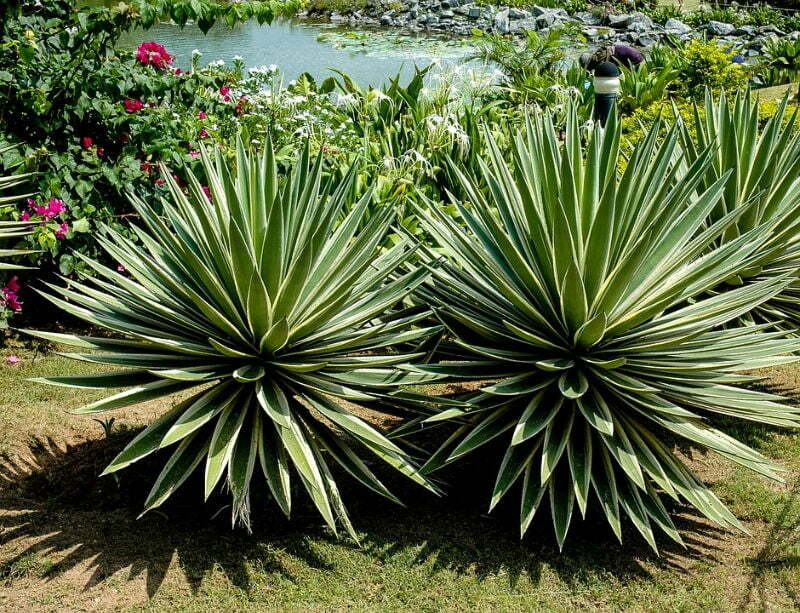
Plant your blue agave in well-draining soil with at least six hours of direct sunlight per day. This plant isn’t picky about soil conditions, but it can’t stand wet feet. To keep the plant out of the cool air that collects in low regions, place it on a high point in the landscape. Keep an eye on the future when looking for your blue agave. In a short period of time, this short-lived plant will grow to a colossal size. It has rigid, needle-sharp bayonet spines on the leaf tips, so keep it away from foot traffic and places where your children and pets are likely to be. Place this enormous specimen where it will be easy to remove once it has died.
How long does blue agave take to grow?
Tequila is produced from the agave plant. It takes about 7 years for an agave plant to mature enough to be harvested for tequila.
Can you grow blue agave at home?
Indoors, agave plants are quite easy to cultivate if you supply them with enough warmth and light. They only require a small amount of water and food, and overwatering or overfeeding can be fatal. They also don’t require repotting very often because to their moderate growth.
Where does blue agave grow best?
Although blue agave grows well at sea level, it favors the higher altitudes of its native region, the 4,500-foot mountains of western Mexico’s Jalisco state, where it produces its distinct flavor. Tequila created from Jalisco blue agave provides attributes that reflect where and how it was produced, similar to French wine types, and it comes with a registration number that validates its area of origin.
Blue agaves can be a dream as a landscape design element. The plants are symmetrical, drought-tolerant, slow-growing (which means less upkeep), and can thrive on slopes not to mention attractive. The most serious flaw is the spiky points, which can puncture the flesh to the bone. Similarly, the flesh’s liquid can produce skin irritations comparable to poison ivy. Gardeners should use leather gloves and wrap the leaves in cardboard when planting it.
How often do you water a blue agave plant?
Agaves are low-maintenance plants that require minimal care to grow. For the first month or two, water the plant every 4-5 days. Agaves only need to be watered 2-3 times a month in the summer, or more if you live in a low desert area. During the agave’s growing season, from spring to summer, you can feed it with a specific plant food like Miracle-Gro Liquid Succulent Plant Food, as directed on the label.
How long does a blue agave live?
Blue agave is a short-lived plant with an average lifespan of 8 to 14 years.
A mature blue agave will not survive if the flower stem is cut off. Flowering time is determined by genetics, which also determines when the plant should die.
Because their roots don’t mind being packed, small blue agave plants work nicely in containers. Succulents should be planted in a free-draining potting soil. Maintain a warm environment for the plant and provide it with as much direct sunshine as possible. When the top half of the medium in the pot is entirely dry, water it. Feed your cacti and succulents once every six to eight weeks with a cactus and succulent fertilizer.
Can a blue agave get too much sun?
Agave plants thrive in full sun, which means at least six hours of direct sunshine each day on most days. They can, however, endure some shade. The more shadow they can tolerate, the hotter the climate.
How do you take care of blue agaves?
Growing agave is simple if you choose the proper kind and put it in the right spot. Agaves require full sun and a grittier, easily percolating soil. They can even be potted if you use an unglazed clay container that will let excess moisture to evaporate.
The amount of water required varies based on the season’s heat, but the plants should be allowed to dry up before irrigation.
They benefit from the application of a granulated time release fertilizer in the spring, which will provide their nutrient requirements for the entire season.
Many agave kinds die after flowering and are replaced by pups or offshoots produced from their base. It’s a good idea to buy long-handled pruners and remove the wasted bloom on kinds where the parent plant doesn’t die after flowering.
After the plants have been established, neglect is the best way to develop agave and generate happy plants.
Can you grow agave in shade?
Agave thrives in full sun, although it may also take partial shade. Protection from the sun is recommended in very hot, dry areas. The best soil is free-draining soil of any sort, including gravelly or sandy soil.
How big does a blue agave plant get?
Tequila agave grows wild in Mexico’s states of Jalisco, Colima, Nayarit, and Aguascalientes. The plant grows best at heights of over 1,500 meters (5,000 feet) and in rich, sandy soils. Large succulents with spiky fleshy leaves, blue agave plants can grow to be over 2 metres (7 feet) tall. When blue agaves are around five years old, they produce a stalk (quiote) that can grow up to five metres (16 feet) in length and is crowned with yellow flowers. Commercial plants have their stalks removed so that the plant can focus its energy on the heart.
The greater long-nosed bat (as well as insects and hummingbirds) pollinates the flowers, which yield thousands of seeds per plant, many of which are sterile. After then, the plant dies. Planting the previously cut shoots allows the plants to reproduce, however this has resulted in a significant loss of genetic variety in cultivated blue agave.
A 50-year-old blue agave in Boston produced a 9 m (30 ft) stalk that required a hole in the greenhouse roof and flowered in the summer of 2006, despite the fact that it is rarely managed as a houseplant.
Do blue agave plants bloom?
The agave plant, unlike other plants that bloom every spring, only blooms once throughout its lifetime. The bloom stalk takes 3 to 4 months to mature and marks the end of the plant’s life cycle.