
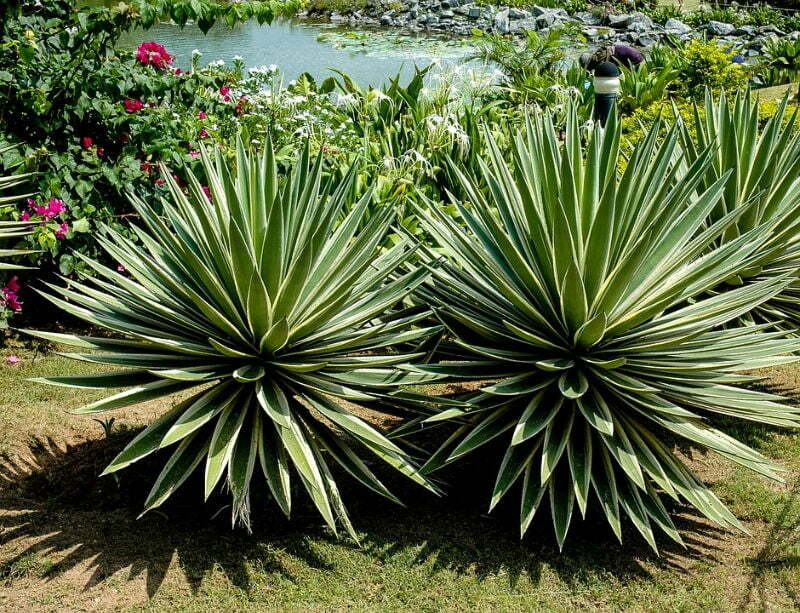
Agave is classified as slightly hazardous by the University of California Division of Agriculture and Natural Resources. It says the plant’s leaves contain oxalate crystals, which can cause severe discomfort. The needlelike crystals can irritate a sensitive person’s or pet’s mouth and throat to the point of swelling and breathing trouble. According to the Merck Veterinary Manual, agave plant leaves contain saponins and volatile oils that induce irritation and swelling. To be safe, contact a doctor, veterinarian, or poison control center if any part of the plant is chewed or eaten.
What can I do with blue agave?
What can you do with it?
- Agave nectar is a fantastic sweetener for cold drinks like iced tea or cocktails since it dissolves fast.
- Use in hot drinks, baking, and other dishes as a sweetener instead of sugar or honey.
- Toppings for pancakes and French toast can be made using dark agave nectar directly from the bottle.
Does blue agave taste good?
Agave is defined as having a honey-like flavor and being much sweeter than sugar. Darker agave nectars have a maple syrup-like flavor, whereas lighter agave nectars are more mild. The nectar is made from the juice of the agave plant, which is also the source of tequila. Agave syrup is used in many pubs and restaurants to make cocktails, and these modern concoctions are far more complicated and interesting than classic margaritas.
Can you eat agaves?
The agave plant has a number of edible sections. According to Inside Herb Gardens, the agave plant’s blossoms and leaves can be roasted or boiled, and the leaves have a “caramel-like” flavor. When cooking the blossoms, which match well with eggs according to Inside Herb Gardens, take sure to remove the pollen stalks first, as they have a bitter flavor.
The green maguey plant’s leaves are traditionally used to prepare a cuisine called mixiote, according to Masa Americana. The outer layer of the leaves is peeled to make a translucent sheet that is wrapped around food and cooked in a barbeque or underground oven, similar to how food is cooked in parchment paper in France. The leaves have a moderate flavor and help to keep the food contained while cooking.
Is blue agave healthy for you?
Agave is less toxic and more natural, but it should be avoided by persons who are regularly monitoring their blood glucose levels. The high sugar level can lower insulin sensitivity and wreak havoc on the liver. Agave is also a sweetener with more calories than table sugar.
People with diabetes should avoid adding sugars to their food and instead use fruit as a sweetener.
Can you cook with agave?
Agave syrup is a tasty addition to cereal, pancakes, and toast. It can also be used in dessert recipes instead of honey, though the difference in viscosity should be taken into account. While agave has a low GI, it is around 30% sweeter than sugar, so you’ll need less to get the same flavor. It works well in chewy bakes like flapjacks, as well as sticky cakes and muffins – just keep in mind that you’ll have to cook at a lower temperature (about 10C/50F). Because agave nectar contains a lot of fructose, which is one of the most harmful sugars, use it in tiny amounts and buy organic, raw agave instead of the cheaper, highly processed kind.
Is blue agave better than honey?
If you have to choose between honey and agave, honey is the healthier option. Honey is mostly composed of fructose, whereas agave contains a higher percentage of glucose. Honey has a number of health benefits that aren’t available from other natural sweeteners. Honey is fundamentally more like table sugar than agave, despite the fact that both are plant-based and related to table sugar. While honey is the better option, agave may be more useful in modest amounts than table sugar.
Is blue agave a vegetable?
Agave is a monocot genus. Although the plants are perennial, each rosette only blooms once before dying. Century plant is a moniker given to some species. The term “century plant” alludes to the length of time it takes for the plant to flower.
Agave plants create a variety of byproducts, including: Agave nectar (sometimes known as agave syrup) is a sugar substitute. The flower sap is distilled and used to make mezcal, a sprit. The most well-known variant of this spirit is tequila. The leaves and thorns can be used to make paper and writing materials. The leaves and flower heads can be boiled and roasted as vegetables, though it can’t have been a common dish because it only blooms once every hundred years!
Agave americana, a tropical American native, is one of the most well-known species. Century plant, maguey (in Mexico), and American aloe are all common names for this plant (it is not, however, closely related to the genus Aloe). The amount of years before flowering varies on the vigor of the particular plant, the soil’s richness, and the environment; during these years, the plant stores the nourishment needed for the effort of blossoming in its fleshy leaves.
Agaves are primarily Mexican, but they can also be found in the southern and western United States, as well as central and tropical South America. They have a big rosette of thick, fleshy leaves that culminate in a sharp point and have a spiny edge; the strong stem is usually short, and the leaves appear to arise from the root. Various Agave species, as well as plants from the allied genus Yucca, are attractive ornamental plants.
Each rosette is monocarpic, meaning it only flowers once. A tall stem or “mast” emerges from the center of the leaf rosette during flowering and bears a great number of small, tubular flowers. The original plant dies during fruit development, however suckers are frequently formed from the base of the stem, which grow into new plants.
Agaves are sometimes misidentified as cactus. They are neither related to cactus, nor are they related to Aloe, which has similar-looking leaves.