
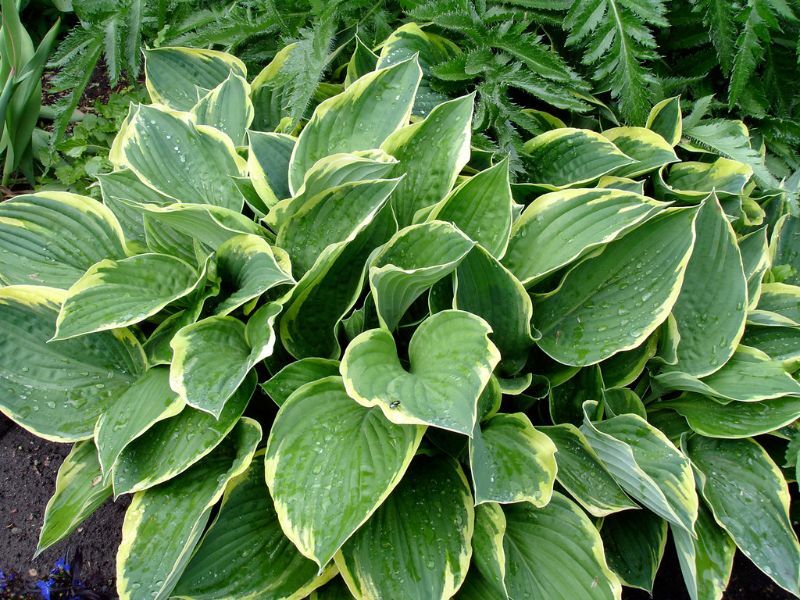
Many gardeners are concerned when deer or other wildlife eat their hostas, but they shouldn’t be! In the correct conditions, Hosta leaves recover quickly, and these tough plants are desperate to survive.
Can I cut the leaves off my hostas?
After the first frost, the leaves wilt and become brown. Slug eggs can be found in the leaves of Hostas. After hatching, these eggs have the potential to harm a healthy plant. This problem can be solved by removing the leaves.
Garden shears or a sharp pair of scissors can readily cut the leaves and stems of hostas. Reduce the plant to the ground level. Leave an inch or two of plant to indicate where it belongs in the garden.
To insulate your plant, lay down a one-inch layer of mulch. This helps prevent the hostas from losing their dormancy due to excessive freezing and thawing. Remove mulch in the spring to avoid excessive moisture and rotting.
Should I cut damaged hosta leaves?
Unfortunately, injured Hosta leaves need not be removed until after the autumn deadly frosts arrive, as unattractive as they are. The dead, unattractive foliage should then be removed and destroyed. The good news is that magnificent new Hosta leaves with no holes will emerge next spring!
Why do hostas get holes in the leaves?
What causes holes in the leaves of hostas? This is one of the most often asked questions about hosta plants. Slugs or snails are frequently the culprits when it comes to pests eating hostas. These nocturnal foragers, which eat small holes in the leaves, are perhaps the most frequent of the hosta pests. Snail trails of silvery tint can be found around the garden area, indicating their presence. Beer traps may be used to control these slugs, which they crawl into and die in.
The adult black vine weevil is another insect pest that eats hosta leaves. This bug makes uneven notches along the outer edges of leaves as a sign of its presence. Their larvae also cause damage to hosta plants by feeding on the crown and roots, resulting in yellow, wilted foliage.
Nematodes, which are minute roundworms, infect hosta plants in the same way as fungi or bacteria do. They flourish in damp environments, just as fungal infections. Nematodes eat on the leaves, resulting in brown spots between the veins, giving the leaves a striped appearance. This usually happens in the late summer. Plants that have been harmed should be destroyed. Most nematode attacks can be avoided by providing proper distance between plants, using soaker hoses to avoid damp foliage, and removing and destroying all diseased plants.
Do you believe that only bugs consume hostas? Reconsider your position. Hosta plants are frequently eaten by deer and rabbits. Deer, on the other hand, may leave merely stalks where once lovely hosta leaves grew, whilst rabbits prefer to nibble on the young shoots.
Should I cut the flower stems off my hostas?
Cut each scape when just two flowers are open if you wish to enjoy the hosta flowers in a bouquet; the remainder will emerge over two weeks inside your home. Even if you leave the flowers on the plants, you should still cut off the scapes once the blooms have faded. Cutting off each scape after three-fourths of the flower buds have opened, according to the American Hosta Society, prevents the plants from directing energy into seed production for the following year, allowing them to grow more roots and leaves instead.
How do I know if my hostas are dead?
Check for dead or dying stems in the heart of the hosta plant. With each consecutive season of growth, hostas spread outward. A withering center could simply be a sign of the plant’s typical growth cycle.
Can I grow hostas?
In hardiness zones 3 through 9, hostas are fairly easy to grow. Check out What’s My Zone? for more information. to determine which zone you reside in Some hostas thrive in hotter climates than others, albeit they are often smaller than cultivars produced in cooler climates. Because they have H. plantaginea in their DNA, fragrant hostas thrive in the South. Heat tolerance is stronger in H. plantaginea variants.
How long will it take for the hostas I get from you to reach their mature size?
The time it takes for a hosta to attain the mature size indicated varies depending on the hosta. Hostas that are smaller and more vigorous can mature in 3 to 5 years. It can take up to 7 years for giant and slower growing hostas to attain their full potential. The quality of your soil and the amount of available moisture might also have an impact. For the best results, read our Hosta Growing Tips.
Why did my hosta die?
While we may never know for sure why certain hostas die, it is almost always due to poor maintenance or pest damage. A newly planted hosta may perish if it is not properly cared for, whether due to a lack of water, too much water, or even a lawn mower accident. Pests such as mice and voles, as well as excessive freezing and thawing, are the most common reasons for a hosta’s failure to return from its winter hibernation. We’ve compiled a list of Hosta Growing Tips to assist you with these challenges. Rest assured, the number of reports we receive about missing hostas is incredibly rare!
How much water do my hostas need?
Hostas adapt well to their surroundings, however they are accustomed to receiving more annual rainfall in their native areas than in the United States. Although hostas may survive even the driest of conditions, they nevertheless require appropriate water during the growing season. We discovered that certain hostas were smaller the next season after a dry summer.
If it hasn’t rained enough, we prefer to give the hostas a good DEEP watering once a week over the summer. During dry periods, a general sprinkler set for an hour once a week will assist the hostas survive the growing season and grow stronger the next year. This kind of watering should be used on newly planted hostas for the first few months to help them acclimate to their new surroundings.
Why doesn’t my hosta look like the photo on your website?
As previously indicated, certain hostas might take up to 5-7 years to attain their maturity height. Some features can also take that long to manifest. As they age, certain blue hostas get even bluer. Heavy corrugation can take several years to appear. In general, we’ve seen that hostas begin to display their real colors in their third or fourth year.
What is the size of your plants?
It’s a little more difficult to estimate the size of individual plants. For most hostas, we make every effort to supply 2 to 4 eyed plants. Some of the larger and slower hostas have only one eye. Because some plants are more aggressive than others, they can grow to be larger. Some hostas grow slowly and are hence smaller. In any case, we will do everything we can to offer you high-quality plants at a fair cost.
Why has my hosta stopped growing?
One of the most crucial components of keeping your hosta plants thriving and healthy is to provide them with appropriate hydration. If a hosta doesn’t have enough water, it won’t put in the effort to create foliage. During the summer, Hostas require at least 1 inch of water every week, and if the soil feels dry at a depth of 1 inch, water them deeply. To limit evaporation from the soil, add a 3- to 4-inch layer of new mulch around the hostas. Reduce the amount of water you give your hostas in the late fall and winter, but don’t allow them entirely dry up.
What animal is eating my hostas?
Hostas are eaten by what animal? You can usually blame deer, voles, or mice if yours suddenly vanish. Slugs, snails, cutworms, black vine weevils, and nematodes are some of the bugs that can cause more slow damage. Hostas are rarely eaten by rabbits and squirrels, however bunnies do appreciate the fragile spring shoots.
Do you know what eats hostas? If that’s the case, you’ve come to the correct place. Because different species can leave similar indications, it can be difficult to know which animal is eating your hostas.
How do I stop my hostas being eaten?
Slugs aren’t bothered by cornmeal. It is actually fed to the snails that are used to make escargot in France.
-Crush some egg shells and scatter them among the plants. Slugs avoid moving over sharp objects, therefore the egg shells’ edges help keep the slugs at bay. This is a hoax, as evidenced by recordings of slugs traveling freely across smashed shells.
Can you dig up hostas and replant?
Dig all around the hosta clump and pull it out of the ground using a garden shovel or fork. Move your hosta to its new location after removing as much of the old dirt as possible without injuring the roots. Hosta clumps can be quite heavy! Now is the moment to divide your plants if you’ve been thinking about it.
You’ll need a wheelbarrow or a tarp to transport the cluster to its new location. Keep the roots moist and sheltered, especially if you won’t be able to transfer right away. Hosta plants rely on their roots quickly adapting to their changing surroundings.
Set the clump a little deeper in its new location than it was in the old. Fill in around it with enriched soil, mounding the dirt around the clump to a bit more than the depth it was before. The clump will rest at its original depth when the soil settles over time. Keep the clump well hydrated for the next six to eight weeks, and keep an eye on it for signs of wilt caused by a lack of moisture in the weeks after that. Due to the trauma of transplanting hostas, the first season may offer lesser leaves, but the next year will see your plant happy and healthy once more.