
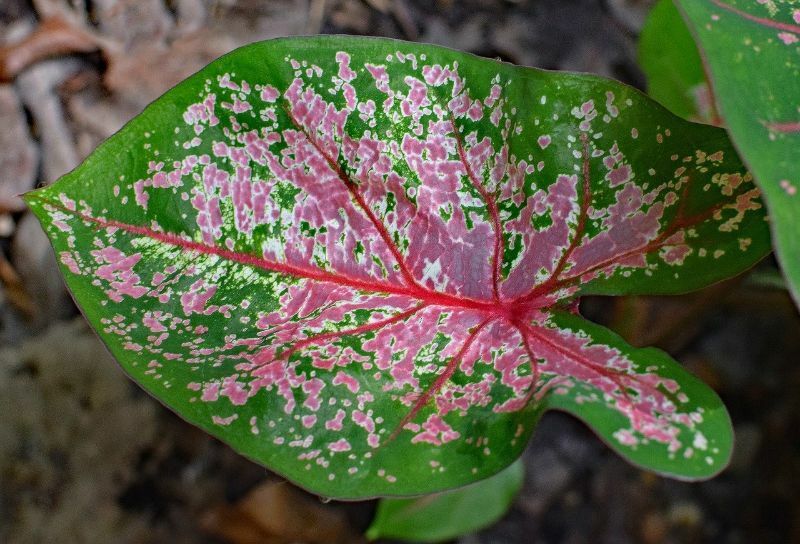
Caladium leaves curl due to overwatering, the improper soil pH, too much sun and wind, pests, and the inappropriate temperature. Caladium will return to normal if only watered when the soil is dry, pests are treated with neem oil, the soil pH is 6.0 to 6.5, and the leaves are kept out of direct sunlight.
Overall, curled leaves indicate that the caladium plant is stressed. The way the leaves curl provides a decent indicator of what’s causing them to curl. Here’s a quick rundown for your convenience:
I’ll show you how to fix each of these problems, as well as the accompanying symptoms of each problem, so that your caladium’s leaves are firm, flat, and attractive.
Why do my leaves curl?
Curled, decaying leaves are a common response to a plant’s demands not being supplied. When a plant doesn’t get enough water, its leaves wilt or curl up, but too much water can also produce leaf curl. Keep the soil moist but not dripping wet. Leaf roll can also be triggered by extreme heat and drought. Using a shade cloth to protect plants during the warmest portion of the day is beneficial. Leaf curl can also be caused by transplant shock, root injury, or trimming. The leaves will thicken and curl, but they will stay green. The plant will normally recover with adequate care and the leaves will return to normal.
Do caladiums like to be misted?
Caladium plants should be grown in a medium-light environment with protection from the midday sun, which can scorch the foliage. The best exposure is usually from a northern or eastern window. Caladium tubers are native to South American tropical forests and grow seasonal foliage during the rainy, warm season, therefore humidity is essential for Caladium houseplant care.
The key to successfully introducing the plant to the home interior is to mimic the plant’s native environment. Misting and placing a saucer filled with stones and water under the container might help keep the humidity high in a warm home. The evaporation will moisten the surrounding air and supply the humidity that your Caladium requires. Keep your plant away from drafty windows or doors, as well as heating vents that blast dry air.
You’ll need to maintain your plant watered and happy while it’s still in its foliar splendor. Fertilize the plant only when it is actively growing, which is from spring to late summer. No extra meal is required in the fall and winter. When the soil feels dry to the touch, water it.
Maintain a temperature of at least 65 degrees Fahrenheit for the plant (18 C.). Allow the leaves to die back until they are completely wasted before cutting them off. After that, you can either take the tubers, dry them, and store them in peat in a breathable bag, or leave them in the soil and stop watering them.
In the spring, either plant the tubers that have been stored or start watering the tubers that have been potted. Move the container to a slightly stronger light, being cautious not to burn the new shoots. Once the container has blossomed completely, slowly reintroduce it to the outdoors until fall, then repeat the process.
How do you fix curled plant leaves?
Move your houseplant to a spot that receives more adequate light for the type of plant you have to cure curled leaves caused by too much light. Also, learn about the permissible light requirements for your particular plant. Curled leaves on indoor plants can occur for a variety of causes.
How do you revive a caladium wilting?
Caladiums are native to tropical Brazil and dislike cold weather. The leaves will begin to droop and eventually collapse when air temperatures fall below 65 degrees Fahrenheit, including at night. If the plants are in pots, bring them inside during the night and return them to the outdoors during the day. If they’re in the ground, cover them with an old sheet at night to keep the heat in.
Why are my anthurium leaves curling?
In the United States of America and Canada, the anthurium plant has become a must-have houseplant. In recent days, the lovely foliage and gorgeous year-round bloom are worth your consideration.
Anthurium houseplants are simple to grow. However, your anthurium leaves may get twisted and wrinkled in rare circumstances. It’s understandable to be concerned, but there’s no reason to panic. Fortunately, this article will identify the most prevalent issues and assist you in restoring the houseplant.
Pest infestations, temperature stress, overwatering, inadequate sunlight exposure, low humidity, and other factors are among the most common causes of curling anthurium leaves. The first step in resolving this problem is to figure out what’s causing it.
Identifying the source of curling leaves on an anthurium plant can be a difficult task. Checking the plant’s growth health and inspecting the wrinkling patterns on the leaf is a good rule of thumb.
How do you treat leaf curls naturally?
Spraying sulfur or copper after leaf drop in the fall and again in the spring is the most popular treatment for leaf curl.
It’s common belief that once the leaves are contaminated, there’s little you can do to save them during the season. And that you’ll have to wait until the fall to do so. However, spraying the tree with these items would cause the remaining leaves to burn.
That’s not quite what we’re searching for, is it? You don’t want to lose an entire crop this year, do you?
Who wants to spend the entire season watching the tree disease? It was not acceptable to have icky fungus spores slowly kill our fruit trees.
Do caladiums like sun or shade?
Caladiums thrive in shaded areas of the yard and garden. They thrive in full to partial shade in southern climates. Most caladiums can be grown in the sun in northern climates if they are given enough water and their leaves are shaded during the warmest portion of the day.
How often should I water my caladium?
Moisture and feeding are the most important aspects of caladium care. Fertilizer will help the plants grow stronger so that they can produce enough tubers for the following growing season.
Caladiums require constant watering, especially during periods of drought. Watering them on a weekly basis is actually suggested. Container-grown caladiums should be examined every day and watered as needed. Mulch around caladium plants, especially in pots, will aid to conserve and maintain moisture.
Caladiums must be dug up in the fall and preserved indoors throughout the winter in cold locations because they are considered sensitive perennials. Caladiums can be carefully plucked from the ground once their foliage turns yellow and begins to fall apart. Place the plants in a warm, dry place for at least two weeks to allow them to dry out. After that, remove the foliage and place the tubers in a netted bag or box with dry peat moss on top. Put the tubers away in a cold, dry place. You may transplant outside once spring arrives. Caladiums can be overwintered inside if they are grown in containers.
You may add these lovely plants to your landscape now that you know how to plant caladiums. Caladium bulb planting is simple, and with good caladium maintenance, they can last for years.
Why is my caladium bending?
When there isn’t enough water or it’s too chilly, caladium leaves bend and droop. Ensure that the Caladium plants are not exposed to temperatures below 60 degrees Fahrenheit is one of the issues to address.
If you had caladiums outside, bring them inside as soon as the temps begin to drop.
The second step is to make sure the plant is getting enough water, as mentioned previously. The plant is already stressed by the time you notice drooping leaves.
Wind is another factor to consider while planting Caladiums outside. To avoid wind damage, make sure they’re planted in a sheltered area.
When the plants are exposed to the wind, the fragile leaves and stems might be damaged as they are blown around.
What are the symptoms of leaf curl?
Leaf curl is a disease that affects peach, nectarine, and related ornamental plants in the spring. Though the disease isn’t a problem every spring, it can be particularly bad after a warm winter and a cool, damp spring. The leaf curl fungus kills peach trees by forcing them to remove their leaves prematurely. The trees become weaker as a result, leaving them more prone to various illnesses and winter damage. The following season, weaker trees will produce fewer fruits. When blooms and immature fruit get sick and drop, yields may be further diminished.
Symptoms
Leaf curl symptoms emerge in the spring. The leaves are significantly deformed (thickened and puckered) and have a crimson or purple cast as they develop. The leaves turn powdery gray in hue when spores grow on the leaf surface. The leaves become yellow or brown and fall shortly after that.
This disease does not spread from sick leaves in the spring to new leaves generated later in the growth season. During that growth season, no further symptoms will occur once the diseased leaves have fallen. Swollen and stunted twigs with a faint golden hue are signs of disease. At the apex of their leaves, they frequently develop curled leaves.
Flowers and fruit can get infected, however this is a rare occurrence. They die soon after becoming afflicted. Shiny, crimson, elevated, warty patches characterize diseased fruit.
Causal Organism
Taphrina deformans is the fungus that causes peach leaf curl. The fungus survives the winter in the form of spores (conidia) on the bark and buds of trees and shrubs. Early in the growth season, infection occurs. The conidia infect new leaves as they develop from the buds during the chilly, rainy spring season. Host plant tissues are only vulnerable for a short time. The tissues become more resistant as they age. On the upper surface of the infected leaves, the fungus forms a different type of spore (ascospore). Ascospores produce more conidia via budding under moist conditions. Rain and wind carry the conidia to different areas of the tree, where they will overwinter until the next spring.
Leaf curl infection might be limited by the environment. This helps to explain why the sickness doesn’t strike every year. When the temperature is cool and rainy, leaf curl is exacerbated. Low temperatures are supposed to slow the maturity of leaf tissue, allowing infection to take longer. At temperatures between 50 and 70 degrees F, the fungus may easily penetrate young peach leaves, but only weakly below 45 degrees F. Infection necessitates rain.