
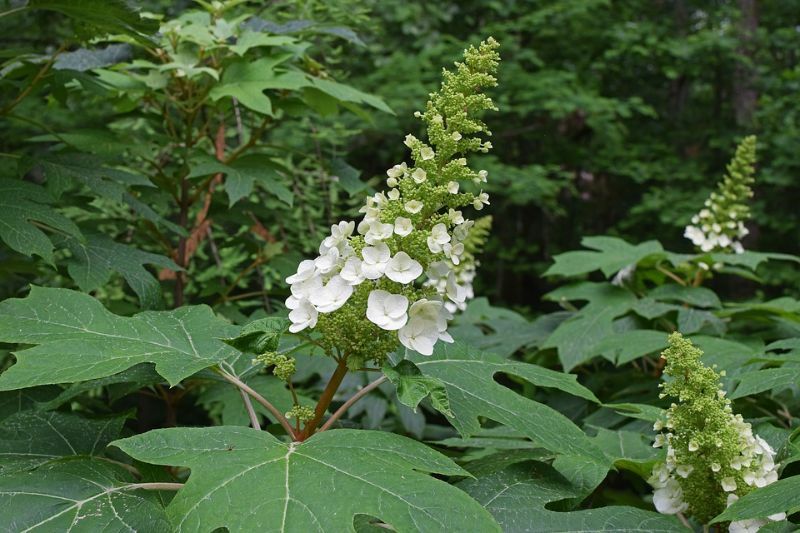
Maybe it’s time to consider transferring your oakleaf hydrangea if it’s outgrown its existing setting. Or perhaps you’re simply redoing your yard. Don’t be scared by this assignment, no matter what your requirements are. The move will be well tolerated by a robust, well-established oakleaf hydrangea with a strong root foundation. After your specimen has lost all of its foliage and entered dormancy, the optimum time to transfer it is in the fall or early winter.
When can I move oakleaf hydrangea?
If the ground isn’t frozen, the best time to transplant your Oakleaf hydrangea is late fall or late winter.
Oakleaf plants prefer well-drained soil and should not be transplanted in heavy soil. If the soil in your plant’s new habitat is heavy, enrich it with organic material. Winter wind damage is a concern for oakleaf hydrangeas, so choose a protected location for the best results.
Because the Oakleaf Hydrangea and its root ball are so hefty, ask the assistance of a buddy or two while lifting and moving your plant. The job will be made easier with the use of a sled, stone boat, or wheelbarrow. As a makeshift sled, I’ve used a tarp or heavy gauge plastic.
To protect the canes from damage during digging and transferring, bundle them loosely together and wrap them in burlap, a tarp, an old sheet, blanket, or rug.
To dig up your Oakleaf, start digging around 1-1 1/2 feet away from the plant’s base. Cut a circular path through the earth with the shovel, elevating the blade to remove as much root ball as possible. Use the shovel to work under the root ball and lift the plant. Move and transplant your hydrangea as soon as possible to avoid root damage from desiccation. Dig a new hole that is as deep as the root ball and slightly wider. Fill up the gaps surrounding your hydrangea with as much soil as needed once it has been placed in its new home.
To settle the dirt and hydrate the roots, water your plant well. Because the plant is dormant, you won’t need to water it again during the winter, but checking for moisture on a regular basis will ensure that the rootball doesn’t dry up.
Keep the soil around the transplanted hydrangea wet (not damp or soggy) until the roots have a chance to establish themselves in the spring.
Applying a 3″ to 4″ layer of mulch to the transplanted Oakleaf’s root zone will provide further winter protection. Allow for air circulation by leaving a gap of 2-3 inches around the stems.
I’ve successfully utilized this method to relocate Hydrangeas, some of which were so enormous that a winch line was required to remove them from their previous location and ramp them onto a truck.
I haven’t found that pruning relocated dormant Hydrangeas is necessary, but I do strive to dig them out without severing too many roots.
How do you transplant an oak leaf hydrangea?
At the edge of the transplant hole, create a 2- to 3-inch-high ring of earth around the new hydrangea. Cover the earth surrounding the hydrangea with 3 inches of mulch, but keep it 1 to 2 inches away from the stems. For the first two years after planting, water it once or twice a week.
Can oakleaf hydrangea be divided?
Entire hydrangea plants can be dug and split into two or more parts if you don’t notice any shoots or are getting portions without roots. Early spring is the finest time to divide bigleaf hydrangeas, just as new green buds begin to expand and open along the stems.
Should oakleaf hydrangea be cut back in the fall?
The oakleaf hydrangea is a deciduous, blooming shrub that is great for borders, bulk planting, and foundation planting. The flowers are pink, pastel purple, and creamy white in color and bloom throughout the summer and fall. Although this hydrangea doesn’t require much pruning, a little cut once a year will keep it looking tidy. Oakleaf hydrangeas bloom on the previous season’s growth, so prune in the fall or early winter after blossoming.
Can you transplant hydrangeas in spring?
Planting hydrangea shrubs in the spring and fall is great; however, most publications I discovered recommend waiting for cooler weather and transplanting the bushes in late fall or early spring, when the plants are dormant but the soil is still usable. Choose a location with well-drained soil.
Can you dig up and move hydrangeas?
Dig up as much of the rootball as possible when transplanting a hydrangea. Because the roots are fibrous and create a ball loaded with earth, the plant may be quite heavy, so you may need assistance.
Replant the hydrangea in a shady location in the afternoon. This will not only help the plant live, but it is also where hydrangeas prefer to grow, especially in the South.
If you transplant your hydrangeas when they are dormant (which is the optimal period), water them well once. They may not require any additional water until the spring, when the weather becomes warmer.
Hydrangeas should be kept well watered throughout the first and second summers following transplanting.
Deep watering is the best method. Instead of using a sprinkler system, water with a hose. Do not, however, over-water. Allowing the plants to dry up might be just as damaging as watering them every day.
Mist the leaves every day until they recover if they wilt and the soil is moist enough.
Allow the soil surrounding the hydrangeas to dry up if your soil does not drain effectively. This is especially true for oakleaf hydrangeas, which will rot in a heartbeat if they are first planted in moist soil.
Can I transplant a hydrangea in the summer?
Is it Possible to Plant Hydrangeas in the Summer? Hydrangeas can also be transplanted in the spring or summer, with the exception of when temperatures are excessively hot in the summer or when there is a heat wave. Be aware that hydrangeas in bloom may lose their blossoms as a result of transplant shock. Leaves and buds can be harmed as well.
Will oakleaf hydrangea grow in shade?
To ask which of my plants is my favorite is like asking which of my children is my fave! A difficult topic to answer, but since I’m not in danger of hurting sensitive young egos, I’d have to say the oakleaf hydrangea is one of my favorites (Hydrangea quercifolia). The reason for this is that this is a plant that has four distinct seasons of appeal. That appeals to me since it saves me time, energy, and money. It rewards me in the spring, summer, fall, and winter once it has established.
Hydrangea quercifolia is a shrub that grows to be around six to eight feet tall, with a maximum height of ten to twelve feet. The huge, dark green leaves have silvery undersides and resemble the Northern Red Oak, from which it receives its popular name. It can be grown in zones 5 through 9.
Cone-shaped flowers can grow up to a foot in length. The blossoms start out white, then acquire a pink blush before turning red as the seasons pass. Single or double florets might be found.
Although the spring and summer are lovely and lush, I am looking forward to the warm days and cool nights of October and November, when the flowers change red and the foliage takes on a variety of yellow, orange, red, brown, and burgundy hues. In protected areas, the leaves last for a long time before falling to reveal an uneven branching structure of cinnamon-colored peeling bark. The contrast against a snowy white bedspread is breathtaking.
Oakleaf hydrangeas thrive in hotter climates, but they like some afternoon shade. It can be grown in full sun in its northern range. The more sun exposure you get, the more flowers you’ll receive, and the more stunning the fall color will be.
This shrub can survive drier soil than its mophead relatives, but not wet feet. Plant it in acidic, wet, well-drained soil supplemented with compost or other organic matter. It can be used as a specimen feature in the landscape or as a mass planting in shaded wooded regions.
Pruning is rarely essential, although it should be done after the flowers have faded and before August. Late summer and early fall are the best times to plant flower buds for the next year. By simply snipping off old flowers, you can “deadhead” them at any time. I like to leave the blossoms on the plant throughout the winter months so that I may enjoy them.
You can cut longer stems for flower arrangements before August if you’re cutting blossoms for arrangements. After that, only remove short stems to avoid losing next year’s blooms.
Oakleaf hydrangeas are generally pest and disease free. This is another bonus in my eyes because it means that plants will look and perform their best all year long without the need of chemicals (always a last resort in my book).
The double flowered variety ‘Snowflake’ is arguably the most popular. Its creamy white blossoms can reach a length of a foot.
In the spring, the foliage of ‘Little Honey’ turns golden, then chartreuse, then green, with a gorgeous burgundy red fall color.
Oakleaf hydrangeas are a perennial favorite in my yard. They’re lovely all year with stunning leaves, exquisite flowers, and fascinating bark, and they’re hardy in many regions of the country. They’re pest and disease resistant, bloom in the shade, and are very little maintenance. What more could we expect of a plant for our landscapes and gardens?
Where is the best place to plant a hydrangea?
Learning the basics of how to plant hydrangeas, like most things in your yard, can save you time and money. You may boost your chances of enjoying enormous, colorful hydrangea flowers for years to come by choosing the appropriate spot, getting the soil just right, and planting correctly.
The best time to grow hydrangeas is in the fall, followed by early spring. The goal is to give the shrub plenty of time to develop a strong root system before it blooms. Early morning or late afternoon are the finest times to plant. The cooler hours of the day provide relief from heat exhaustion. Keep new plants well-watered until they have established themselves.
The first step in planting hydrangea shrubs is to figure out where they should go. Hydrangeas are commonly planted in gardens adjacent to houses or fences. This is because hydrangeas prefer the warmth of the early sun to the heat of the afternoon sun. Hydrangeas thrive in a sheltered position with sun in the mornings and shade in the afternoons. This is most common on the north or south sides of your house. Avoid planting immediately beneath trees, as this can result in water and nutrient competition. Winds can rip and harm foliage, as well as ruin flowers.
Hydrangeas thrive in soil with a high content of organic matter. It’s critical to have good drainage. Hydrangeas prefer damp soil, but they cannot stand being waterlogged. Root rot can be caused by soggy, poorly draining soils. Your hydrangeas can perish in a matter of weeks. If your soil is heavy, use plenty of compost before planting to increase the quality of the soil.
Simply drill planting holes 2 feet wider than the root ball when planting hydrangeas. Keep the hole depth constant with the size of the root ball so that your plant sits level with or slightly above the surrounding soil. You can aid promote water drainage away from the plant’s base by making a tiny mound.
Simple propagation procedures can multiply a single hydrangea into a large number of plants. Layering is the greatest way to propagate bigleaf and panicle hydrangeas in the early to mid-summer. All you have to do is complete the following steps:
- Bend a branch down into the trench until the middle of the branch meets the soil (six to 12 inches of branch should extend past the trench).
- The branch will eventually create its own root system and be able to be transplanted to a new spot.
Hydrangeas, both smooth and oakleaf, produce new shoots from underground stems. Simply separate the baby plant from the main plant by digging it up. It can then be moved to a different position.
How deep are oakleaf hydrangea roots?
The majority of hydrangea plant roots are found in the top 6 inches of soil; you must keep this layer wet but not soggy. Hydrangea rhizome roots may easily push through nutrient-rich, friable soil to make room for smaller, fibrous root growths. The Old Farmer’s Almanac recommends watering deeply once a week to foster a healthy root expansion. Spread mulch around the soil to help keep the ground moist. You don’t need to water your plants all the time because frequent sprinklings produce shallow, weak roots.