
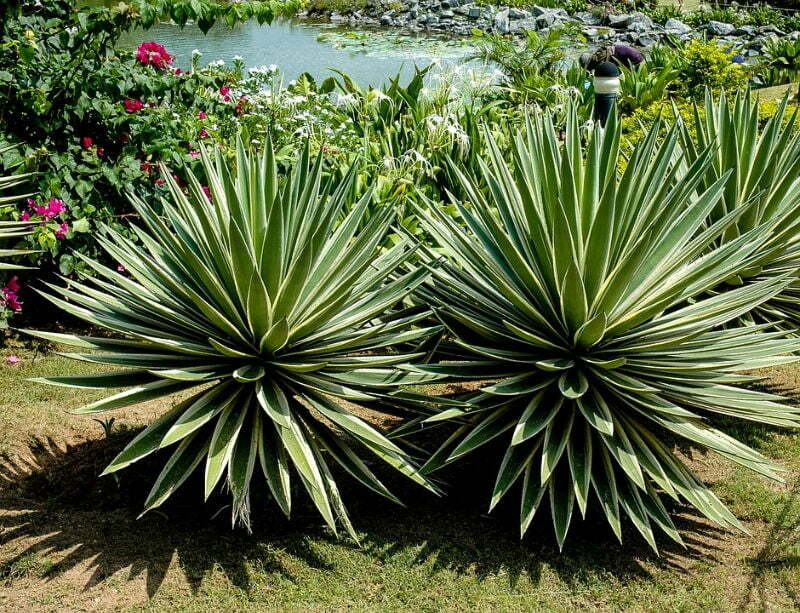
Mixto: This term isn’t found on the bottle label, but if you don’t see “100% De Agave,” you’re dealing with a mixto. This sort of tequila is made up of at least 51 percent sugars derived from the blue agave plant, as well as additional sugars like cane sugar. Mixto tequilas are reasonably priced and contain some of the most popularly purchased tequilas, such as Jose Cuervo Gold and Sauza.
Tequilas that are 100 percent De Agave or 100 percent Puro De Agave are made entirely from fermented and distilled blue agave. They are more expensive, but in terms of quality and flavor, they are considered superior to mixtos. Patron, Herradura, Don Julio, and Cazadores are all 100% agave tequila brands.
Tequila made from either mixto or 100 percent agave can be classified as aged in one of the following ways:
Blanco, White, Plata, Platinum, or Silver: Generally unaged, but occasionally aged in barrels for less than two months. They have a clear color to them.
Most gold tequilas (Cuervo Gold, for example) are mixto tequilas that have been contaminated with colorants or flavorings. There are just a few joven tequilas that are 100 percent agave tequilas (for example, Casa Dragones), and most joven tequilas are made by blending a blanco tequila with an older tequila to enhance color or flavor.
Reposado tequila is tequila that has been matured in oak barrels for two to one year. Large vats or small barrels can be used.
Tequila matured for at least one year in oak barrels no greater than 600 liters is known as anejo.
Tequila matured for at least three years in oak vessels no greater than 600 liters is known as Extra-Anejo.
It’s a common misconception that blanco tequilas are for mixing while reposado, anejo, and extra-anejo tequilas are for sipping. Blanco tequilas produce excellent margaritas and blend well with fruity cocktails. Longer-aged tequilas develop caramel woody aromas and can be used in place of other aged spirits such as bourbon. (If you’re feeling adventurous, try an Anejo Tequila Manhattan.) Many 100% agave tequilas are also excellent for sipping at any age.
Is de agave wine tequila?
Agave wine is made in Mexico. It’s a fortified wine prepared from fermented blue agave that’s been fortified with blanco tequila. It’s similar to tequila in that it’s made from the same plant as tequila. Although both alcoholic beverages are made from the weber blue agave plant, their flavors are similar but distinct. Agave wine has a substantially lower alcohol concentration and can be sold by sellers without a liquor license in the United States. Agave wine, like tequila, is available in 100 percent de agave and mixto varieties. Long used in traditional Mexican margaritas, 100 percent de agave wine is claimed to generate margaritas that are as delicious as, if not better than, tequila-based margaritas.
What is the difference between de agave and blue agave?
Consumers are always forced to turn to natural sweeteners due to the negative health effects of added sugar. Agave is one of the most widely used natural sweeteners on the planet. Agaves are divided into two types: ordinary agave and blue agave. These sweeteners are mostly utilized in the confectionery industry as a food additive. Agave is primarily sourced from plants. It is a sweetener made commercially from numerous agave species, including Agave tequilana and Agave salmiana. The fundamental distinction between Agave and Blue Agave is that blue agave is only found in the Blue Agave plant (Agave tequilana). Agave nectar is made from a variety of agave plants, including Grey, Green, and Thorny Agave.
What tequila is 100 percent agave?
Casamigos is a Hollywood favorite because to its co-founder George Clooney, but it has a lot of substance to go along with its style. Casamigos is a 100% agave tequila manufactured in the Jalisco highlands. It’s one of the smoothest and most natural-tasting tequilas on our list. Clooney and Rande Gerber, the company’s co-founder, said they aimed to create, “The best-tasting, smoothest tequila that didn’t require the addition of salt or lime.”
Nothing beats a good cocktail, whether you’re at an A-list after-party or just relaxing at home “For a refreshing, celeb-approved drink, try “casamigos and soda.” Each batch is distilled in stainless steel barrels for at least two months, yielding a pleasant blend of sweet agave, mild citrus, and a hint of vanilla.
Why do some tequilas say 100% agave?
Tequilas with the phrase “100% Blue Agave” on the label are Tequilas created entirely of Blue Agave. To make it seem like a quality tequila, mixto makers generally add colorings, flavorings, and thickeners in addition to additional sugars.
Does mezcal taste like tequila?
Many people have been duped by urban legends or deceptive marketing practices. Some people mistakenly believe that mezcal and tequila are the same thing, which isn’t true. We’ve come to dispel the myths around mezcal and tequila.
Mezcal (sometimes written mescal) is a distilled alcohol manufactured from the agave plant in Mexico. Tequila is technically a mezcal, but there are variances in the way it is made and the types of agave that are utilized. Tequila is created from a particular variety of agave plant, the agave tequilana (blue agave), and can only be grown in Jalisco and a few other states.
Mezcal is prepared from up to 28 types of agave (including blue agave) and is produced in and around the city of Oaxaca, as well as in some areas of Guerrero, Durango, San Luis Potosi, and Zacatecas, according to official government laws (NOM -070-SCFI-1994). The Espadin agave is used to make the majority of mezcals, while some manufacturers mix agave varietals to create a unique flavor.
Mezcal has a distinct, smokey flavor that allows it to be distinguished from tequila. It also has a sweeter or richer flavor than tequila. Some mezcal producers have adopted tequila-like production procedures, and the resulting mezcal has a tequila-like flavor profile.
Traditional Methods
The agave head is cooked in an above-ground oven when tequila is manufactured. This started in the late 1800s. Mezcal manufacturers, on the other hand, frequently use in-ground pits as a traditional technique of production. Agave heads (also known as agave hearts or pias) are roasted or grilled in a cone-shaped pit over hot rocks (called palenques or hornos). To heat the stones that line the pit, a fire is created and burned for around 24 hours. The agave heads are placed in the pit and then covered with moist agave fiber from the fermentation process. The fibers are covered with agave leaves or woven palm fronds, and the agave heads are left to simmer for two to three days.
Types of Mezcal
Mezcal is regulated by the Mexican government, which defines several varieties and age categories in a similar way as tequila. Mezcal is divided into two categories per the regulations:
There are three aging categories:
Abacado (also known as joven or blanco) is a transparent, unaged mezcal produced via distillation. It’s usually bottled right away, but flavoring and coloring additives might be added afterwards.
Tequila producers are not allowed to make mezcal, and mezcal producers are not allowed to make tequila.
The Worm
Agave is the main ingredient in mezcal “The “worm” (or gusano) that floats to the bottle’s bottom. It is essentially a marketing ploy designed to increase sales, particularly in the United States and Asia. In actuality, it isn’t a problem “A caterpillar of a night butterfly or the larvae of the agave snout weevil are two insect larvae that can infest yucca and agave plants.
Now that you’ve clarified a few points, you can explain the distinctions between mezcal and tequila to anyone who is confused. If you’re still stumped, give them a shot! The unrivaled flavors will unquestionably speak for themselves. And if you ever want a nice refreshing drink made with mezcal or tequila, stop by (insert restaurant name) and we’ll be pleased to make you one! Keep in mind that it’s always five o’clock someplace!
Is Mezcal Stronger than Tequila?
Is mezcal more potent than tequila? No, that is not the case. It simply has a reputation for being one of the more powerful spirits. Many people believe that mezcal has a stronger flavor than tequila, however that’s a different story.
Tequila and mezcal are both between 38 and 55 percent ABV (Alcohol by Volume), or 76 and 110 proof, respectively. Yes, a specific mezcal can be stronger than a specific tequila, but the opposite can also be true. If you order a mezcal or tequila neat or on the rocks in a bar, you’re likely to get a spirit with an ABV of around 40%, which is the same as the vast majority of spirits sold around the world.
Where are Mezcal and Tequila Made?
The town of Tequila, located in the Mexican state of Jalisco, about an hour’s drive northwest of Guadalajara, is where tequila derives its name. The majority of tequila is made in this region, while it can also be made in specified locations in the states of Guanajuato, Michoacán, Nayarit, and Tamaulipas per Mexican law. You can’t call it tequila if it’s made somewhere else.
Mezcal, on the other hand, is produced in a broader area, yet Mexican law regulates where the spirit can be produced and still be called mezcal. Oaxaca is the largest producer, but it is also produced in Durango, Guanajuato, Guerrero, San Luis Potosi, Tamaulipas, Zacatecas, Michoacan, and Puebla.
How is Mezcal Different from Tequila?
What are the additional differences between tequila and mezcal besides where they’re made? The first question is, “What is it made of?” Only the blue agave plant can be used to make tequila. To be termed tequila, it must contain at least 51 percent blue agave, although the greatest tequilas include 100 percent blue agave. You have no idea what else is in there if it doesn’t mention so on the label.
Any type of agave plant can be used to make mezcal. Tequila is technically a mezcal, but it is a spirit that has gone its own way and developed its own personality. There are about 200 different types of agave plants, of which roughly 30 are suitable for distillation into mezcal, yet the bulk of mezcals are made from just seven varieties.
How Are Mezcal and Tequila Made?
Another distinction between tequila and mezcal is the method of manufacture. Both spirits are created from the pias, or hearts, of agave plants. These are baked in ovens for tequila, but they are baked in subterranean pits for mezcal, giving the drink a smokier, more powerful flavor.
Another distinction between mezcal and tequila is that tequila, like whiskey, can be aged in barrels to produce various tequila varieties (see my Mexican Spirits 101 page). Mezcal is traditionally bottled and consumed right away.
Finally, mezcal has always been produced in small batches by family-run distilleries. Each town or hamlet would have one or more mezcal producers, and the majority of the mezcal would be consumed locally. Tequila can be created in this manner as well, but many distilleries, such as Patron, are large operations with tequilas distributed all over the world.
Why is Mezcal More Expensive than Tequila?
Because of the method mezcal is created, which is mainly in tiny batches by small distilleries, it is more expensive than tequila. It is not only more expensive to create, but it is also more costly to export in tiny quantities when compared to tequila.
Is Mezcal Better than Tequila?
Tequila is superior to mezcal. It’s just a little different. A decent tequila, on the other hand, is preferable to a terrible mezcal. It also relies on your personal preferences. Mezcals are smokier than Speyside whiskies, similar to Islay whiskies. If you’re a fan of Islay whiskies, you should definitely try mezcal. Some have compared the complexity of mezcal to that of whisky.
To be clear, mezcal isn’t as powerful as tequila. It also doesn’t cause you to have hallucinations. That’s the drug, mescaline, and the only thing they have in common is a similar sounding name.
What is the difference between tequila and mezcal?
In a nutshell, mezcal is a distilled alcohol made from any agave plant kind. The agave is cooked in pits in the ground, which imparts a pronounced smokey flavor. Tequila is a distilled spirit composed entirely of blue agave. When aged (called resposado or aejo), it has a smoother, richer flavor that is agave-forward.
- Mezcal gives drinks a smokey flavor. It’s true that a little goes a long way! Mezcal is sometimes used with tequila to create smoky twists on classic cocktails, such as the Mezcal Margarita or Mezcal Paloma.
- Tequila is a well-known spirit that has been featured in classic cocktails for ages. The Margarita, Paloma, and Tequila Sunrise are all popular cocktails.
Is 100% agave the same as 100% blue agave?
Not all mezcal is tequila, and not all tequila is mezcal. Tequila can only be manufactured from agave tequilana (blue agave), but mezcal can be made from over 30 different agave species (AKA maguey). (Agave espading is used to make the majority of mezcals.)
Agave is not a cactus.
Agave is a succulent, not a cactus. Tequila and cacti have nothing to do with each other. Unless you’re sitting next to one, sipping a joven, of course. The agave plant is a succulent that grows in the desert.
Blue agave typically takes eight years to mature.
Agave is difficult to grow, to say the least. The correct desert conditions are required, and even then, most blue agave takes eight years to mature. And that’s only to get you to the harvesting stage. Add some more time to your tequila if you want it to age.
The blue agave plant only has one life to give.
The fact that blue agave is a one-time use plant doesn’t help efficiency. When the agave plants are ready to be harvested, their pias or hearts are ripped out. They’re called that because they end up looking like pineapples. These are the portions of the plant that will be cooked, crushed, and fermented to make tequila.
Tequila is legally required to be only 51% blue agave.
Tequila is created from blue agave, but it does not have to be made entirely from this plant. Many tequilas claim to be made entirely of blue agave, while the legal requirement is 51 percent. The balance of the bottle can be filled with a neutral spirit prepared from cane sugar juice, resulting in a “mixto” tequila. These are, unsurprisingly, believed to be of poorer grade.
Your tequila bottle should not have a worm in it.
There will be no worms in the tequila, FYI. The link between tequila and worms is (possibly) due to the fact that maguey plants are frequently chewed on by “gusano de maguey,” small larvae that, if not interrupted, would develop into a mariposa, a butterfly-like creature. It’s mezcal, not tequila, when they’re inserted into liquor bottles as larvae. So, if there’s a worm in your tequila, don’t drink it. Who knows what else is wrong in the bottle if the maker got that wrong.
Young tequila is really young.
We consume a lot of tequila that is still young. And by aging standards, that’s still rather young: blanco/joven is 0 to 2 months old, reposado is 2 months to 1 year old, and aejo is 1 to 3 years old. There is, however, such a thing called “extra aejo,” which takes tequila maturation to a new level (3 years or more).
You can buy tequila that has been aged for over a decade.
Although three years may seem like a long time to age tequila, one of the oldest “extra aejos” now for sale is 11 years old and costs upwards of $1000. It’s composed entirely of organic blue agave and aged in French oak barrels. A fantastic (really fantastic) present for the tequila connoisseur in your life?
The name tequila carries legal weight around the globe.
Tequila is protected as a Mexican designation of origin in dozens of nations, similar to European Union products with protected names (e.g. Champagne and Prosciutto di Parma). That protection is built into NAFTA in the United States and Canada. So please don’t try to brew tequila in your bathtub.
The Tahona process is as crafty as it gets.
Tequila may be as artisanal as the most artisanal crafty little spirit. Even if it’s made by a major manufacturer. Tequila is manufactured by heating and crushing the gigantic pias, as you may know. The Tahona processbasically dragging a giant volcanic wheel over the cooked agave heartsis one method those pias can (and have) been crushed. Donkeys are still used in some places, according to tradition. We’re not sure anything is more artisan than using a donkey.