
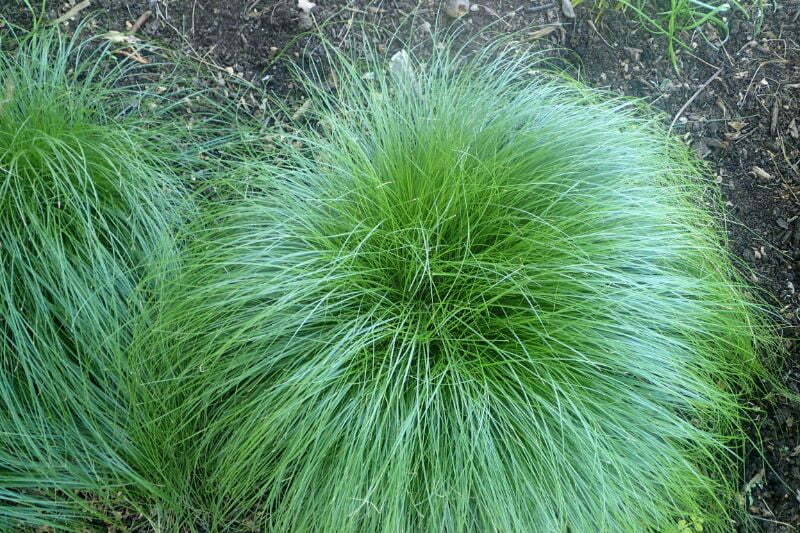
- From 6 inches to 2 feet tall and wide, this creeping perennial with blue-gray, grasslike foliage.
Does Carex plant spread?
Carex oshimensis is a plant that grows in Japan. The grassy, evergreen sedge ‘Evergold’ has long golden leaves with rich green edges. It forms a lovely, arching cluster that stays put. It looks great planted beside ponds or at the edge of borders, and it’s wonderful for planting in annual container displays as a foil for brilliantly colored flowers. It has received the renowned Award of Garden Merit from the Royal Horticultural Society (AGM).
How do you get rid of Carex?
The RHS thinks that the first line of defense against pests, diseases, and weeds should be proper cultivation practices, cultivar selection, garden hygiene, and supporting or introducing natural enemies. If chemical controls are utilized, they should be applied sparingly and with great precision.
Cultural control
Plants can be dug out by hand on a small scale. In bigger areas, enhancing drainage by installing land drains, as well as liming to lower acidity, will deter the sedge. Carex pendula and Carex binervis seeding can be prevented by cutting plants on a regular basis (C. hirta grows from a rhizome and seeds much less).
Apply a high nitrogen fertilizer to lawns and meadows to encourage vigorous growth of the other grasses. The sedge can be controlled by mowing it selectively. Goats are effective in controlling rushes (Juncus) and sedges in meadows (Carex).
Weedkiller control
Selective lawn herbicides are not effective against Carex. Individual plants can be treated using glyphosate-based ready-to-use sprays. Glyphosate is a systemic, non-selective weedkiller that is administered to the foliage. Raking in some grass seed after the sedges have been eliminated will encourage the barren patch to recover fast. If there are severe weed infestations, the entire site may need to be treated and reseeded. Chemical management is unlikely to be effective unless it is combined with drainage improvement.
Only complete fallowing will clear the site if it is heavily infested with sedge seeds. This is accomplished by removing the area of vegetation, establishing a seed bed, allowing the sedge seeds to develop, killing them (with a contact weedkiller like Weedol Gun! Fast Acting), and cultivating the area again to bring more latent seeds near the surface. The fresh seeds on the surface will germinate and can then be sprayed away. If required, repeat the procedure 3 or 4 times more until the top 2 or 3 inches of soil are virtually free of dormant sedge seeds.
The inclusion of a weedkiller product does not imply that the RHS recommends or endorses it. It’s a list of products available to home gardeners right now.
Which ornamental grasses are invasive?
- Pampas grass (Cortaderia selloana, Cortaderia jubata) is abundant. If I had grown up in a community with a homeowner’s association, there would have been only one rule: everyone must plant a pampas grass mound outside their mailbox. Pampas seeds prolifically and is invasive in California and Hawaii, as well as South Africa and New Zealand, where it is prohibited for sale.
- Miscanthus spp. (Maidengrass)
- It’s amazing how many various Miscanthus species are available in the nursery trade; M. sinensis appears to be the most popular, and there are a billion different varieties. I’ve read that some species and/or cultivars are invasive, while others are not: Variegated ones are a concern; antique species aren’t; it all relies on when they bloom and shed seed during the growing season. Personally, I find that there is far too much material to sort through. I understand that Miscanthus spp. is an important landscaping plant, however I no longer purchase Miscanthus spp. Many people, I’m sure, will disagree.
- Reed canary grass or ribbon grass (Phalaris arundinacea) is a wetland invader in the wild, but there are a few white-striped varieties available in nurseries.
What grass is not invasive?
Grasses come in such a wide range of colors, sizes, and textures that you can easily select the appropriate grass to match your landscaping needs, whether you want to plant them in the shade or in the sun.
It’s simple to grow ornamentals. When it comes to picking the proper grass for your yard, there are a few factors to consider. We’ll assist you in answering a few key questions and provide you a list of our top ornamental grasses that stay put.
Nobody wants to deal with quack grass or other invasive grasses that may quickly overtake a yard. Make thoughtful choices and you’ll be rewarded with a stunning show.
Are there Different Types of Grasses?
Based on the structure of their roots, grasses can be divided into three types. Creeping grass spreads swiftly and forms vast colonies thanks to its long rhizomes. Many of these grasses are invasive and should be avoided when planted in a controlled environment.
Clumping grass forms thick tufts that spread in diameter over time, although it is easy to control by dividing. They’re a low-growing grass that’s perfect for putting in an ornamental garden.
Finally, some grasses that develop sod and have short rhizomes are not deemed invasive. They resemble tufts but are less dense than clumping grass, and while they do spread outward, they are rather easy to regulate.
How to Tell if the Grass is Invasive
Before buying a grass from the garden center, make sure it’s not invasive. Examine the shape and growth of the potted plant’s stems. Clumping grass is made up of stems that form a small, thick cluster.
It has small rhizomes if the stems are close together but do not form a tuft. The grass, on the other hand, is a creeper and likely invasive if the individual stems are separated and develop with structure.
What Types of Grass are Non-Invasive?
Little bluestem is a tufted grass with short rhizomes that is ideal for growing along a garden’s border. Fountain grass is a clump-forming grass that comes in a wide range of sizes and colors and looks fantastic as a garden focal point.
However, if left to their own devices, some Sporobolus kinds can become invasive and spread throughout the yard.
Are Non-Invasive Grasses Hard to Grow?
Once the plant is established, non-invasive grass is relatively simple to grow. Choose plants that thrive in your garden’s environment. Consider how much light your yard gets and match the plant’s USDA hardiness zone to your location.
After planting, properly water the grass and water it as needed during the growing season. Late in the winter, cut the plants back to foster new growth and divide them if the center dies out or they become overcrowded.
What can I plant with Carex grass?
Carex testacea can be grown with other drought-tolerant grasses or perennials, such as sedum (shown), or as a specimen plant in a large container. In a herbaceous border, its architectural form makes it a great foil for cottage garden plants.
Where does Carex grass grow?
The majority of carex prefer moist soil in the sun or mild shade. Some people favor damp soil, while others prefer acid dirt. When grown in the sun, bronze-leaved cultivars provide their best leaf color.
Is Pennsylvania sedge invasive?
These native sedges were chosen for their compact growth and bright green color; most are also evergreen. Many plants can endure varied degrees of shadow and root competition. They thrive in their native habitats, but most have demonstrated remarkable flexibility and thrive in areas outside of their natural range. Many more species are being collected from residual populations in nature as more horticulturists become aware of thesedges’ potential in gardens. Hybridization is still underutilized, but it has huge potential for future lawns.
Carex texensis Catlin sedge
This sedge can be found in the wild from Texas to Ohio, and it has naturalized in sections of southern California. It hybridizes and mingles with closely related, similar species all over the Southeast in nature. Catlinsedge thrives in a wide range of conditions, from the humid Southeast to the dry Southwest. It can withstand USDA Zone 6 and possibly Zone 5 in protected areas. It grows into a mat-like clump that is 3 to 4 inches tall and 6 inches broad. Catlin sedge requires two to three mowings per year to sustain as a lawn. In partial to full shade, this dark green sedge thrives. It will be lighter green if planted in full sun and will require plenty of water to look its best. Catlin sedge provides a nice lawn whether it’s mowed or not, and it’s easy to grow from seed or plugs spaced 6 inches apart.
Carex perdentata Texas Hill Country sedge
Another great lawnlike sedge is this Texas native. It has remarkably soft, medium-green foliage that is drought and moisture tolerant. It has a light green tint and grows 4 to 6 inches tall with gently creeping, nearly clump-forming foliage. C. perdentata is an extremely adaptable sedge that thrives in both sun and shade, heavy and sandy soils. Its evergreen foliage is hardy to at least Zone 6 and possibly below. It looks best when watered on a regular basis, but like most sedges, it can withstand spells of dryness in the summer. In the fall or spring, plant plugs 6 to 12 inches apart on 6 to 12 inch centers.
Carex pensylvanica Pennsylvania sedge
The Pennsylvania sedge is found across much of the eastern and central United States, with one variety, C. pensylvanica var. pacificum, reaching all the way to Puget Sound in Washington state. With such a wide natural distribution, this sedge and its hybrids show a lot of potential for future natural lawns. Nurseries all around the country are evaluating a wide range of different clones. Pennsylvania sedge can withstand less-than-ideal circumstances in the garden, and can be found on sandy soils in dappled shade or as a component of low grasslands. Its spreading foliage generates dense mats of medium green, fine-textured leaf that grow 6 to 8 inches tall when left unmowed. This sedge looks best cut two to three times a year at 3 to 4 inches high as a mowed lawn. In the fall or spring, plant Pennsylvania sedge plugs 6 to 12 inches apart.
Carex pansa California meadow sedge
This Pacific Coast native sedge is without a doubt one of the best native sedges for creating natural lawns. It has proven durable in Texas and Colorado, despite being mostly untested in the East. Dark green foliage grows 4 to 6 inches tall if not mowed. From sandy, exposed seacoasts to heavy clays and hot, inland valleys, California meadow sedge can withstand a wide range of soil conditions and temperatures. It can also withstand a lot of traffic. It thrives in broad sun to moderate shade, but in deep shade it will thin down. Keeping the foliage low, tight, and lawnlike requires mowing two to three times each year. It forms a lovely meadow when left unmowed and is evergreen in all but the coldest regions. California meadow sedge establishes quickly from plugs spaced 6 to 12 inches apart.
Carex senta Baltimore sedge
When unmowed, this native eastern sedge looks like a refined variant of catlin sedge, with shorter flower spikes that give it a neater, more lawnlike appearance. Baltimore sedge is one of the greatest low-growing, grass-forming sedges for heavy shade, discovered by Briar Hoffman growing in the lawn of a church in Towson, Maryland. This sedge should be treated similarly to C. texensis. Plant plugs 6 to 8 inches apart on a 6- to 8-inch center. Baltimore sedge plugs, like other sedges, establish swiftly when planted in the spring or fall.
How do I get rid of Chinese Silvergrass?
ANNAPOLIS, MARYLAND (The 1st of November, 2017) As fall breezes blow, tall silver, white, and even purple plumes of grass drooping from ancient fields and road borders may grab your sight. Ornamental grasses are graceful and lovely in gardens, but they are quickly becoming natural area concerns. Miscanthus sinensis, often known as maiden grass or Eulalia, is one of these plants. This warm-season clumping grass keeps its fluffy seed heads well into the fall, making it stand out in the landscape as the trees shed their leaves. The Maryland Invasive Species Council has picked Chinese silvergrass as its November Invader of the Month because the plants have become so well-known.
There are roughly 25 species in the Miscanthus genus, but M. sinensis, with its more than 100 cultivated cultivars, is one of the most popular for aesthetic planting and thus more likely to escape domestication. Chinese silvergrass spreads out in circular bands from an original plant, growing in dense clusters from small branching rhizomes. It grows from 3 to 10 feet tall, with long, packed leaves at the base. Green leaves with a pronounced white midrib arch over at the higher ends, producing a cascading impression. Depending on the cultivar, bloom stalks might reach the same level as the foliage or tower above it. Panicles are dense, fan-shaped to ovoid, and have more than 15 branches. They are about a foot long. Multiple vpairs of two-flowered spikelets are found on each inflorescence branch. The base of each spikelet is tufted with fine hairs that are longer than the spikelet, giving the entire flower head a feathery, delicate feel. Wind pollinates the grass and disperses the seeds; the flower head’s empty limbs often remain through the winter.
From the Kuril Islands in eastern Russia, through Japan, Korea, and eastern China, to Taiwan, Chinese silvergrass is native. It thrives in full to partial sunlight, moist but not saturated soils, and a wide pH range. The first known introduction to the United States occurred in 1893 in Asheville, North Carolina, and then again in 1894 in Washington, D.C. By the early twentieth century, naturalized populations had been documented from New York, Washington, DC, and Florida, as well as West Virginia in the 1940s. EDDMaps reports naturalized populations from 27 states, ranging from New York and Massachusetts to Florida and including Colorado and California. The plant is found in anthropogenically damaged places such as open fields and road and railroad rights of way in its new habitats. Miscanthus has been observed infecting forest understory and edges in the United States, including Maryland.
Chinese silvergrass is utilized for roof thatching and cattle fodder in its natural habitat. Elk browsed on Miscanthus in Kentucky. It is being considered as a biofuel source in the United States due to its rapid growth, rhizome production, and temperature flexibility. It was discovered to compete successfully with native switchgrass in one research in the United States, raising worries about its propensity to displace natural grasses. Although there is little published evidence of consequences on natural areas in the United States, it is one of the plants that southern land managers are most concerned about. The plant’s documented growth and reproduction in high-canopy, low-light environments, such as those found in Maryland, is cause for concern, as it could spread from disturbed borders into forests.
Miscanthus, like many other rhizomatous grasses, is difficult to eradicate by digging unless the entire root system is eliminated. Small rhizome fragments can sprout new plants. In as little as two years, repeated mowing throughout the summer growing season will damage the root system, but pulling back old growth in the spring only encourages new development for the season. Conservation grazing by horses, cattle, and sheep has proven to be an efficient control method in Japan. Burning, on the other hand, is not. Miscanthus responds strongly to fire, and it should only be used in conjunction with chemical treatment. Chinese silvergrass can be controlled by foliar spraying of glyphosate or imazapyr in low doses on 12 tall freshly emerging leaves or chopped and flushed grass clumps. Fusilade (active component fluazifop-p-butyl) and other grass selection herbicides are also effective.
How do you stop ornamental grass from spreading?
Roots should be pruned To root prune ornamental grasses, dig out sections of roots. To keep the grass in check, jab the point of the shovel around the perimeter of the crown of the grass and remove as much as you like. Ornamental grasses can be kept from taking up too much area with regular pruning, but only for three to five years.
Do ornamental grasses have invasive roots?
Rhizome-rooted ornamental grasses spread swiftly in a lateral orientation. Ground coverings and plants for erosion control are examples of rhizome grass kinds. The roots are shallow, and the lateral spread sprouts new grass. If not regulated with an underground barrier, these grasses can become invasive. Digging sections of grass and a piece of the roots to replant in a new region is the process of propagation. The roots will take hold and begin to extend laterally as new grass stems appear. Ribbon Grass (Phalaris arundinacea), Big Bluestem (Andropogon gerardii), and Blue Lymegrass are rhizome grasses (Elymus arenarius glauca).