
If your caladium has lost a lot of leaves towards the end of the winter, you can completely remove the foliage to stimulate the growth of new shoots and rejuvenate your plant.
When should I prune caladiums?
Make sure you irrigate frequently enough during the first several weeks after planting to keep the soil moist. After that, only water the plants when the soil is dry to the touch. Once the leaves begin to fall off, stop irrigating.
Caladium plants should be pruned every 2-3 weeks, removing any damaged or dead leaves. Ensure that all discarded leaves is disposed of at a safe distance. Caladium plants benefit from fertilizing on a regular basis. Once a month, feed the plants with a balanced liquid fertilizer.
Caladiums are hardy plants that rarely suffer from insect or disease problems. These beautiful plants only take a little care. If you give them their due, they’ll fill your garden with enough charm to make your neighbors envious!
How do I make my caladium bushy?
The tubers can be found in nurseries and garden centers, as well as on a number of websites dedicated to the plant. Tubers are available in four different sizes:
Each tuber contains a bigger center bud surrounded by two or more secondary buds, regardless of size. Here’s the part that makes rookie growers squirm: Before planting your elegant leaf caladium bulbs, snip away the huge central bud with a sharp knife. This will promote the development of secondary buds, resulting in a fuller yet equally vibrant plant.
Fancy leaf caladiums are heavy feeders and require loose, slightly acidic soil for good root growth. To meet the first two criteria, dig in lots of peat or pine bark before planting, and provide a good dosage of 10-10-10 fertilizer (1 tbsp/plant). Every four weeks after that, apply a 5-10-10 or comparable high potash and potassium fertilizer till fall. Depending on size, space your tubers 2 to 8 inches (5-20 cm) apart.
The tubers of a fancy leaf caladium require warm soil, at 70 degrees F (21 degrees C). The bulbs will perish if the soil is too chilly. As a result, many growers choose to start their tubers inside in peat moss or light potting soil in small pots or flats. Cover the tuber with about 2 inches (5 cm) of soil, rough side up.
Leaves will take three to six weeks to appear, so be patient. As long as the outdoor soil is warm, the bulbs can be transplanted outside at any time after that.
During the season, water thoroughly and make sure the ground does not grow too hard and dry. When the soil feels dry to the touch, water it thoroughly.
Fancy leaf caladiums are ideal for sections of your yard that are extremely shaded, and their vibrant colors and broad leaves complement ferns and hostas. If you have to put them in direct sunlight, make sure it’s the kind that comes early in the morning. They’ll repay you with a colorful tropical treat if you keep them well hydrated and fertilized.
Why is my caladium leggy?
In most circumstances, plant development is unpredictable. Plants with legginess are generally the result of ideal growing conditions that allow them to add too much greenery before their stems and roots have developed enough dimension and strength. As a result, the plant grows floppy and leggy. With a little manual grooming and the right fertilizer routine, you can prevent this to some extent.
In ideal meteorological circumstances, plants that die back in the winter and reappear in the spring experience a strong growth spurt. As a result, the stems and branches can become narrow and fragile, while the quick growth piles up towards the terminal end.
Improper illumination is another cause of leggy plant development. Plants extend for sunlight in low-light circumstances to synthesize vital plant carbohydrates. As a result, the plants become excessively tall and spindly.
Plants that receive high nitrogen fertilizers early in the spring will also have an advantage in terms of growth. Excess nitrogen can induce a burst of greenery development that outpaces the plant’s ability to grow in size. Plants are tall and leggy, and they don’t always yield well.
Should I prune caladium flowers?
Greetings, Neil. On my patio, I have many large pots of caladiums that are starting to bloom. Someone recommended that I pick the flowers before they bloom. Is it a decent piece of advice?
Yes, it is correct. Flowers on some plants, such as coleus, lambs ear, santolina, and caladiums, aren’t particularly showy. They can actually make the plants look ragged, therefore they should be trimmed or nipped off before they form.
Greetings, Neil. In my Bermuda lawn, I have an area of this weed. What exactly is it, and how can I regulate it?
Answer: You have a good amount of johnsongrass in your system. It’s a perennial weed with enormous rhizomes and strong roots. Fortunately, it does not tolerate being mowed closely. Maintain a 1 1/4-inch bermuda turf, and the johnsongrass should thin out over the next few months. We now have no effective weed control that will kill grassy weeds without killing bermudagrass since MSMA was removed from the market.
Should I cut off drooping caladium leaves?
Caladium Leaf Dysfunction The leaves, on the other hand, gradually yellow, soften, and wilt. During this winding down, you can clip each droopy caladium leaf (yanking it may pull the corm right out of the soil) to make the plant look less full but still orderly.
- Select a pot that is at least 200mm broad and deep (or larger, depending on the size of your plant). Place the pot indoors in a well-lit area that is not under direct sunlight.
- Fill your planter halfway with good potting mix, such as Yates Speciality Potting Mix Plants and Ferns.
- Remove the plant from the container, carefully pull the roots, and cut away any roots that are surrounded or entangled.
- Backfill the pot with potting mix, gradually firming it down. There is water in the well.
- Apply a coating of Yates Gnat Barrier to the top of the mix to protect your plants from pesky fungus gnats.
- Yates Thrive Indoor Plants & Ferns Liquid Plant Food should be fed every two weeks from spring to autumn.
How do I make my caladium pink?
FEATURE Plant some in the garden, some in a container, and others in a window box. Then, as needed, water, fertilize, and wait for the color to explode.
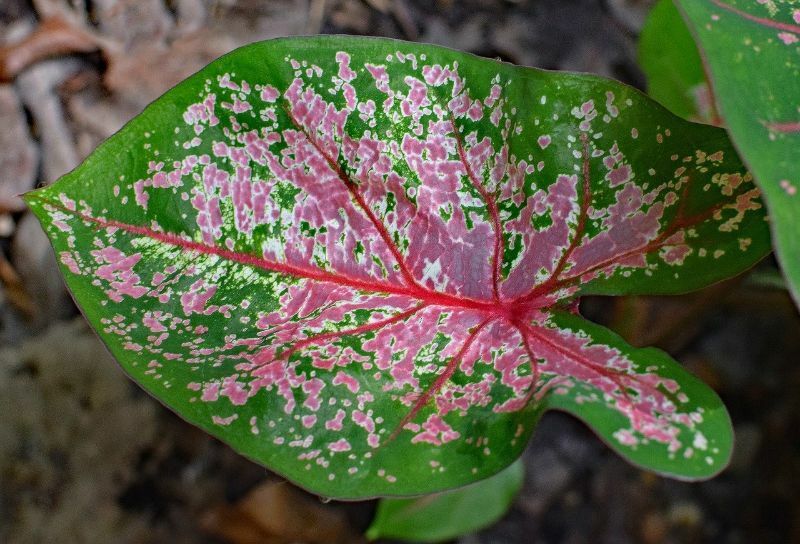
Caladium leaves come in a variety of colors, including pink, red, white, and green. These heat-loving plants produce stunning color throughout the season. The best part is that no deadheading is required.
Caladiums can be put practically anyplace in your home to make a beautiful garden. These tropical beauties thrive in full to partial shade, with some kinds thriving in full sun as well. Choose types that will offer the color, size, and appearance you like, as well as those that will thrive in your yard’s lighting circumstances.
Planting caladiums at the right time is one of the most important things you can do to ensure adequate care. However, depending on where you reside, you should plant caladium bulbs at different times. According to USDA hardiness zones, the following is the best time to grow caladiums: Zones 9, 10, and 15 (hardiness zones) – March 15 April 15th, hardiness zone 8 May 1st, hardiness zone 7 June 1st, hardiness zone 6 Zones 3, 4, and 5 June 15th
Compact caladiums, like lime and dark pink Miss Muffet, reach a height of 12 inches and are ideal for lining a pathway, edging a flowerbed, or dressing up a container. The brilliant, rose-pink foliage of Florida Sweetheart have ruffled green margins, while Gingerland has creamy white leaves with splashes of green and red. All of these small caladiums and elephant ears look fantastic together.
Caladium Red Flash amplifies the color effect. This full-size caladium stands about 20 inches tall and features bright red centers with pink dots that contrast with the big, deep green leaves. Use these in a garden bed or container to add a bright burst of color.
Combine caladiums with other summer bulbs like cannas and elephant ears, as well as shade-loving annuals like begonias, coleus, and mildew-resistant impatiens. Visit Longfield Gardens for more container design ideas and inspiration. On a deck, patio, or doorway, you’ll find basic combinations that have a great impression.
Wait at least two weeks after all danger of frost has passed before putting caladiums directly into the garden. The soil temperature should be at least 65 degrees and the nights should be warm. Before you start planting, make sure the soil is ready. Improve drainage in clay soils and moisture-holding capabilities in fast-draining soils by adding compost or other organic matter. Plant tubers six inches apart and two inches beneath the surface of the soil. Water the soil thoroughly and frequently enough to keep it moist but not soggy.
Gardeners in colder climates may want to start the tubers indoors to get a head start on the show outside. Plant four to six weeks before transferring to the garden. Place the tubers near the top of a shallow container filled with well-drained potting soil. Indoors, grow them in a warm, sunny place with the soil slightly damp. Once the risk of frost has passed and the earth has warmed, go outside.
As the temperature rises in the summer, your caladiums will sparkle, whereas many other flowers will fade in the heat and humidity.
Throughout the summer, water as needed and fertilize to encourage new growth.
Caladiums can be left in place all year for gardeners in zones 9-11. Others can grow these brilliant beauties as annuals or dig out the tubers and bring them indoors for the winter. When the soil temperature drops to 55 degrees, it’s time to dig tubers. For at least a week, spread them out in a warm, dry spot. Remove the foliage from each variety and place tubers in a mesh bag or loosely packed in dry peat moss. Store at 60 degrees Fahrenheit in a cool, dark place.
Make 2019 the year you add caladiums to your landscape for gorgeous splashes of color all season long.
How long will caladiums last?
What is the life expectancy of caladium? The plants are perennials, meaning they can be used year after year. They are visible for about six months of the year, from sprouting to hibernation.
Why is my caladium droopy?
Salt buildup in the soil of potted caladiums causes leaf droop. A yellow or white crust on the top of the soil or a ring around the inside of the pot indicate excess salts. Pour twice the volume of water a pot holds onto the soil and let it run out the drain hole to fix this in pots with drainage holes. Fill the container with water in a steady stream. Leach potted plants every four to six months to avoid salt buildup. Plants that have become severely coated will need to be repotted.
How do you make a plant bushy?
Although you may already “pinch out” tomatoes, bedding plants benefit from the same technique.
Pinching is a method of pruning that promotes plants to branch out along their stems, making them fuller and bushier. When you pinch out a plant, the top of the main stem is removed, forcing the plant to produce two new stems from the leaf nodes beneath the pinch.