
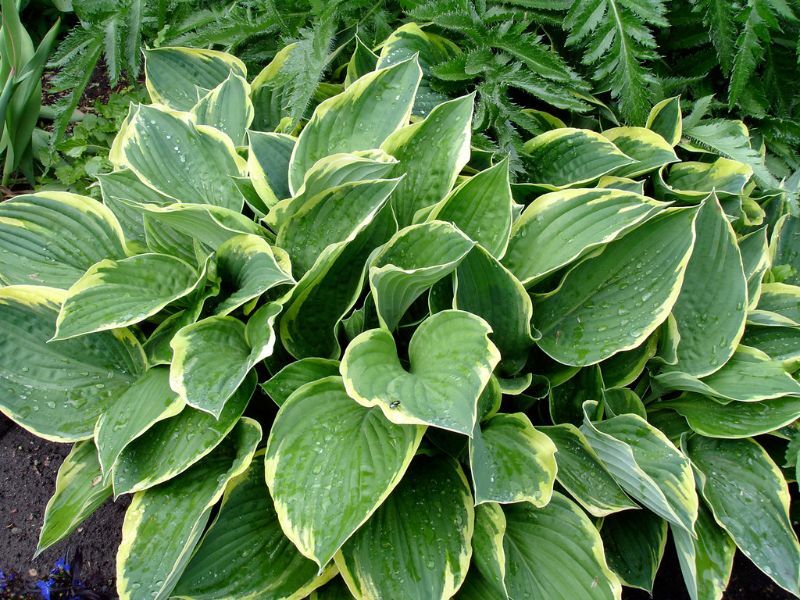
What exactly is the Hosta virus X? Hosta virus X (HVX) is a viral disease that affects numerous hosta cultivars, including ‘Gold Standard,’ ‘Guacamole,’ ‘June,’ ‘Patriot,’Paul’s Glory,’Regal Splendor,’Sagae, Striptease,’So Sweet,’ and ‘Sum and Substance,’ among others. Since its discovery in 1996, a considerable number of hostas have been deliberately destroyed by nursery owners and gardeners in the United States to help prevent the spread of HVX.
How does Hosta virus X appear? HVX can infect any hosta cultivar, however some cultivars are more susceptible than others.
The type and degree of symptoms that emerge over time are determined by the cultivar. Symptoms do not appear in all hosta cultivars, and in some cultivars, symptoms do not appear until the second year of growth. Light or dark green discolorations along leaf veins, green and yellow mottling of leaf blades, puckering, circular discolored regions (called ringspots), and, in certain circumstances, wilting and tissue death can all be signs of the disease (necrosis). In gold-colored hosta varieties, symptoms are easier to spot than in green ones. Holding an infected leaf up to the light and comparing it to a healthy leaf can help identify symptoms when they are modest.
What is the origin of Hosta virus X? HVX is caused by the same-named plant virus (i.e., Hosta virus X). Only hostas are affected by this virus. HVX is usually introduced into a garden on newly transplanted, generally asymptomatic hostas. Garden equipment (e.g., pruners, shovels, knives, string edgers) and other items contaminated with the sap of infected plants can then be used to disseminate the virus from hosta to hosta. Many farmers are unaware that their hostas are infected, and as a result, HVX is spread from hosta to hosta in their garden or nursery without their knowledge.
How do I rescue a Hosta virus X-infected plant? Once a plant is infected with HVX, it will remain infected for the rest of its life. There are no chemical therapies that can be used to get rid of the infection. Although a grower’s first reaction is to remove infected leaves off a symptomatic plant, if contaminated pruners are then used to trim other plants, the virus can spread. The illness may only be eradicated by burning (where permitted by municipal regulation) or landfilling afflicted plants (and any accompanying plant debris). HVX should not be used to compost hostas.
How can I avoid future difficulties with Hosta virus X?
Prior to purchasing hostas, inspect them thoroughly and avoid any plants that show indications of HVX.
Keep in mind that even asymptomatic plants can transmit HVX, and symptoms may appear (or not) after you get your plants home.
Consider asking confirmation of HVX-free hostas from the seller when acquiring them (particularly if they are pricey).
For HVX testing, virus testing kits (from firms like Agdia, Inc.) are available and are quite affordable.
Note that hostas can be infected by a variety of other plant viruses, therefore a negative HVX test result does not imply that your plants are virus-free.
Whether or not your new hostas have been tested for HVX, keep them separate from other hostas in your yard for a few weeks and watch for symptoms as they adjust to their new surroundings.
Once your hostas have established themselves in your garden, try to avoid any wounds that could release sap and allow HVX to enter.
Wash your hands thoroughly with soap and water after working with individual hosta plants.
Decontaminate any items (e.g., pruners, shovels, knives, pots, work surfaces) that may have come into touch with hosta plants by soaking them in a solution of one of the following for at least one minute:
- In one gallon of water, combine 9 cups Carnation nonfat dry milk and 0.75 tablespoons polysorbate 20, or
- 2.5 tablespoons sodium lauryl sulfate (SLS) with 2.75 tablespoons Alconox (a sort of lab detergent) in one gallon of water, or
These ingredients are available for purchase on the internet. If you decide to use SLS, wear gloves and safety goggles and mix the solution in a well-ventilated environment because SLS is a recognized skin and eye irritant. Once the goods have been treated, rinse them well with enough water to remove any residue. In order to prevent the spread of HVX and other plant viruses, proper cleanliness is essential.
What does HVX in hostas look like?
Hosta Virus X (HVX) is not a new concern, but it isn’t as widespread as it was nearly a decade ago since farmers have improved their recognition of the disease and their ability to remove affected plants from their nurseries. Mottled, light or dark green discolorations along leaf veins are the most typical symptoms (Fig 1). Green and yellow mottling on the leaf blades, puckering, circular discolored spots, or twisted leaves are all signs of HVX. Symptoms appear differently depending on the cultivar and the color of the leaf (Fig 2, 3).
How do you treat hosta disease?
Remove any leaves that have been diseased. Irrigate plants in such a way that water does not fall on the leaves. To protect healthy leaves, use a fungicide. As the leaves turn yellow, brown, wilt, and die, the stems of the leaves turn brown at the soil level.
What is killing my hosta?
What causes holes in the leaves of hostas? This is one of the most often asked questions about hosta plants. Slugs or snails are frequently the culprits when it comes to pests eating hostas. These nocturnal foragers, which eat small holes in the leaves, are perhaps the most frequent of the hosta pests. Snail trails of silvery tint can be found around the garden area, indicating their presence. Beer traps may be used to control these slugs, which they crawl into and die in.
The adult black vine weevil is another insect pest that eats hosta leaves. This bug makes uneven notches along the outer edges of leaves as a sign of its presence. Their larvae also cause damage to hosta plants by feeding on the crown and roots, resulting in yellow, wilted foliage.
Nematodes, which are minute roundworms, infect hosta plants in the same way as fungi or bacteria do. They flourish in damp environments, just as fungal infections. Nematodes eat on the leaves, resulting in brown spots between the veins, giving the leaves a striped appearance. This usually happens in the late summer. Plants that have been harmed should be destroyed. Most nematode attacks can be avoided by providing proper distance between plants, using soaker hoses to avoid damp foliage, and removing and destroying all diseased plants.
Do you believe that only bugs consume hostas? Reconsider your position. Hosta plants are frequently eaten by deer and rabbits. Deer, on the other hand, may leave merely stalks where once lovely hosta leaves grew, whilst rabbits prefer to nibble on the young shoots.
What does HVX do to hostas?
Hosta virus X (HVX), a virus illness that produces mottled leaf colour in hostas, was recently discovered. Some diseased plants were initially propagated and grown for their “interesting” leaves.
Why are my hosta leaves curling?
Hosta leaves curl as a result of underwatering, too much sun, poorly draining soil, and a lack of nutrients. To restore the hosta to its former glory, keep the soil moist, replant them in a more shady location, and into free-draining, pH-balanced soil.
Insecticides or neem oil can be used to kill pest insects. The way the leaves curl will give you a clear indication of what is most likely causing the problem. Curling up, for example, suggests that they are exposed to too much sun or wind.
I’ll go through the different types of curling leaves and what they mean, as well as what you should do if your hosta leaves curl for any of the reasons.
What causes brown spots on hosta leaves?
A.Many fungal illnesses thrive in the chilly, rainy, gloomy spring we had this year. Anthracnose and botrytis are two of the most frequent fungal diseases that afflict hostas. This season, Plant Information has seen a lot of cases of botrytis on hostas, which is common in cool, rainy conditions. Botrytis on hosta leaves shows as little water-soaked patches that become larger over time. Cinnamon to dark tan rings can sometimes be observed within the lesions as they grow larger. Lesions can also spread down to the plant’s petiole. During warm, damp conditions, anthracnose can harm hosta. Large, irregularly shaped tan to brown patches with dark borders develop as symptoms. The spots’ centers can fall out, leaving the plants looking ragged.
Why are my hostas turning yellow and dying?
Plants affected with petiole rot cannot be saved. Prevent the problem by carefully checking young seedlings before planting them. In addition, any contaminated plants should be removed and destroyed, and the soil should be removed and replaced to an 8-inch depth (20 cm.).
Other fungi, rots, and virus illnesses that produce yellowing leaves on hostas are similarly difficult to treat. All you can do to treat fusarium root and crown rot, bacterial soft rot, hosta virus X, and other viruses is remove and destroy the plants while avoiding spreading the disease to other plants.
Because fungal diseases thrive in the soil and attack hosta at or below the soil’s surface, you may need to solarize the soil using black plastic to kill the fungus. Make sure your garden tools are clean, the area is free of debris, and unhealthy plants aren’t transplanted. Other fungal infections, such as root and stem rot, are usually fatal and are caused by excessive moisture. Make sure the plants aren’t overwatered and that air circulation isn’t hampered by crowding. To keep the leaves dry, water your hosta at the soil level.
Pests Causing Yellow Hosta Leaves
Foliar nematodes are tiny worms that dwell within the leaves. The symptoms begin as a yellow discoloration that progresses to brown streaks between the leaf veins and are usually initially detected in early summer. To prevent the pests from spreading, keep an eye on the plant and remove any infected leaves as soon as possible.
Hosta Leaves Turning Yellow Naturally
Hostas will naturally begin to go dormant once the growing season is over. You may see yellowing hosta leaves if this happens. This is completely normal and causes no concern. You can prune the plant back once the leaves have entirely died back in the fall.
How do you treat brown leaves on hostas?
In the fall, Hostas naturally turn brown and die back. After the leaf margins begin to yellow or brown, cut back all of the foliage. Remove all of the foliage from the plant’s base and discard or compost it. Once the foliage turns dormant, Hostas don’t need to be watered. To insulate the roots in the winter, replenish the mulch layer to 2 inches, but avoid covering the plants’ crowns.
What does slug damage look like on hostas?
Slugs are a typical hosta pest, and they are most likely eating your plants. When the temperature rises over 50 degrees and there is enough moisture from rain or watering, slugs become active. So far, this year has been a rainy one, which means ideal circumstances for slugs. They have soft bodies and feed at night and on overcast days, resembling snails without the shell. Large, uneven holes form in the leaves as a result of the feeding damage. When populations are huge, a lot of damage can happen.
What does Epsom salt do for hostas?
Epsom salt enhances chlorophyll levels in hostas, reducing stunted development and making their leaves greener and thicker. It also promotes bushier plant growth and increases disease and insect resistance.
Get Rid of Slugs
The most prevalent pests that attack hostas are slugs. Slugs can be deterred by placing a tablespoon of Epsom salt in the shape of a ring around hostas. Their bodies will be irritated by the sharp crystals of Epsom salt, and they will avoid getting near your plants. For optimal results, apply once a week.
For Yellowing Hosta Leaves
Magnesium insufficiency might be indicated by yellow hosta leaves. Once a month (or more frequently if necessary), sprinkle a spoonful of Epsom salt around the base of your hosta plant per 12 inches of height until it begins to look green again.
For Lush and Healthy Hosta Plants
Even if your soil is not magnesium deficient, factors such as acidic soil, low soil temperature, soil cation exchange capacity, high potassium, and salt can all impede Magnesium uptake by plant roots.
In that case, foliar feeding your hosta plants with Epsom salt solution is a good idea:
- During the rapid growth period, mix 2 teaspoons Epsom salt in 1 gallon of water and sprinkle on the foliage once a month.
- Reduce the amount to 1 tablespoon as growth slows. Your hostas will stay lush and healthy with the foliar treatment.
Mix Epsom Salt with Fertilizer
To improve the efficiency of the all-purpose liquid fertilizer, mix a pinch of Epsom salt with it before feeding the hosta plants, then apply according to the recommendations on the fertilizer’s packet.