
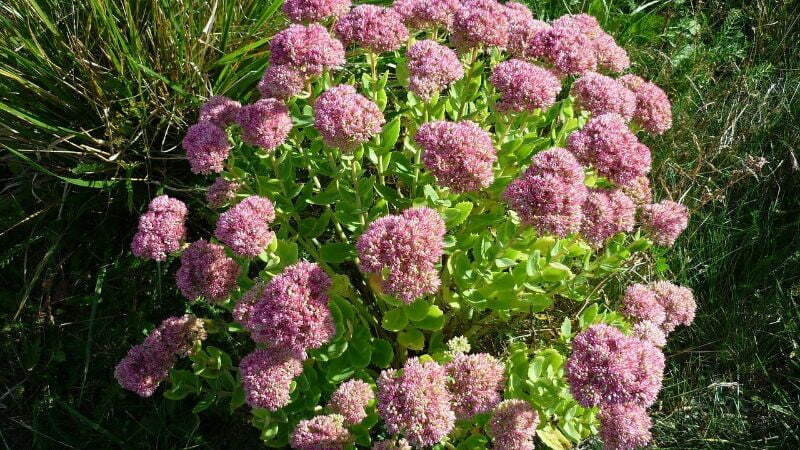
All your upright container needs to survive all season is plenty of sunlight, moderate water, and plant food. Lemon Coral is a hardworking garden plant that strives to impress.
Size & Growth
Sedum lemon ball plants normally reach a height of 4 to 6 inches and a spread of 10 to 18 inches per plant.
This stonecrop can spread quickly and resemble a towering ground cover in perfect conditions.
Lemon Ball stonecrop foliage ranges in color from chartreuse to blue-gray to blue-green. The majority of the varieties have a vivid lemon-lime greenish-yellow tone.
Flowering and Fragrance
Lemon ball flowers are a charming, little yellow star-shaped flower that blooms in the summer. Or the human nose, the blossoms have little to no aroma. Hummingbirds, bees, and butterflies, on the other hand, are drawn to them.
Light & Temperature
Lemon ball sedum prefers full sun and will grow in a sunny location for several hours each day.
It can survive in partial sunlight (four to six hours per day), but it won’t grow thick and robust without a lot of it.
Lemon ball may be grown in USDA zones 4 through 9, although it flourishes in heat zones 6 through 9. In temperatures between -10° and 0° Fahrenheit, the lemon ball stonecrop will perish.
Watering and Feeding
Overwatering is one of the most common difficulties that sedum stonecrops face. Between waterings, it’s better to let the soil dry out. You don’t want to have to water these plants every day.
Sedums are drought-tolerant plants that may survive for days without water in hot weather.
In most circumstances, a single application of granular plant fertilizer once a year is sufficient. If you’re using a dry fertilizer, make sure you wet it in so the stonecrop can absorb it.
Soil & Transplanting
The pH of the soil should be 6.5 or higher for Sedum lemon ball to thrive. This plant, by the way, can withstand poor soil and brief droughts.
Stonecrop can flourish in slightly acidic or alkaline soil. Lemon ball stonecrop is tolerant to mildly salted soils in the environment.
The most important factor is to have well-drained soil and to avoid overwatering. Overwatering will quickly dehydrate the root system.
Sedum thrives in slightly dry soil rather than excessively damp dirt. Allowing your Sedum lemon ball to sit in waterlogged soil will eventually destroy it.
Grooming And Maintenance
Sedums are low-maintenance plants that only require watering during dry weather.
Plant lemon ball as a partial ground cover, border edging, or in bright light rock gardens, xeriscapes, pots, or flower boxes.
A Sedum lemon ball plant is ideal for full-sun locations where you want a low-maintenance plant.
It’s preferable to wipe off dead leaves in the spring before the new growth starts.
Do you cut back Lemon Coral sedum?
- We weren’t joking when we stated Lemon Coral was low-maintenance and worry-free! Lemon Coral is a vibrant coral with just the right amount of vitality. It will spread out to make a beautiful carpet of succulent foliage, but it will not overflow its container or be a bully to the other plants you match it with. With this role model of a plant, little to no trimming is required.
- If you want to give your Lemon Coral a haircut for whatever reason, go ahead. Simply pinch or cut the stems to the desired length. Trimming the plant won’t harm it as long as you don’t remove more than 1/3 of it at a time.
How do you keep sedum from getting leggy?
Summer – You may want to trim the plant in half in May or June. This will aid a plant that has become excessively leggy and heavy. Make a clean cut towards the top of the stalk, just above a group of leaves. Don’t worry, the cut stalks will sprout new flowers.
Maintenance pruning can be done in the fall or at any other time. You may need to remove dead or unhealthy growth on occasion. Dead stalks should be cut back to the healthy part of the plant or to the soil’s base.
Do you fertilize Lemon Coral sedum?
If you have a Lemon coral plant in your house or yard, you must keep it happy and healthy by following a maintenance schedule. Your plant’s care instructions are listed below.
Water Requirements
These plants do not require much water because they are drought-tolerant. However, forgetting to water these plants on a regular basis can be hazardous to them. Put your finger up to your knuckle in the soil of your Lemon coral plant to see whether it needs to be watered. If the soil clings to your fingers, it is sufficiently moist and does not require water. You should water your plant if the soil does not stick to your finger. You must inspect the soil of your plant on a daily basis to see if it is dry.
Sunlight Requirements
In full to moderate sunlight, the lemon coral plant thrives. This plant can be grown both indoors and outdoors. If you’re growing a lemon coral plant indoors, make sure it’s not facing the sun. In your room, place this plant facing east or south.
Temperature Requirements
Lemon coral plants can be grown in both hot and cold temperatures. This is why lemon corals are known as easy-to-grow plants that may thrive in any environment.
Fertilizer Requirements
To get the most out of your lemon coral plant, utilize water-soluble fertilizers. Fertilize your lemon coral once a month or as needed, depending on its demands.
Why are my sedum dying?
Because sedums like sandy, low-fertility soil, soil that is overly rich or over-fertilized may foster excessive foliage development, resulting in lank, top-heavy plants with few blooms. Do not use any fertilizer on these plants’ soil. If possible, relocate the plants to a place with poorer soil.
Sedum plants, particularly ground coverings like Goldmoss, can die suddenly, leaving barren patches.
This is mainly due to them spreading out too much or becoming overcrowded. By moving the soil a little and sprinkling leaves from existing plants over it, it’s easy to start new sedums in the locations. They’ll take quickly to root and fill in the gap.
Aphids are small, soft-bodied, pear-shaped insects that are roughly the size of a pinhead.
They come in a variety of colors, including green, brown, and pink.
To feed, they form clusters on sensitive young shoots and stems, sucking sap from sedum leaves and causing discoloration and deformation.
Under direct sunlight, the leaves turn yellow or brown and wilt.
Spray the leaves thoroughly with water to control a minor infestation.
Do this for three days in a row in the morning.
If this doesn’t work, treat the aphid clusters with insecticidal soap every two to three days for two weeks.
Use pyrethrum spray as a last resort.
Slugs are snails without their protective shells.
They range in length from 1 to 2 inches (some species grow up to 8 inches).
They come in a variety of colors, from white to gray to yellow to brown-black.
Slugs and snails damage plants, leaving big ragged holes in the leaves and stems.
Although these pests prefer moist, well-mulched gardens and acidic soil, they will eat succulent sedums on occasion.
They are most active at night, rasping holes in leaf and stem surfaces with their file-like tongues.
During the day, they hide under boards or leaf litter.
Control them by catching them in a beer-baited plate.
The slug is drawn to the beer’s yeast, climbs in, and drowns.
Set traps as soon as you notice holes in the sedum leaves.
Sedums degrade at the soil line due to crown rot caused by a soil-dwelling fungus.
Crown rot does not have a lasting treatment.
Plants that are sick, as well as the soil around them, should be removed.
To avoid spreading the fungus, throw them away in the trash.
For a year or two, don’t transplant sedums in that location.
Cultivating around nearby plants thoroughly allows the soil to dry up, which helps prevent the fungus from spreading.
Botrytis gray mold wreaks havoc on sedum leaves and flowers, resulting in blotches.
The leaves and blossoms eventually turn brown and die.
All sick plant components should be cut off and discarded, and any severely afflicted plants should be completely destroyed.
Apply a copper or sulfur-based fungicide to affected plants in two applications, 5 days apart.
Rust is a fungus disease that causes powdery patches on the undersides of leaves.
Sedums are rarely harmed by rusts, but the blotches are ugly.
Infected leaves should be removed and destroyed.
If the infestation is severe, remove all unhealthy plants and debris before the spring growth season begins.
Weeds can add to rust problems in and around the garden, so keep them under control.
To prevent rust, apply wettable sulfur to plants on a regular basis, starting several weeks before you expect the disease to show.
Plants should be spaced widely to allow air to circulate between them, and watering should avoid wetting the leaves.
Can sedum survive winter?
Sedums are tough succulent plants that can withstand harsh winters. It’s frequently preferable to forget about them over the winter than to over-care for them and cause damage.
Is Lemon sedum a perennial?
Sedum is a genus of succulent, herbaceous, evergreen perennials with mushy, flat or rounded leaves. The plant is generally erect and spreads out across the ground. There are about 300 species in the genus, though many have been relocated to the Hylotelephium genus. The genus name comes from the Latin word sedeo, which means “to sit,” in reference to many sedum species’ habit of sitting and sprawling over rocks.
Lemon Coral Sedum is a small summer-blooming succulent with lime-green leaves and little star-shaped blooms. It grows best in dry to medium well-drained sandy to rocky soils as a ground cover, in rock gardens, mass plantings in the border, or cascading over planters, rocks, or walls, and it tolerates heat and dryness in full sun to light shade. It requires little watering and thrives in damp soils with adequate drainage. Plants that are planted in extremely rich soils or in too much shade may grow weak and floppy. Plants spread slowly over time. Lemon Coral, like many other members of its genus, can only withstand little foot movement on occasion. The leaves are prone to falling off readily, however they can be used to propagate new plants.
Except for the occasional slugs and snails, there are no severe diseases or bug concerns. Avoid areas that are damp or inadequately drained. Flopping is a problem that can be prevented by growing in full sun on soils that aren’t excessively wet or rich. Pinching stems in the spring can also make them thicker and bushier.
Why is my Lemon Coral sedum turning yellow?
According to scientists at the Missouri Botanical Garden, crown rot, also known as stem rot or southern blight, is caused by fungi in the soil. Plants become discolored along the soil line, lose their leaves, and die. Mycelium, a cottony webbing that appears at the stem and extends across the earth, appears during prolonged periods of excessive humidity. At the root of the plant, little white, reddish, or light brown lumps may appear and spread. Crown rot is uncommon in houseplants grown in potting soil. Fungicides can aid in the garden, but it’s best to remove and dispose of unhealthy plants.