
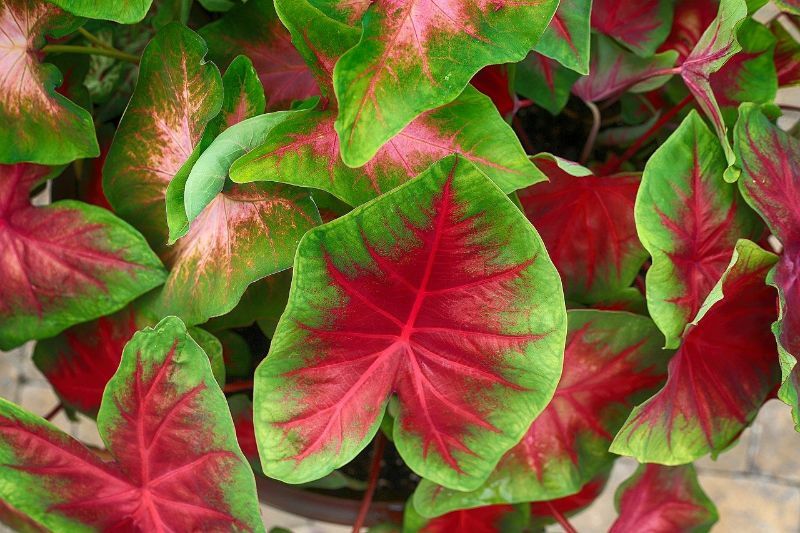
Caladium plants should be grown in a medium-light environment with protection from the midday sun, which can scorch the foliage. The best exposure is usually from a northern or eastern window. Caladium tubers are native to South American tropical forests and grow seasonal foliage during the rainy, warm season, therefore humidity is essential for Caladium houseplant care.
The key to successfully introducing the plant to the home interior is to mimic the plant’s native environment. Misting and placing a saucer filled with stones and water under the container might help keep the humidity high in a warm home. The evaporation will moisten the surrounding air and supply the humidity that your Caladium requires. Keep your plant away from drafty windows or doors, as well as heating vents that blast dry air.
You’ll need to maintain your plant watered and happy while it’s still in its foliar splendor. Fertilize the plant only when it is actively growing, which is from spring to late summer. No extra meal is required in the fall and winter. When the soil feels dry to the touch, water it.
Maintain a temperature of at least 65 degrees Fahrenheit for the plant (18 C.). Allow the leaves to die back until they are completely wasted before cutting them off. After that, you can either take the tubers, dry them, and store them in peat in a breathable bag, or leave them in the soil and stop watering them.
In the spring, either plant the tubers that have been stored or start watering the tubers that have been potted. Move the container to a slightly stronger light, being cautious not to burn the new shoots. Once the container has blossomed completely, slowly reintroduce it to the outdoors until fall, then repeat the process.
How do you take care of potted caladiums?
Ensure that the soil is kept evenly moist during the growing season. Allowing the soil to dry out will cause the leaves to yellow and drop. To assist your plants retain moisture, apply a layer of mulch around them.
Fertilizing:
Caladiums don’t require much fertilizer, and too much can cause the leaves to burn. Proven Winners horticulturists recommend applying a controlled-release fertilizer at 1/4 strength of what you would use for blooming plants. It’s also possible to utilize liquid fertilizer.
Overwintering:
Tubers will fall dormant and the foliage will die back in warmer regions (Zone 9 or higher). Leave the tubers in the ground and cut the leaves to the ground. If you want to replant them the following spring in a colder environment (Zone 8 or below), you must dig them up in the fall before frost. Allow the soil to dry out when the leaves have fallen naturally in the fall, then dig up the tubers and store them in a dry spot no cooler than 65° F.
Propagation:
After bringing tubers out of winter storage in the spring, divide them. Each tuber should be cut into smaller pieces with at least one “eye” or knob from which new growth will emerge. Allow a day for the cut pieces to dry before planting.
How long do caladiums last indoors?
Caladium is a South American native that thrives inside in indirect light, giving it a stunning tropical accent for any house. The flashy season is expected to extend 6 months or longer. Caladiums thrive in warm, humid environments. Provide them with bright, indirect light as well as humidity.
Is caladium a good indoor plant?
They thrive in high heat, strong but indirect light, and plenty of humidity when cultivated inside. Caladium foliage lasts only a few months even in ideal conditions before the leaves fall back and the plant stays dormant, which is typical.
How often should I water my caladium?
Moisture and feeding are the most critical aspects of caladium care. Fertilizer will help the plants grow stronger so that they can produce enough tubers for the following growing season.
Caladiums require constant watering, especially during periods of drought. Watering them on a weekly basis is actually suggested. Container-grown caladiums should be examined every day and watered as needed. Mulch around caladium plants, especially in pots, will aid to conserve and maintain moisture.
Caladiums must be dug up in the fall and preserved indoors throughout the winter in cold locations because they are considered sensitive perennials. Caladiums can be carefully plucked from the ground once their foliage turns yellow and begins to fall apart. Place the plants in a warm, dry place for at least two weeks to allow them to dry out. After that, remove the foliage and place the tubers in a netted bag or box with dry peat moss on top. Put the tubers away in a cold, dry place. You may transplant outside once spring arrives. Caladiums can be overwintered inside if they are grown in containers.
You may add these lovely plants to your landscape now that you know how to plant caladiums. Caladium bulb planting is simple, and with good caladium maintenance, they can last for years.
Why are my caladiums drooping?
Salt buildup in the soil of potted caladiums causes leaf droop. A yellow or white crust on the top of the soil or a ring around the inside of the pot indicate excess salts. Pour twice the volume of water a pot holds onto the soil and let it run out the drain hole to fix this in pots with drainage holes. Fill the container with water in a steady stream. Leach potted plants every four to six months to avoid salt buildup. Plants that have become severely coated will need to be repotted.
How do you keep caladiums alive?
Caladiums prefer bright, indirect light to thrive (full sun would fry them in a heartbeat). Keep the soil evenly moist don’t allow it get too dry, but don’t let it get too wet, or the tubers will rot. Group pots together, even with other houseplants, to enhance humidity.
What is bright indirect light?
At midday, indirect light should be in the 25 to 1,000 foot-candle range, though most plants won’t flourish in the lower end of that range. You’ve got bright, indirect light if your hand still casts a distinct shadow but it’s a little fuzzy around the edges. According to a University of Florida chart, 500 foot candles is a desirable amount to aim for because it can handle houseplants that require both high and mild indirect lighting.
At the brightest time of day, low light is at the lower end of the indirect light scale, ranging from 25 to 300 foot-candles. Your hand won’t cast much of a shadow in those conditions. If you can’t read a newspaper without extra illumination in a room, the light is definitely too low for any plants.
So, what is bright, indirect light?
To summarize, bright, indirect light is bright enough to cast a shadowthough not one that is dark and well definedand read by. It grows near north- and east-facing windows, as well as shaded south- and west-facing windows and a few feet away from unshaded south- and west-facing windows. It can also be achieved by employing diffusing sheer curtainswhite, see-through curtainsbetween the panes and the plants on windows that receive direct sunlight.
Rooms or hallways with no windows, or plants in corners more than 5 feet from windows, are unlikely to get adequate light for houseplants. Fluorescent or LED grow lights can be used to generate bright, indirect light in those locations.
The best way to create bright, indirect light for your plants is by using your windows and the direction of the sun throughout the day.
The amount of light that reaches your plants is often determined by the direction your windows face and how clear they are. White walls will reflect more light back to your plants than dark ones.
Why are my caladium leaves dying?
Caladiums are famed for their broad, colorful leaves, so it’s a cause for concern when they start to become mushy and brown. Brown soft leaves frequently appear when the plant has been overwatered or exposed to cold conditions. When the plant is actively growing, water when the top 25% of the soil is dry.
Where do caladiums grow best?
Caladiums thrive in shaded areas of the yard and garden. They thrive in full to partial shade in southern climates. Most caladiums can be grown in the sun in northern climates if they are given enough water and their leaves are shaded during the warmest portion of the day.
How do I make my caladium pink?
FEATURE Plant some in the garden, some in a container, and others in a window box. Then, as needed, water, fertilize, and wait for the color to explode.
Caladium leaves come in a variety of colors, including pink, red, white, and green. These heat-loving plants produce stunning color throughout the season. The best part is that no deadheading is required.
Caladiums can be put practically anyplace in your home to make a beautiful garden. These tropical beauties thrive in full to partial shade, with some kinds thriving in full sun as well. Choose types that will offer the color, size, and appearance you like, as well as those that will thrive in your yard’s lighting circumstances.
Planting caladiums at the right time is one of the most important things you can do to ensure adequate care. However, depending on where you reside, you should plant caladium bulbs at different times. According to USDA hardiness zones, the following is the best time to grow caladiums: Zones 9, 10, and 15 (hardiness zones) – March 15 April 15th, hardiness zone 8 May 1st, hardiness zone 7 June 1st, hardiness zone 6 Zones 3, 4, and 5 June 15th
Compact caladiums, like lime and dark pink Miss Muffet, reach a height of 12 inches and are ideal for lining a pathway, edging a flowerbed, or dressing up a container. The brilliant, rose-pink foliage of Florida Sweetheart have ruffled green margins, while Gingerland has creamy white leaves with splashes of green and red. All of these small caladiums and elephant ears look fantastic together.
Caladium Red Flash amplifies the color effect. This full-size caladium stands about 20 inches tall and features bright red centers with pink dots that contrast with the big, deep green leaves. Use these in a garden bed or container to add a bright burst of color.
Combine caladiums with other summer bulbs like cannas and elephant ears, as well as shade-loving annuals like begonias, coleus, and mildew-resistant impatiens. Visit Longfield Gardens for more container design ideas and inspiration. On a deck, patio, or doorway, you’ll find basic combinations that have a great impression.
Wait at least two weeks after all danger of frost has passed before putting caladiums directly into the garden. The soil temperature should be at least 65 degrees and the nights should be warm. Before you start planting, make sure the soil is ready. Improve drainage in clay soils and moisture-holding capabilities in fast-draining soils by adding compost or other organic matter. Plant tubers six inches apart and two inches beneath the surface of the soil. Water the soil thoroughly and frequently enough to keep it moist but not soggy.
Gardeners in colder climates may want to start the tubers indoors to get a head start on the show outside. Plant four to six weeks before transferring to the garden. Place the tubers near the top of a shallow container filled with well-drained potting soil. Indoors, grow them in a warm, sunny place with the soil slightly damp. Once the risk of frost has passed and the earth has warmed, go outside.
As the temperature rises in the summer, your caladiums will sparkle, whereas many other flowers will fade in the heat and humidity.
Throughout the summer, water as needed and fertilize to encourage new growth.
Caladiums can be left in place all year for gardeners in zones 9-11. Others can grow these brilliant beauties as annuals or dig out the tubers and bring them indoors for the winter. When the soil temperature drops to 55 degrees, it’s time to dig tubers. For at least a week, spread them out in a warm, dry spot. Remove the foliage from each variety and place tubers in a mesh bag or loosely packed in dry peat moss. Store at 60 degrees Fahrenheit in a cool, dark place.
Make 2019 the year you add caladiums to your landscape for gorgeous splashes of color all season long.