
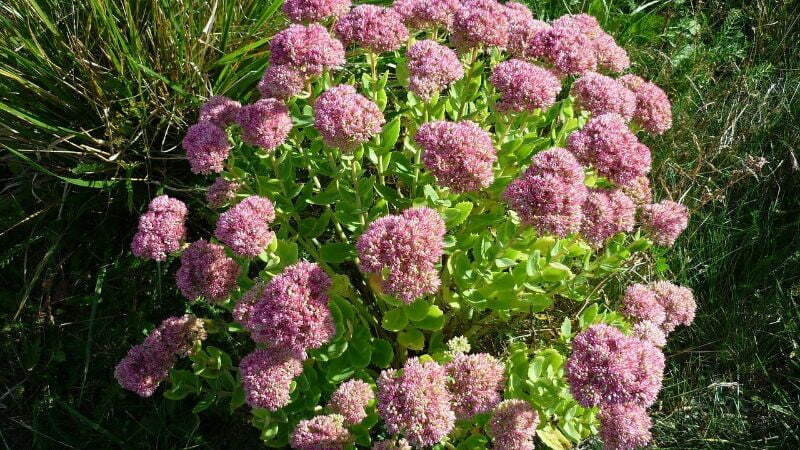
Sedum thrive in well-drained soil and are drought tolerant. It’s best to give the plant a good drink and then let the soil dry up before watering again. Stonecrops thrive in broad sunlight and a dry climate. Water every 7-10 days throughout the hot summer months. In the fall and winter, water every two to three weeks.
The watering requirements of container sedums are determined by a number of factors. An outdoor container may not require any watering depending on rainfall, however an indoor container will require weekly watering. In comparison to a small or shallow container, a large container will hold more moisture and require less watering. Give the sedum a long sip until the drainage pores are completely dry. Allow the soil to dry completely before watering again. Once a week, examine the soil is a reasonable rule of thumb.
Does sedum need a lot of water?
Sedum don’t need much water, and if they get at least 6 hours of sunlight per day, they’ll produce their greatest colors. In thick, mucky, or high clay soils, they will not thrive. If you have some high spots and some low locations in your yard, the higher spots that drain well after a heavy rain will be preferable for sedum, while low spots tend to collect water.
Some succulents thrive inside, but sedum isn’t one of them. They simply require an excessive amount of direct sunshine.
Why is my sedum dying?
Because sedums like sandy, low-fertility soil, soil that is overly rich or over-fertilized may foster excessive foliage development, resulting in lank, top-heavy plants with few blooms. Do not use any fertilizer on these plants’ soil. If possible, relocate the plants to a place with poorer soil.
Sedum plants, particularly ground coverings like Goldmoss, can die suddenly, leaving barren patches.
This is mainly due to them spreading out too much or becoming overcrowded. By moving the soil a little and sprinkling leaves from existing plants over it, it’s easy to start new sedums in the locations. They’ll take quickly to root and fill in the gap.
Aphids are small, soft-bodied, pear-shaped insects that are roughly the size of a pinhead.
They come in a variety of colors, including green, brown, and pink.
To feed, they form clusters on sensitive young shoots and stems, sucking sap from sedum leaves and causing discoloration and deformation.
Under direct sunlight, the leaves turn yellow or brown and wilt.
Spray the leaves thoroughly with water to control a minor infestation.
Do this for three days in a row in the morning.
If this doesn’t work, treat the aphid clusters with insecticidal soap every two to three days for two weeks.
Use pyrethrum spray as a last resort.
Slugs are snails without their protective shells.
They range in length from 1 to 2 inches (some species grow up to 8 inches).
They come in a variety of colors, from white to gray to yellow to brown-black.
Slugs and snails damage plants, leaving big ragged holes in the leaves and stems.
Although these pests prefer moist, well-mulched gardens and acidic soil, they will eat succulent sedums on occasion.
They are most active at night, rasping holes in leaf and stem surfaces with their file-like tongues.
During the day, they hide under boards or leaf litter.
Control them by catching them in a beer-baited plate.
The slug is drawn to the beer’s yeast, climbs in, and drowns.
Set traps as soon as you notice holes in the sedum leaves.
Sedums degrade at the soil line due to crown rot caused by a soil-dwelling fungus.
Crown rot does not have a lasting treatment.
Plants that are sick, as well as the soil around them, should be removed.
To avoid spreading the fungus, throw them away in the trash.
For a year or two, don’t transplant sedums in that location.
Cultivating around nearby plants thoroughly allows the soil to dry up, which helps prevent the fungus from spreading.
Botrytis gray mold wreaks havoc on sedum leaves and flowers, resulting in blotches.
The leaves and blossoms eventually turn brown and die.
All sick plant components should be cut off and discarded, and any severely afflicted plants should be completely destroyed.
Apply a copper or sulfur-based fungicide to affected plants in two applications, 5 days apart.
Rust is a fungus disease that causes powdery patches on the undersides of leaves.
Sedums are rarely harmed by rusts, but the blotches are ugly.
Infected leaves should be removed and destroyed.
If the infestation is severe, remove all unhealthy plants and debris before the spring growth season begins.
Weeds can add to rust problems in and around the garden, so keep them under control.
To prevent rust, apply wettable sulfur to plants on a regular basis, starting several weeks before you expect the disease to show.
Plants should be spaced widely to allow air to circulate between them, and watering should avoid wetting the leaves.
How do you water sedum?
To keep things easy, water your Sedum only until the top 1-inch of soil dries out. You can check the moisture level by putting your index finger into the soil at the pot’s edge to see how deep it is, and water sparingly if necessary.
How do you maintain sedum?
Staking: Sedum types that creep do not require staking. If they don’t receive enough sun, have too much nitrogen fertilizer, or are too old, clumping kinds might become floppy. Wrap twine or a low metal wire around your clumping sedum plants before they flower to keep them upright, especially when they’re flowering. You may also put clumping kinds together to assist support each other, or plant them near to hardy perennials like miniature asters to help support them.
Watering: Sedums are succulents that can withstand drought. During the first year, keep newly planted sedums properly watered. They should grow OK without any more watering once they’ve been set. Sedum stems and roots can rot and die if they receive too much water. That’s why keeping sedums healthy necessitates well-drained soil.
Sedums survive low-fertility soils and do not require fertilization. Too much nitrogen in the soil might cause clumping plants to flop and bloom later. To keep your sedums growing and flowering robust, apply a 1 inch thick layer of compost when planting and once a year in the spring.
Mulching: Because sedums require well-drained soil, only a little layer of bark mulch should be applied to keep weeds at bay. To avoid rotting, keep organic mulches away from the plant’s crown. Mulching with gravel is not only appealing and helps retain soil moisture, but it also helps keep the soil properly drained, which is important for sedums in rock gardens.
Can you over water sedum?
The succulent plant Sedum (Stonecrop) belongs to the Sedum family. Succulents have thick, meaty leaves that help them withstand drought. Sedums retain water in their leaves, stems, and roots, allowing them to last longer periods without being watered. This isn’t to say that sedums don’t need water. Sedums, like all plants, need to be watered on a regular basis to grow and thrive. Although sedums may thrive in tough, dry environments, you’ll want to give them just enough water to keep them alive. A sedum that has been overwatered will perish more faster than one that has been underwatered.
Will an overwatered succulent recover?
The sooner you intervene, the better your chances of saving your plant. The more overwatered the plant is, the more likely it is to decay. As you can see from the examples above, there are times when the plant is simply too far gone to be saved.
If the plant starts to show signs of overwatering, such as mushy, soft, and pale bottom leaves, it is essentially drowning and needs to be dried out as quickly as possible.
Steps on How To Save an Overwatered Succulent:
- It’s better to take the plant out of its current location and remove all of the damp soil from the roots.
- To avoid scorching the plant and its roots, place it somewhere bright and dry but out of direct sunshine.
- Replant in an appropriate well-draining potting mix once dry, but do not water right away. Wait about a week before watering again, and avoid overwatering.
If you believe your plant is already in the correct potting mix but you were simply overwatering it, you may be able to avoid repotting it by letting it alone.
Wait at least a week before watering again, and before you do, feel for moisture in the top inch of the soil. You can water it again if it feels dry. If it’s still damp, your plant has to be repotted since the soil it’s in isn’t drying out quickly enough.
Will The Leaves Grow Back?
Yes. If you overwatered your plant and lost a lot of leaves, it will ultimately recover as long as it is not rotting. You’ll find fresh growth or tiny leaves along the stems after they’ve had a chance to dry up.
You may also observe new growth coming from the plant’s sides, top, or bottom. When you see new growth, it usually means your plant is no longer in danger and has fully healed.
Steps on How to Save a Rotting Succulent From Overwatering:
- Examine the plant to see how bad the rot is. If the rot isn’t too bad, you might be able to save some of the plant’s pieces.
- Any leaf that appears to be recoverable should be saved. To proliferate, save as many leaves as possible. Leaf propagation is difficult, and you’ll need as much leaf as possible to ensure that some of them survive. Ensure that you have the complete leaf, including the base. A shattered leaf isn’t going to make it.
- Allow the leaves to dry for a few days in a dry, out of direct sunlight location.
- Prepare a well-draining potting mix and either lay the leaves flat on the soil or stick the ends in the soil once the leaves are dry. (If you want to go all out, you can dip the leaves in rooting hormone.) I usually omit this step, but some people prefer to add rooting hormones to improve the success rate and expedite the propagation process).
- Mist every few days or when the soil seems dry, keeping it out of direct sunlight. Wait for new plants to develop and roots to grow.
Other than leaves, you can also save parts of the stem
- Inspect the stem for any rotting spots, including the roots, and cut them off. Save any sections of the stem that are still green or viable. When you cut the stem, you’ll know if it’s viable or not. If the inside of the stem has green tender sections rather than brown or black, it may have a chance of survival and can be propagated to grow a new plant.
- Save the stems and keep them dry and away of direct sunshine. Allow for drying time of a few days to a week, or until all cuts are calloused and sealed. (Dip the stems in rooting hormone if desired.) I usually omit this step, but some people prefer to add rooting hormones to improve the success rate and expedite the propagation process).
- Mist once or twice a week, or whenever the soil gets dry.
- To avoid sun damage, keep the plant out of direct sunlight until it is firmly rooted.
After removing the rotten section, you’ll notice that the stem still has lots of green, viable components, indicating that it can still be preserved. I dried the stem for a few days before planting it in soil to root and propagate it.
Overwatering has caused the echeveria to decay. Some of the leaves were retained for propagation.
What does Overwatered succulent look like?
Succulents’ tissues, leaves, and stems all have water storage capacity. They can go without water for long periods of time. A succulent’s leaves and tissues bloat up and finally explode when it receives too much water.
Here’s what to look for to know that your succulent is overwatered:
- Soft, mushy, translucent leavesWhen a plant is overwatered, the leaves become soft, mushy, and shriveled. And this is where individuals can become perplexed, unsure if their plant is being overwatered or not. A plant that has been overwatered will have withered leaves that are also mushy and translucent in appearance. The plant and its leaves have taken up too much water and are unable to absorb any more. The plant will also have a sickly appearance and will not appear to be doing properly.
- Leaves turn blackIf you continue to overwater your plants, the leaves will rot and turn black. This usually starts at the bottom of the plant and works its way up. This indicates that the plant is rotting or has succumbed to a fungal illness as a result of too much water.
- Leaves begin to fallAn overwatered plant will drop its leaves as well. The leaves bloat up and begin to shed leaves as they become too saturated with water. Here’s how to detect if a plant is overwatering or has dropped leaves: An overwatered plant will drop its leaves easily, even if only lightly touched, whereas an underwatered plant will drop its brown, shriveled, and dried-up bottom leaves.
How do you revive a dying sedum?
Cut off any brown/black roots that are already rotten and dig the succulent out of the dirt, removing any excess soil adhering to the roots. Allow the plant to air dry for two to three days on a mesh sieve or any other type of strainer. Replant the roots in the pot once they have totally dried.
How long does it take sedum to spread?
Succulents grow at varied speeds depending on the variety. Climate, soil type, watering, and fertilizing all influence the size and rate of growth of a plant. In a pot, slow types will stay small, whereas fast ground cover varieties, such as Sedum, can spread up to 1″ each month during the growth season.