
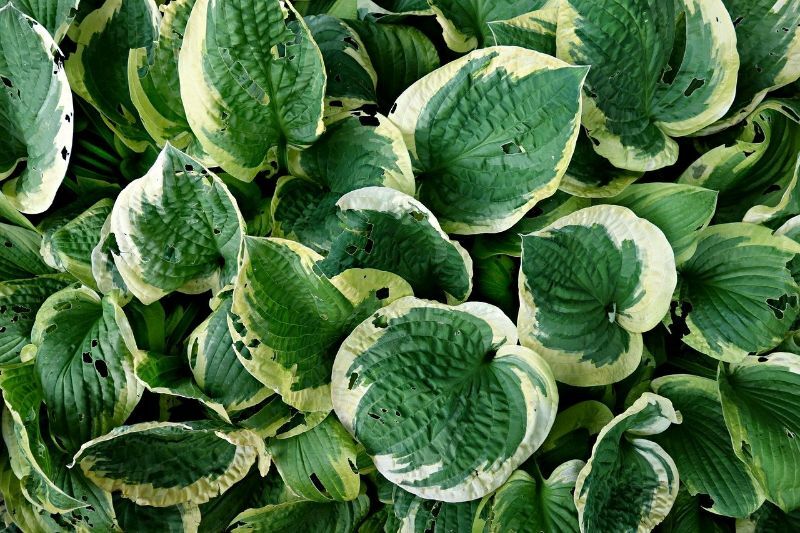
Groundhogs may swiftly ruin a garden. They eat grasses, clover, and dandelions in the wild. They consume newly planted annuals and perennials, hostas, and just about every leafy herb and vegetable in the veggie area in your garden. Burrows dug by groundhogs are large, deep, and have at least two entrances. The excavating process moves a lot of material, making it easier to locate and identify the entrance of a groundhog burrow.
How do you keep groundhogs from eating hostas?
The groundhog will stay away if Epsom salts are placed near or around the burrow entrances or exits. If your plants are being devoured, try putting a tin pie dish full of salts near them. If it rains, replace it.
What animal eats hostas leaves?
Hostas are eaten by what animal? You can usually blame deer, voles, or mice if yours suddenly vanish. Slugs, snails, cutworms, black vine weevils, and nematodes are some of the bugs that can cause more slow damage. Hostas are rarely eaten by rabbits and squirrels, however bunnies do appreciate the fragile spring shoots.
Do you know what eats hostas? If that’s the case, you’ve come to the correct place. Because different species can leave similar indications, it can be difficult to know which animal is eating your hostas.
What is eating my hosta plants?
What causes holes in the leaves of hostas? This is one of the most often asked questions about hosta plants. Slugs or snails are frequently the culprits when it comes to pests eating hostas. These nocturnal foragers, which eat small holes in the leaves, are perhaps the most frequent of the hosta pests. Snail trails of silvery tint can be found around the garden area, indicating their presence. Beer traps may be used to control these slugs, which they crawl into and die in.
The adult black vine weevil is another insect pest that eats hosta leaves. This bug makes uneven notches along the outer edges of leaves as a sign of its presence. Their larvae also cause damage to hosta plants by feeding on the crown and roots, resulting in yellow, wilted foliage.
Nematodes, which are minute roundworms, infect hosta plants in the same way as fungi or bacteria do. They flourish in damp environments, just as fungal infections. Nematodes eat on the leaves, resulting in brown spots between the veins, giving the leaves a striped appearance. This usually happens in the late summer. Plants that have been harmed should be destroyed. Most nematode attacks can be avoided by providing proper distance between plants, using soaker hoses to avoid damp foliage, and removing and destroying all diseased plants.
Do you believe that only bugs consume hostas? Reconsider your position. Hosta plants are frequently eaten by deer and rabbits. Deer, on the other hand, may leave merely stalks where once lovely hosta leaves grew, whilst rabbits prefer to nibble on the young shoots.
What critter is eating my hostas?
Hosta damage is frequently caused by deer, rabbits, groundhogs, and even wild turkeys. I would propose enclosing the area in a green wire cage. It should be just big enough for the hostas to make a decent start.
What do groundhogs hate the most?
Groundhogs will avoid your garden if you plant plants with strong scents, such as lavender. Groundhogs loathe the smell of mint, sage, basil, lemon balm, rosemary, thyme, chives, and oregano, according to the Farmers’ Almanac.
Does Irish spring soap keep groundhogs away?
Groundhogs are effectively deterred by Irish Spring. Groundhogs will be scared away by a bar of soap hung on a post or fence, which will keep them from digging up the lawn or eating the plants.
How do I keep animals from eating my hostas?
- Use baby powder to dust your young hosta plants. The leaves will be coated, making them undesirable to the invading rabbits.
- Garlic and wormwood plants should be planted around the hosta plants in your yard.
Will hostas grow back after being eaten?
In the correct conditions, Hosta leaves recover quickly, and these tough plants are desperate to survive. After the initial deer attack, though, guard your hostas. If hostas are repeatedly eaten, they are far less likely to recover.
What is digging up my hostas?
Squirrels may dig up hosta roots or young, vulnerable hostas that have recently been planted. Simply move it away from the hosta’s base as the plant matures. You can also build an under-the-soil wire mesh cage by digging a tiny trench around the root base of the hostas.
What is eating my hostas roots?
Jim Winter of James City County worries his boxwood roots are being eaten.
Voles prefer hostas, as gardeners who grow them know. Hostas’ rootballs can be sunk into plastic pots and planted in the ground to reduce their activity. If you go this method, cover the drainage holes with fine-mesh wire so that drainage is still good but the vole has no way in.