
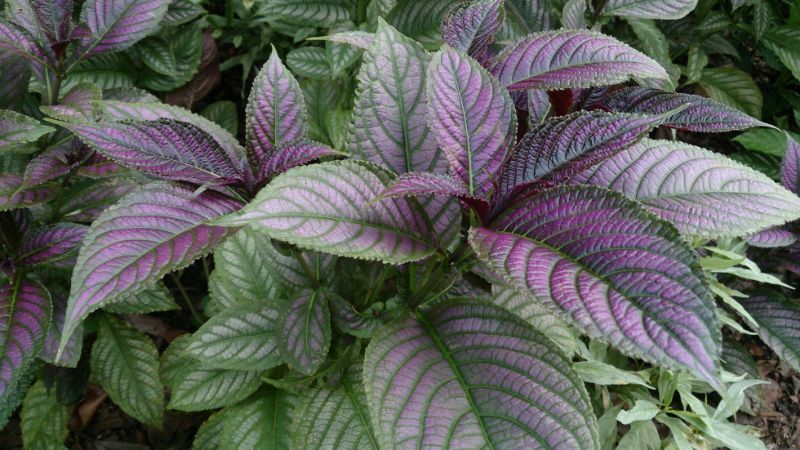
This wonderful plant is simple to share with friends and family. Seeds or cuttings are used to propagate Persian shields. Cutting just below a growth node, cut 2 to 3 inch (5-8 cm) portions off the plant’s tops.
Remove the bottom leaves and place the cut in a non-soil medium like peat. Mist the medium and cover the cutting with a bag. To keep the cutting from molding, remove the bag for one hour each day. The cutting will sprout roots in a few weeks, and you can replant it in potting soil.
Can I root Persian shield in water?
Purple plants, in particular, have always appealed to me, even before it became Pantone’s color of the year. Purple fountain grass and Persian shield are two of my favorites. It’s easy to see why when you see those iridescent purple leaves!
Persian shields (Strobilanthes dyerianus) are really a show-stopper in my garden, bringing color and interest throughout the year. I propagate cuttings from the one plant I bought a few years ago in early spring instead of buying new plants every year (because they’re annuals in my zone).
Stella is her name. This plant spends the entire year indoors, and I utilize its cuttings to propagate new plants for outdoor containers and to give away to friends and family. There’s no bigger win for this crazy plant lady than saving money and obtaining new plants! Here’s how to do it:
Step 1:Cut a 2-3 piece from the tip of a branch above a leaf node.
I came across multiple websites recommending to cut slightly below a leaf node when researching how to spread Persian shield. However, based on my own experience, I’ve discovered that the optimal reaction – for both the plant and the cutting is directly above a node.
The cutting will begin to root at the point where it was cut, with each node submerged in water. Meanwhile, the plant will fill out with two new leaves at the trimmed place, making the plant fuller.
The cutting rooted fine when I followed the Internet’s directions and cut just below a node, however the plant’s stem was stunted and failed to continue developing. The good news is that most plants are tolerant of mistakes. If you cut the wrong area and end up with a stub, you can typically rectify it by cutting the stem lower down in the correct one.
Step 2:Remove all leaves from the bottom of stems and place in water.
Instead of directly planting cuttings in soil, peat, or sand, I submerge them in water until roots grow. Instead of using rooting hormone, I simply lay the cuttings near a bright, warm window. Make sure to change the water every two to three days, and roots should appear in approximately a week.
Step 3:Transfer to soil.
I (perform a joyful dance and) place these vulnerable newborns in little pots of soil to strengthen and thrive when the roots are about 1/21 long.
Fill the container with potting mix to approximately an inch below the rim, making sure it has drainage holes. With your finger, poke a hole in the earth and insert a cutting into it, firming the soil around the stem. Once all of the cuttings have been planted, give the pot a good drink, drain it, and return it to the sunny window. Continue to water the soil as needed to keep it moist.
Step 4:Plant outdoors.
When the Persian shield cuttings have outgrown their little pots and the danger of frost has passed, they can be planted outside in containers or straight in the ground. When they’re first released outside, they’ll be a little shocked, but with time, they’ll adjust and thrive.
Purple fountain grass, pink pentas, and lime green sweet potato vine adorn this one. (Learn more about outdoor container gardening here.)
Despite the fact that Persian shield can withstand the sun, it is best to provide some shade to keep its beautiful foliage.
Is Persian shield easy to propagate?
Follow these simple instructions for propagating Persian Shield plants so that your shade or part-sun garden is a gorgeous sea of iridescent green and purple all summer long!
Persian shield is a simple plant to propagate because it is a hardy, fast-growing species. You can start with small plants and grow them into large examples to fill your garden bed by the end of the season.
To try your hand at propagating Persian Shield, you’ll need the following items:
How do you root Persian shield cuttings?
Find a healthy branch and cut the tip off, leaving about 3 inches of branch. The best results are usually obtained by cutting just above a node on the stem. It speeds up the rooting of the cuttings and makes it easier for the cut branch to flush out with new growth. Also, make sure the stem you’re cutting isn’t too soft or fragile, but also not too woody or stiffened.
After that, you’ll want to remove the bottom half of the branches to reveal the stem. To initiate the rooting process, apply rooting hormone powder to the stem and then set it in well-drained potting soil or sand. Putting the stems in a cup of fresh, clean water is a simpler and more orderly method. You’ll need to keep the dirt or sand damp but not soggy as the roots form, and you’ll need to check on them after a week to see how they’re doing. When cuttings are introduced in water, their growth can be easily observed, making it easy to determine when the roots have established themselves.
Does Persian shield come back?
It is hardy in USDA hardiness zones 9 to 11, but in milder locations, it is most typically cultivated indoors or as a summer annual. Persian shield may die back to the ground after frost in zone 9, and during mild winters in zones 7 and 8, but it will survive and sprout the next season.
How do you make a Persian shield bushy?
Fertilizer works wonders for Persian shield plants. During the peak season, feed your Persian shield plant nitrogen every two weeks, but you can skip it in the winter and fall.
The natural bushiness of a Persian shield plant is one of its most appealing features. You may, however, make it look even bushier by pinching the stems back every now and then.
Why is my Persian shield dying?
If your plant doesn’t get enough water, it will quickly wilt, and you’ll notice it. If this occurs, increase your watering frequency to compensate, making sure to maintain the soil moist and the humidity around the plant at a high level. Even when it’s in horrible shape, it rebounds back rapidly.
As previously said, too much light can cause your strobilanthes dyeriana’s leaves to fade. Shielding it from direct sunlight can help to alleviate the condition. It’s natural for the coloring of older leaves to fade before they fall off.
Size & Growth
Persian Shield can reach heights of 4 feet tall and 4 feet broad in a frost-free environment.
It is unlikely to grow taller or broader than 3 feet outside of USDA hardiness zones 10 and 11.
Flowering & Fragrance
It’s unusual for this plant to bloom outside of its natural habitat. The plant may bloom in the autumn or winter in particularly warm, humid environments.
Persian Shield is a seasonal bloomer that produces little, five-lobed violet flowers every now and then.
Individually, the flowers are relatively small. They do, however, grow in attractive cone-shaped bunches.
The plant’s popular name, Bermuda Conehead, comes from the shape of its inflorescences.
Foliage
Although the flowers are lovely and even showy, the silvery/iridescent purple foliage is the main attraction of this plant.
These foliage plants have purple leaves that are oval and lance-shaped. The base hue is a dark green with a silvery purple undertone.
The undersides of the leaves are a dark purple color. Leaves can grow up to 8 inches long.
Light & Temperature
The Persian Shield thrives in a wide range of light conditions, from partial shade to full sun.
If you live in a cooler climate, the plant may require full sun during the summer months to achieve its best color.
When overwintering, keep the plant in a bright, sunny area like a potted or container plant.
It’s a good idea to chop it back before the winter weather arrives in these zones, then cover it during the harshest months.
Take cuttings as a precaution in case your plant fails to regrow from the roots.
Watering & Feeding
This plant requires only modest watering, although it does require dependably moist soil.
It’s a good idea to develop a weekly watering routine when growing as a houseplant to keep the soil evenly moist.
Use a slow-release plant food to fertilize your plants multiple times a year (3). Carefully follow the instructions on the package.
Soil & Transplanting
It prefers constant dampness but cannot stand in water. It is critical to have well-drained soil.
Use a high-quality, organic-rich potting soil to keep Persian Shield as a houseplant. There should be lots of drainage holes in the container.
Grooming & Maintenance
Preparing Persian Shield for overwintering and keeping them safe throughout the winter can, however, is difficult.
They can be left to grow to their full height and width, or they can be pinched back to encourage compact, bushy growth.
Can Persian shield grow in full shade?
Persian shield thrives in both the sun and the shade. It requires constant watering when planted in full sun, especially in warmer areas, to keep it from wilting. Spread a 3- to 4-inch-deep layer of mulch over the soil around the Persian shield plant to make it easier to grow. This helps to keep the soil cool and moist for a longer period of time. If you grow Persian shield in pots, you can do the same thing!
Use a general-purpose fertilizer to fertilize Persian shield in the spring. For information on how much and how often to fertilize, refer to the package instructions.
Persian shield can be pruned at any time. Pinching it back every now and again promotes the plant to grow fuller and bushier, especially in the shade.
In Zone 10, Persian shield can be used as a landscape shrub. Grow it as an annual in other places.
Is Persian shield poisonous to dogs?
Persian Shield is often a safe choice for properties and households with children, pets, and livestock. Although there is no evidence that this plant is harmful, some anecdotal reports claim that the sap can irritate the skin.
It’s usually a good idea to use gloves and wash your hands after handling any plant. Persian Shield isn’t any different.
Wear garden gloves whenever you pinch the Persian Shield Strobilanthes dyerianus plant back, take cuttings, or otherwise handle it. After you’ve finished touching this plant, wash your hands.
Is Persian shield a coleus?
For some gardeners, Coleus is the go-to foliage plant, while Persian shield is a gorgeous foliage plant that works just as well in summer gardens.